KINGSTON, R.I. — Sept. 4, 2026 — Spending a week in the woods swimming, kayaking, telling scary stories, and eating smores around the campfire is a treasured summer tradition for millions of kids each year. But sleepaway camp presents daunting challenges—especially where those smores are concerned—for kids living with Type 1 diabetes, whose parents may worry about leaving children as young as 7 to monitor their crucial blood-sugar levels on their own.
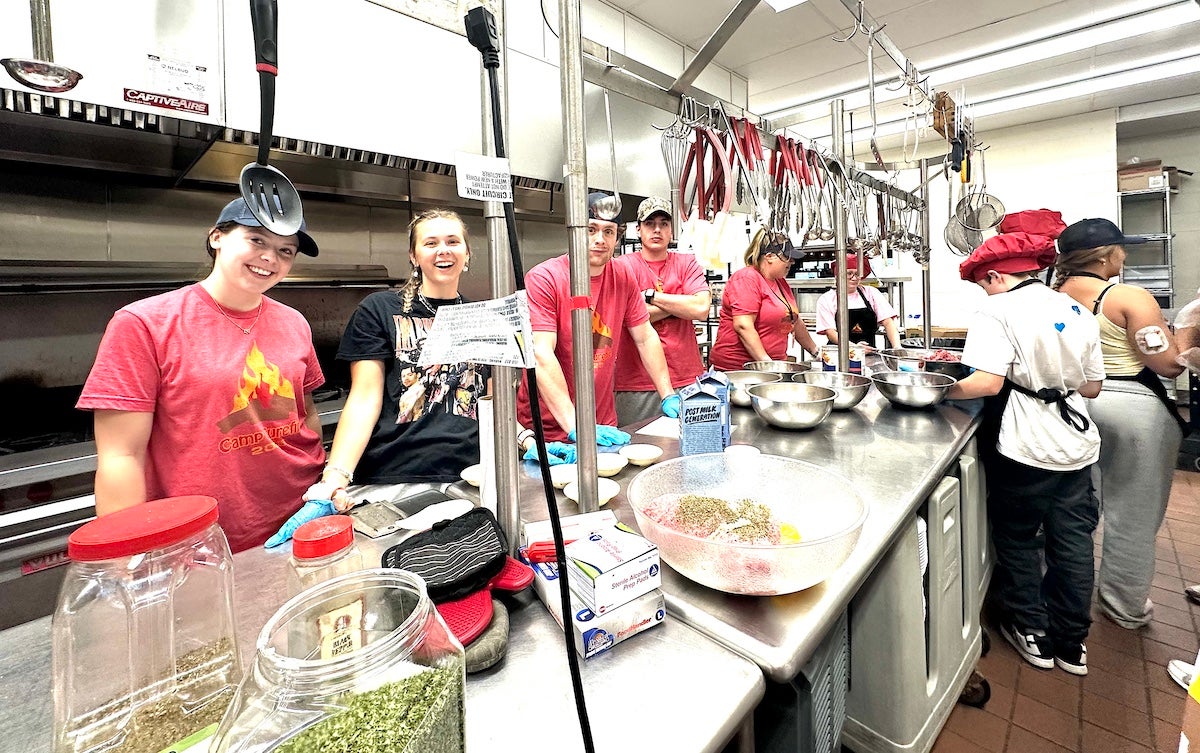
Camp Surefire, located on the grounds of Camp JORI in South Kingstown, lets kids with severe food sensitivities enjoy all the fun and benefits of summer camp while giving their parents or guardians peace of mind that their condition will be closely monitored and controlled. Medical and nutrition staff members—which include dozens of University of Rhode Island health sciences, pharmacy, and nursing students—care for campers, making sure they are safe, well-fed, and that their all-important blood-sugar levels remain in the safe range.
“It’s a delicate balance with every single camper and staff—because a lot of our staff volunteers have diabetes too,” said Robyn Perry, lead dietitian for the camp who is also a clinical instructor in the URI Department of Nutrition. “We’re navigating around a lot of folks that are taking insulin based on their carb counts.”
Medical staff, including URI student nurses and pharmacists, stay with the campers 24 hours a day, continually checking their blood sugar and treating any highs or lows. The campers—ranging in age from 7 to 17—each have an app on their phone, where they report the levels from their Continuous Glucose Monitors multiple times every day. The app digitally transfers that information to a large video board, allowing medical staff to monitor every camper’s blood-sugar in real time.
“It’s direct care and supervision,” said Nick Leso, a URI College of Pharmacy alum who co-directs the camp along with his wife, Jocelyn Leso. “They are embedded in the cabins, watching blood sugars throughout the day and night, getting updates from the campers’ sensors all day long, and making treatment decisions on what we should do to treat them throughout the day.”
Mealtimes are, of course, a more complicated affair here than at a typical camp. In addition to diabetes, several campers have other dietary issues, including food allergies and celiac disease. Perry and her team of URI and Johnson and Wales University nutrition and dietetics students arrange menus that accommodate every camper, preparing multiple versions of each breakfast, lunch, and dinner—vegetarian, gluten-free, dairy-free, and both gluten- and dairy-free options. Vegetables and fruits—including about 120 pounds of strawberries a day—must be cut precisely to meet proper carbohydrate levels.
Along with all that extra preparation, the nutrition team also must consider the audience: children.
“One bad meal usually equals homesickness, so we need to have food that’s comfortable for them,” Perry said. “Sometimes, we have fun things like whipped cream and sprinkles for strawberries, and we have our famous, first-night snack of dirt and worms, which is pudding with an Oreo and two gummy worms. We want to show them that they can eat these things—just a controlled portion.”
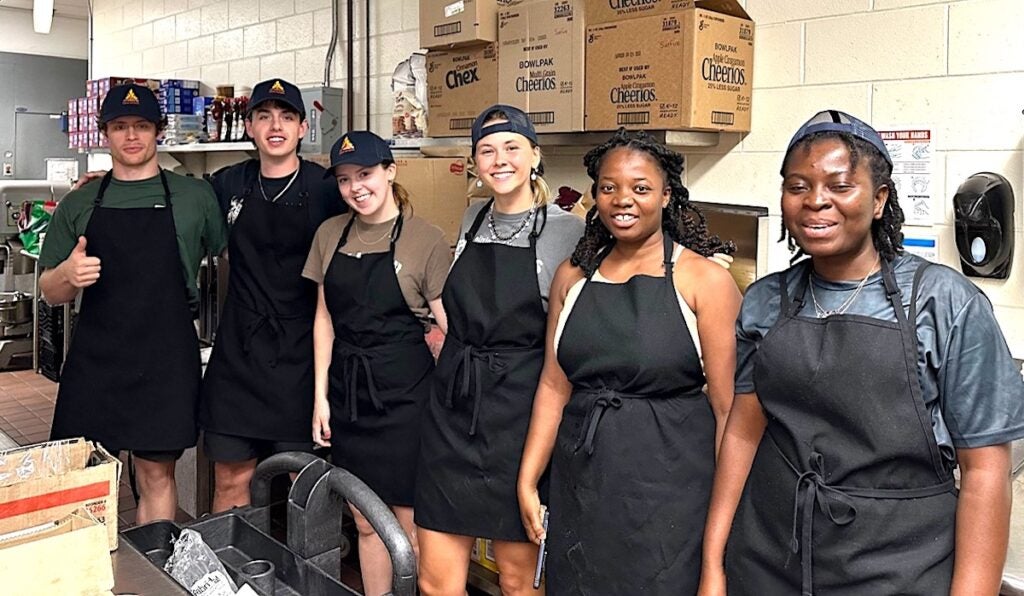
The camp also provides an education component for campers, many led by URI students, including Evelyn Mensah, a Ph.D. student in dietetics from Ghana, Africa. Mensah helps lead “Nutrition Nuggets,” informal gatherings with nutritional topics tailored for each age group, such as how to choose the right drinks that are lower in carbs, especially added sugars.
“You give them some nutrition education, and we find out what they know and want to know about nutrition,” Mensah said, noting she’s gotten an education herself in her three years working at the camp. “I’ve learned a lot, especially with getting the carbs right at each meal, getting the quantities right, making sure we are food-safe in terms of preparation and cleaning. I learn new things every time we meet with the kids. The learning experience and the fun getting to interact with the kids keep me coming back.”
URI nursing and pharmacy students also receive extensive training and diabetes education. They learn how to operate equipment such as CGMs, insulin pumps and pens, and glucometers, said Jocelyn Leso, who initially joined the camp as an 18-year-old volunteer to help her younger brother—and give her mother peace of mind that counselors are monitoring and treating his health.
“They get to see the technology and learn about it ahead of time, so when the kids come in and all the devices start beeping, they’re ready to hit the ground running,” Leso said. “They learn really fast. We also have a full medical staff to make the bigger decisions, but the counselors know the protocol to follow to treat low blood sugar, and they know what to do if there are high blood sugars.”
The URI students get an education not just in diabetes maintenance and treatment, but also in working with patients of different ages and conditions, which can help them throughout their careers.
“From the pharmacy perspective, it makes every interaction they’ll have with a patient who has diabetes that much more meaningful,” said Nick Leso, who also has a younger sibling with Type 1. “Being able to relate to them on their level, and being a voice they can trust is really important in the community, or in a hospital setting.”