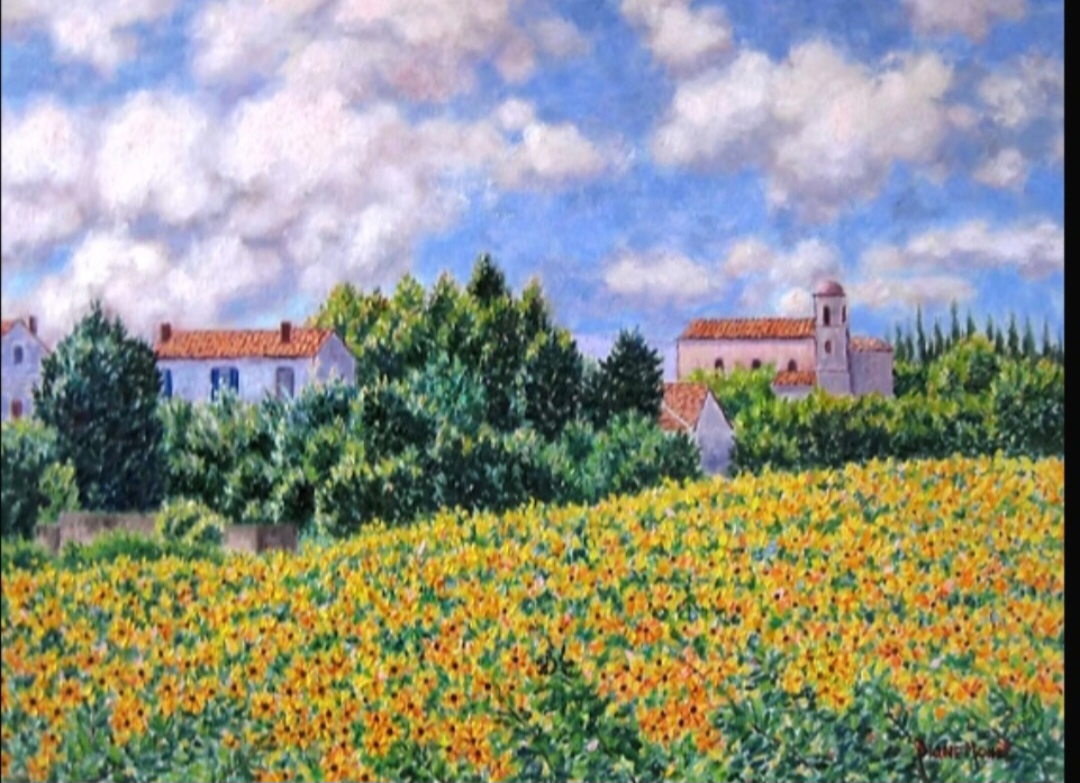
For Diane Monet, yes that Monet, painting began long before she ever imagined becoming an artist. As a child, she could always be found with a crayon in her hand, drawing and spending time in nature. Decades later, little has changed.
“I haven’t changed my subject matter throughout my whole career,” she tells me. “Nature comes first with everything I do.”

Today, Monet is a self-taught artist whose luminous oil paintings are inspired by gardens, landscapes and the places she encounters on her travels. She spends around half the year in France, dividing her time between her ancestral home of New York and her apartment on the seafront in Menton. Her work, she explains, is ultimately about giving people a moment to pause.
“Be silent and still and breathe,” she says. “That’s the purpose of my work.”
There is, of course, another reason the name Diane Monet may catch your eye. Her grandfather, Alexandre Monet, moved from Paris to the United States at the age of 24, working as a chef and sign-painter, and was proud to tell his family that he was related to the Claude Monet. For Diane as a child, however, the connection meant very little. It was only as she grew older and understood the significance of Claude Monet that the family story took on greater importance.
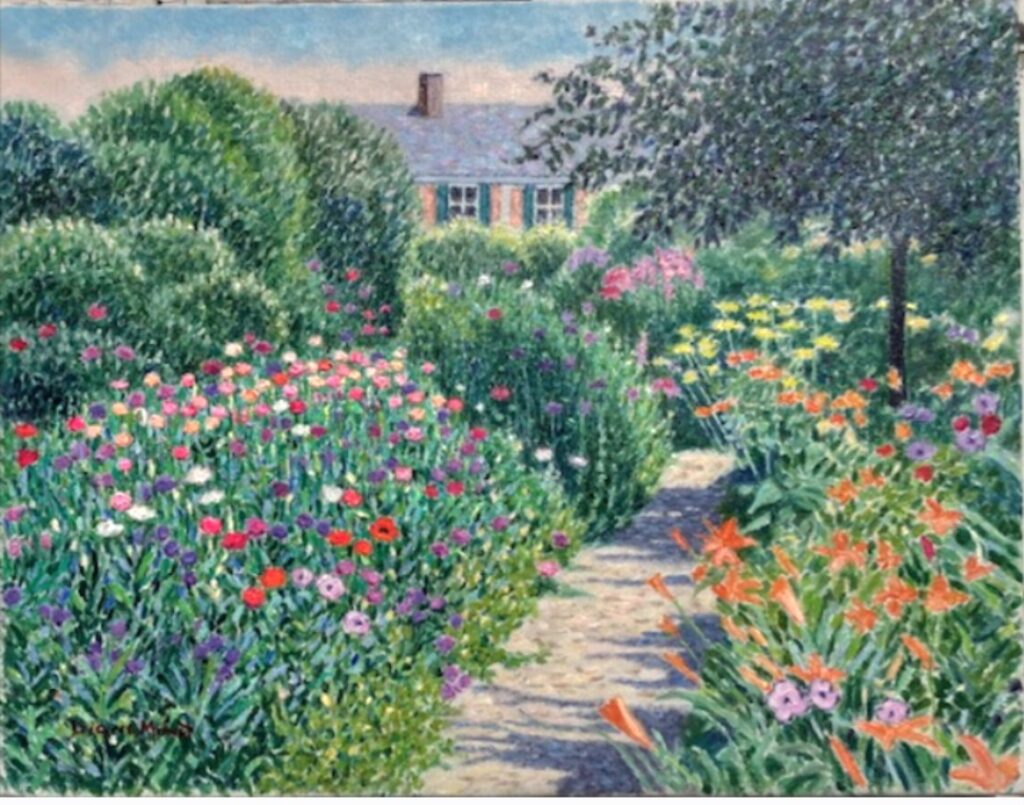
Tracing the connection has not always been straightforward. A fire in Paris sadly destroyed many records, including information relating to her grandfather, leaving holes in the family history. But Diane’s relationship with the Impressionist painter has become increasingly fascinating to her as her own artistic career has developed.
Interestingly, becoming a professional artist was never part of her original plan. Diane initially thought she might follow her mother into nursing, but by her early teens she had changed her mind. Her lifelong wanderlust led her towards an international career instead. She became fluent in Spanish and studied international marketing, eventually working for major companies including Avon, Bristol-Myers and PepsiCo.
But corporate life did not sit comfortably with her values, nor did it satisfy her desire for an international life. Eventually, she enrolled in an adult art class. The course concentrated on drawing and perspective, subjects she already understood intuitively, but it introduced her to oil painting – and this discovery changed everything.
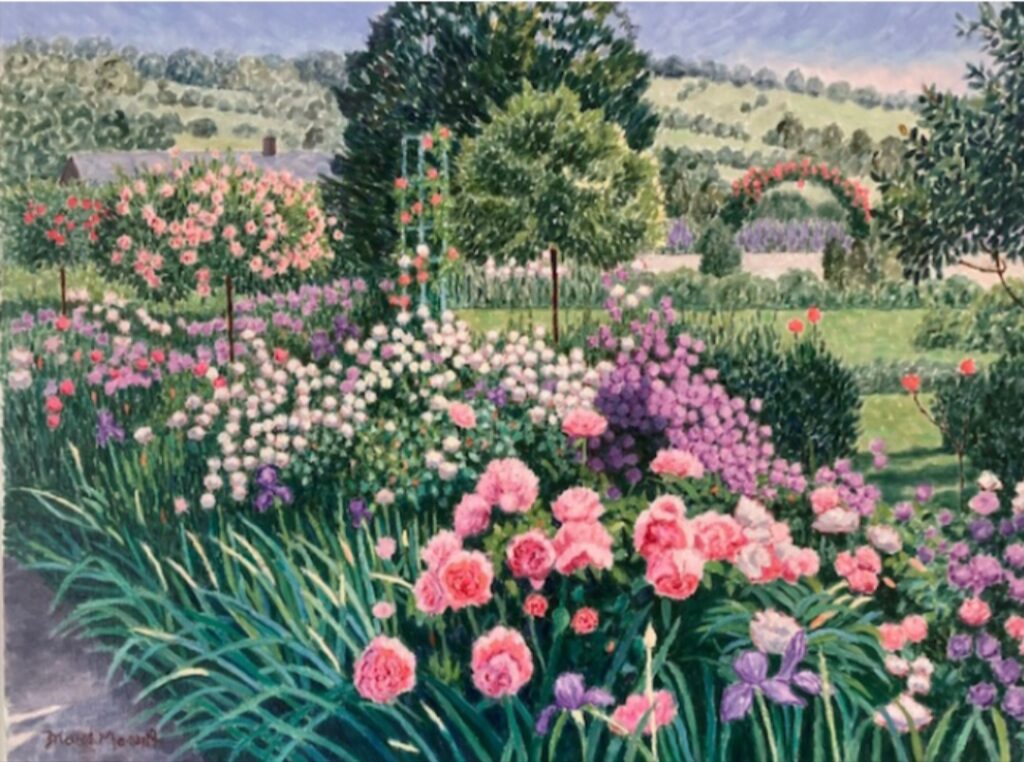
Her late husband, Kevin, recognised something in her work before she did.
“He told me, ‘I want to marry you, but I want you to paint,’” she recalls.
His sincere support helped give Diane the confidence to pursue art seriously. What began as a hobby she had done throughout her life became a profession. She exhibited in the United States, was represented by galleries internationally and developed a particularly strong following in Japan, where she has exhibited on television and could sell out a show of 25 paintings within a week.
More than 600 paintings later, Diane’s work continues to be driven by the same impulse she had as a child: to look closely at the natural world.
For Diane, however, she doesn’t choose what to paint herself. “The subject has to ask me to paint it,” she explains. She might encounter a wild garden, a lake or a particular vista and suddenly feel compelled to preserve it. She sketches on location and takes photographs, before returning to her studio to begin the meticulous process of translating the scene onto canvas.

Each painting can contain more than 100 colours and six or seven layers of oil paint, with each layer contributing to its luminosity and depth. She works on no more than two paintings at a time, allowing the oils to dry between layers. And even when she believes a painting is finished, she waits.
Diane revealed that she won’t sign an artwork until she is completely satisfied. If she senses something is missing, she might get out of bed at two or three in the morning and return to the studio.
“Part of my soul goes into every painting,” she says. “I feel each painting should have adoptive papers!”
The finished work is her interpretation of something she believes was already created with divine beauty. Diane’s Christian faith is deeply intertwined with her artistic practice. She sees nature as God’s work and painting as the gift she has been given to translate what she sees onto canvas. For her, strengthening her faith strengthens her art.

France has become an important part of that relationship with nature. In Menton, on the French Riviera, she has found a place that feels very different from the frenetic pace of New York. She loves its village atmosphere, the friendliness of its residents and, particularly, its relationship with animals. Dogs are welcomed into restaurants, there is even a dog beach, and Diane is struck by the care with which people treat their pets.
Her observations of France also feed into a wider concern about modern life. She is outspoken about our dependence on technology and particularly worried about the way smartphones and artificial intelligence are changing human relationships.
“Cell phones are a great invention,” she says, “but they are being abused.”
For Diane, the answer to this modern tension lies in returning to the things that cannot be replicated digitally: nature, art, animals and human connection. She believes that we have much to learn from animals, which she describes as honest and true, and that spending time in nature can offer a kind of calm that modern life increasingly erodes.
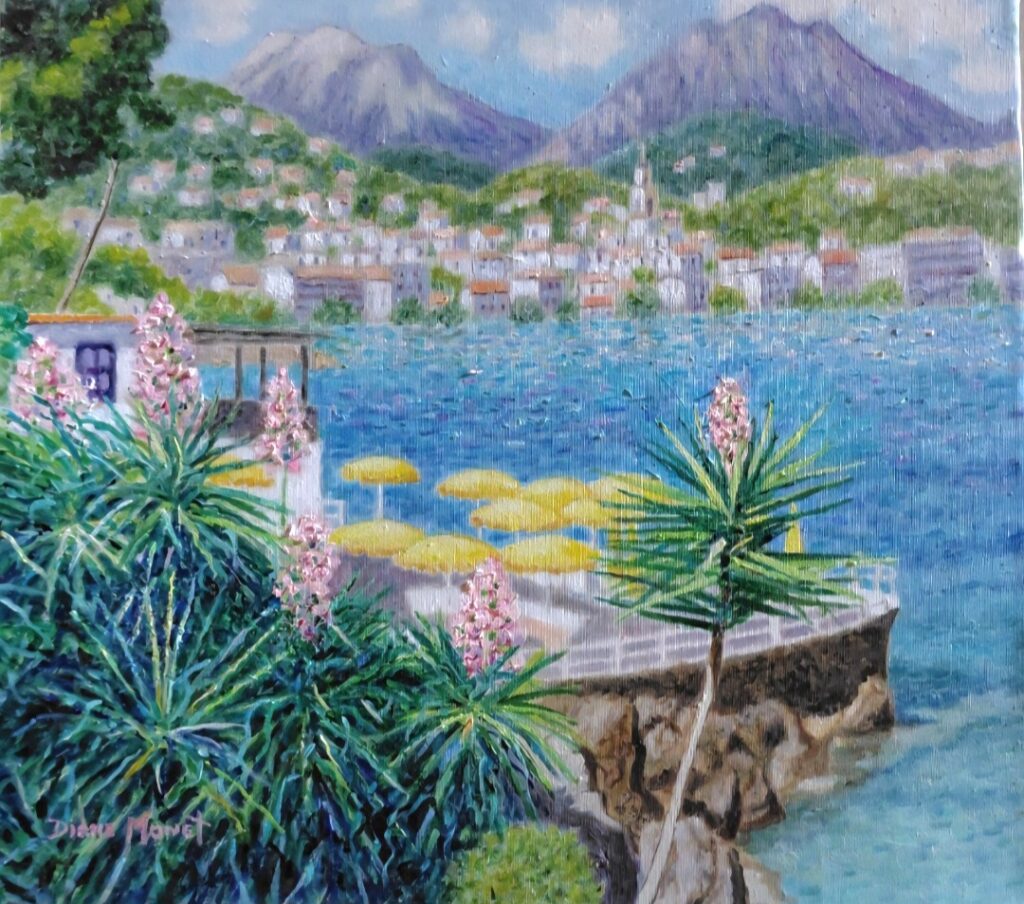
It is perhaps why her paintings feel less like records of places than invitations to inhabit them. There are no people in her landscapes; as Diane puts it, there are already enough people in the world. Instead, the viewer is given the whole scene for themselves to indulge in.
Life, she acknowledges, is not easy. Everyone carries difficulties, and she too experiences periods of struggle. But she believes those struggles can make us stronger. “It’s not what happens to us,” she says, “it’s what you learn from it.”
And so she continues to paint – nature, beauty and the places that call to her – hoping that someone, somewhere, will stop for a moment, look at the canvas and simply breathe.
Your email address will not be published. Required fields are marked *