Empowering Your Immunity With Vitamin D
Vitamin D deficiency is a major public health problem worldwide in all age groups even in those residing in a tropical country such as Malaysia. Of late, there has been renewed interest in the ability of vitamin D to improve immune function. It is known to be important for protecting against infections. Vitamin D deficiency has been found to contribute to respiratory disease and/or severity of respiratory infections. Individuals with low levels of vitamin D have a higher risk of infections such as tuberculosis (TB), influenza, bacterial vaginosis, and many more other infections. A review paper published in 2017 demonstrated that vitamin D supplementation was safe to be used to protect against respiratory tract infections.
Vitamin D sufficiency reduces the risk for morbidity and mortality in COVID-19 patients. This is crucial as high blood pressure, heart disease, asthma, diabetes, and other chronic diseases are related to low vitamin D levels in the body. A possible reason for the increase in case-fatality rate could be due to the presence of these chronic illnesses. Vitamin D deficiency is related to an increase in the C-reactive protein (CRP), a type of inflammatory marker. An increase in CRP increases the death due to acute respiratory distress syndrome (ARDS), heart failure, and diabetes. Those with high
CRP levels have a larger diameter of the lung lesions. In order to reduce the case-fatality rate, it is important to manage the disease as well as the incidence of chronic diseases with vitamin D.
Too Much Vitamin D Could Cloud Its Benefits
Despite COVID-19 being a respiratory disease, one of its complications is heart disease. Heart disease death is the number one killer in Malaysia. COVID-19 promotes the development of heart diseases and the concerns about the outcomes had started during the early stages of the pandemic. A high prevalence of pre-existing heart diseases has been observed in COVID-19 patients with these comorbidities being associated with an increased death rate.
Even though vitamin D is known for its multiple health benefits, consuming too much vitamin D can have deleterious effects if it is not properly regulated. Taking high doses of vitamin D could lead to a transient increase in calcium levels since it is involved in calcium absorption. This leads to calcium deposits in the blood vessels. Hardened calcium deposits can disrupt the vital functions of the brain and the heart. Calcium deposits in the blood vessels can lead to heart diseases or stroke.
The deposition of calcium in the lungs can also lead to damage. When a person is having COVID-19, flu, or pneumonia, they are not able to breathe well. When the lung cells become rigid or hard or fibrous, then the patient is not able to breathe well.
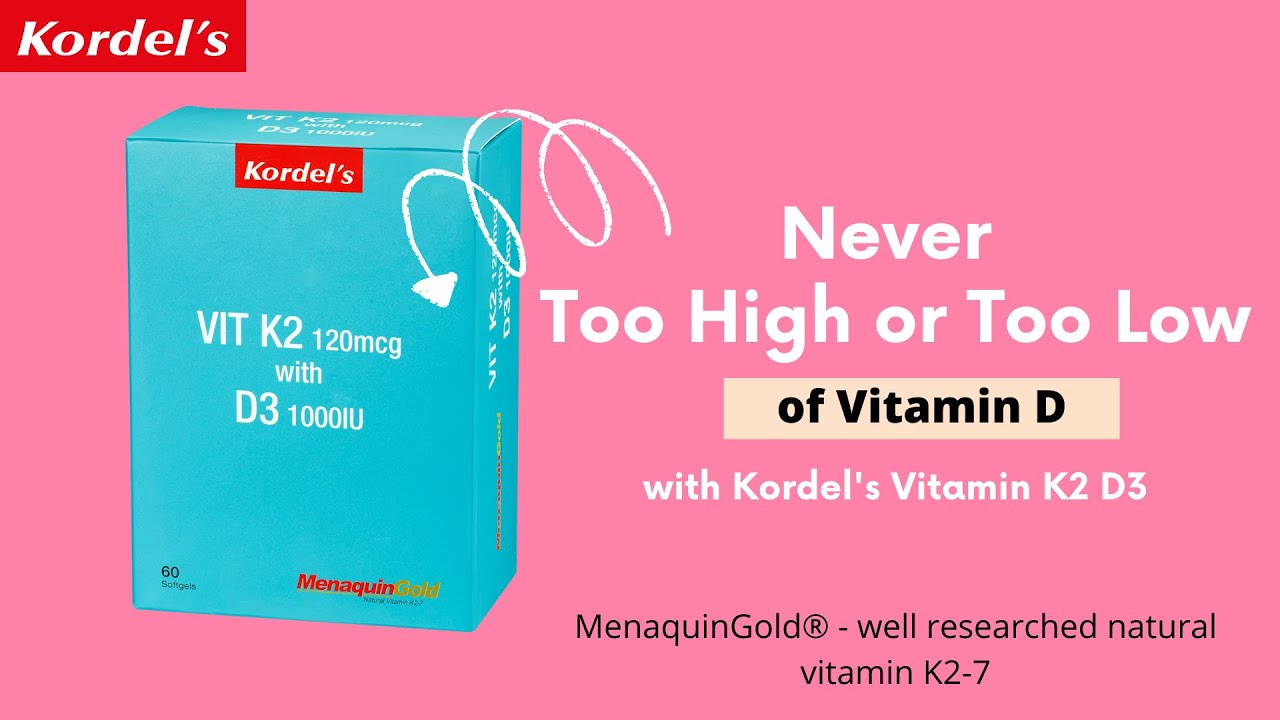
Vitamin D3 and K2 – The Perfect Match
Vitamin K2 functions to stop and reverse the deposition of calcium into the blood vessels and lungs. Although vitamin D3 and vitamin K2 cannot be considered as a prevention or cure against COVID-19, there has been growing scientific evidence that shows a correlation between low vitamin D and K2 levels are related to more severe outcomes of COVID-19. Recent studies evaluating vitamin K2 levels in COVID-19 hospitalized patients found that those with poor outcomes had the lowest levels of vitamin K2. Conversely, those who tested negative for COVID-19 infection showed sufficient vitamin K2
levels.
The review published in the British Journal of Nutrition highlights the critical link between vitamin D3 and vitamin K2. High calcium levels induced by vitamin D administration could lead to accelerated calcification and breakdown of the soft tissues’ elasticity. The administration of vitamin D in a state of vitamin K2 deficiency may endanger the lungs and heart. Some vitamin K2-dependent proteins play a role in protecting our circulatory system. Without sufficient vitamin K2, matrix GLA protein (MGP) is not able to prevent calcification. This leads to lung damage and stiffening of the blood vessels, compromising the lungs’ elasticity. Calcium deposits limit the body’s ability to circulate oxygen-rich blood and this is an important risk factor for heart diseases. Vitamin K2 has also been shown to act as an anti-inflammatory agent by preventing several pathways that are involved in
inflammation and cytokine release.
Even though vitamin D supplementation is widely investigated and recommended for its benefits in immunity, it does come with a downside. It seems prudent to recommend a combination together with vitamin K2 to reap the full benefits of vitamin D3 with minimal side effects.
For general maintenance/prevention, take 1 soft gel daily after a meal. For treatment/reverse calcification, take 1 soft gel 3 times daily after meal.
You can get Kordel’s Vitamin K2D3 at Lazada now