
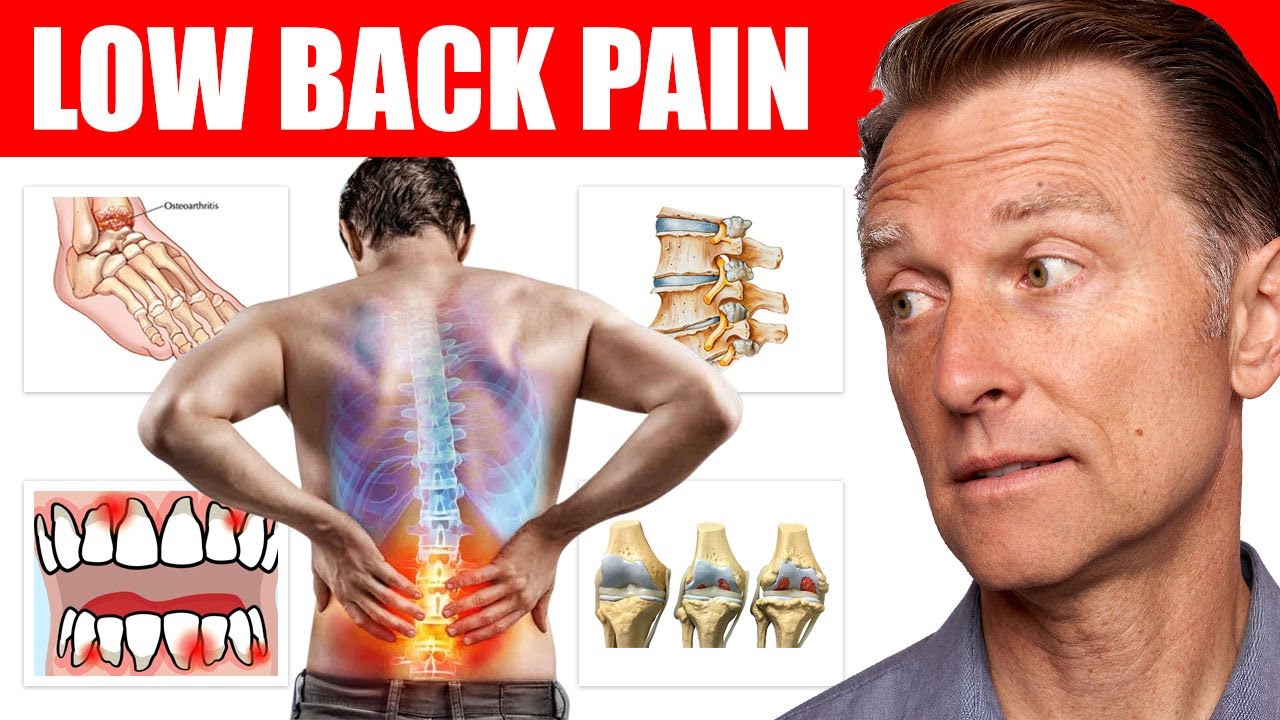
Download My FREE guide: First Signs of a Nutrient Deficiency 👉 https://drbrg.co/4b9UBP1
These nutrient deficiencies can lead to lower back pain. Check this out.
DATA:
https://www.ncbi.nlm.nih.gov/pmc/articles/PMC4712861/
https://pubmed.ncbi.nlm.nih.gov/23384256/
https://pubmed.ncbi.nlm.nih.gov/34919073/
https://vitamindwiki.com/Lumbar+spinal+stenosis+pain+strongly+associated+with+low+vitamin+D+%E2%80%93+March+2013
0:00 Introduction: What back pain says about your health
0:32 Deficiencies connected to low back pain
6:17 Other things that can cause back pain
7:20 Learn more about how to identify nutritional deficiencies by looking at your face!
Let’s talk about what lower back pain says about your overall health and what deficiencies you may have.
Typically, people treat lower back pain with medications, and they go on their way. But what is the root cause of low back pain, especially chronic back pain? It’s important to consider the connection between nutritional deficiencies and back pain to help get rid of back pain for good.
Vitamin deficiencies that can lead to low back pain:
1. Vitamin D
Vitamin D deficiency can lead to:
• Bone pain
• Inflammation
• Soft bone
• Skeletal problems in children
* Magnesium deficiency and boron deficiency can interfere with your vitamin D levels and can lead to back problems, as well.
2. Vitamin K2
Vitamin K2 deficiency can lead to:
• Stenosis
• Arthritis
• Bone spurs
• Calcium deposits
* Vitamin K2 and vitamin D work together.
3. Vitamin E
Vitamin E deficiency can lead to:
• Back weakness
• Atrophy
* Avoid tocopherols and try a tocotrienol complex or wheat germ oil instead.
4. Manganese
Manganese deficiency can lead to:
• Disc problems
• Collagen problems
• Increased risk of scoliosis
Other things that can cause back pain:
• Consuming omega-6 fatty acids and not consuming enough omega-3 fatty acids
• A diet high in sugar and carbs
• Kidney stones
• Gallstones
When using high doses of vitamin D, always check with your doctor. High doses of vitamin D can increase blood/urine calcium levels resulting in calcium deposits in the kidney. Also drink 2.5 liters of fluids per day, take cofactors with vitamin D (magnesium, K2 and zinc) and have your doctor monitor your PTH, vitamin D blood levels and creatinine and avoid excess calcium supplements of high calcium foods when taking vitamin D levels over 10,000 IUs.
Dr. Eric Berg DC Bio:
Dr. Berg, age 58, is a chiropractor who specializes in Healthy Ketosis & Intermittent Fasting. He is the author of the best-selling book The Healthy Keto Plan, and is the Director of Dr. Berg Nutritionals®. He no longer practices, but focuses on health education through social media.
Follow Me On Social Media:
Facebook: https://bit.ly/FB-DrBerg
Instagram: https://bit.ly/IG-DrBerg
TikTok: https://bit.ly/TikTok-DrBerg
Disclaimer:
Dr. Eric Berg received his Doctor of Chiropractic degree from Palmer College of Chiropractic in 1988. His use of “doctor” or “Dr.” in relation to himself solely refers to that degree. Dr. Berg is a licensed chiropractor in Virginia, California, and Louisiana, but he no longer practices chiropractic in any state and does not see patients so he can focus on educating people as a full-time activity, yet he maintains an active license. This video is for general informational purposes only. It should not be used to self-diagnose and it is not a substitute for a medical exam, cure, treatment, diagnosis, prescription, or recommendation. It does not create a doctor-patient relationship between Dr. Berg and you. You should not make any change in your health regimen or diet before first consulting a physician and obtaining a medical exam, diagnosis, and recommendation. Always seek the advice of a physician or other qualified health provider with any questions you may have regarding a medical condition.
#keto #ketodiet #weightloss #ketolifestyle
Thanks for watching! I hope this helps increase your awareness of nutritional deficiencies that lead to low back pain. I’ll see you in the next video.
So today we’re going to take a part of your body the lower back to be able to identify deeper problems nutritionally typically when someone has low back pain what do they do they treat it right and then they might take some medication and they go on their way but there’s no real understanding of what’s really behind this low back pain especially if it becomes chronic but you can do this with any part of the body if you understand the connections today we’re going to focus primarily on the lower back and we’re going to emphasize the nutritional deficiency connection to lower back pain now out of all the vitamins you can be deficient in vitamin D is the one that will create low back pain probably more than any other deficiency you see vitamin D is a very powerful anti-inflammatory and when you become deficient in vitamin D probably the first place you’re going to notice it is in your lower back if an infant is deficient in vitamin D maybe because the mom was deficient during pregnancy they can end up with all sorts of structural skeletal problems like bowed legs flat feet scoliosis problems with your teeth chances are you might need braces to correct an original vitamin D deficiency vitamin D is also intimately involved with bone formation and if you’re deficient you could develop osteoporosis but not only osteoporosis osteopenia which is kind of a milder version of osteoporosis but also this other condition called osteomalacia which is a severe deficiency in children and their bones become very very soft now one thing that’s related to vitamin D you may just be efficient about M D or there could be two other minerals that are deficient that are aggravating or interfering with your vitamin D levels in your blood one is magnesium in fact you need magnesium to help you metabolize and absorb vitamin D vitamin D doesn’t work that well without magnesium if you have a stiff back or your muscles are crappy in your lower back and they can’t seem to relax suspect it could be a magnesium deficiency the other mineral involved in this is boron Boron also increases vitamin D in the body the absorption the half-life vitamin D stays in your body longer with Boron Boron also helps increase magnesium and Boron is a really good anti-inflammatory now if we look at the other side of magnesium we get this mineral called calcium and if you have too much calcium that’s accumulating in your lower back that could be called arthritis where you’re getting these bone spurs or calcium deposits or this other condition called stenosis now stenosis is a situation where the spinal column around the spinal cord is not allowing enough space one reason for that could be calcium buildup inside the canal and so whether you have this stenosis in your lower back or stenosis in your arteries or even arthritis the key vitamin to focus on is vitamin K2 vitamin K2 helps mobilize and remove calcium from the soft tissues into the bone so it takes calcium deposits and keeps them in the right place and a lot of people are deficient in vitamin K2 so vitamin K2 and vitamin D work together but I just want to put that in the radar because if you’re trying to solve a problem and you don’t have all the information and you don’t know that when you take vitamin D3 you need K2 you can end up not really getting the results that you want now another vitamin that’s involved with a weak back suspect a vitamin E deficiency now you have to realize that Alpha tocopherol is not vitamin E that might be one piece of this vitamin E complex but just by taking Alpha tocopherol it’s probably not going to do anything for your week back what you want to take is either you have two choices the whole vitamin E complex maybe taking some wheat trim oil which has everything or you can take the tocatrinal complex which is kind of a newly discovered part of the vitamin E complex which seems to work really good in fact better than the tocopherols and so you can either get a tocotrinal complex okay or a wheat germ oil that will greatly strengthen your lower back I remember in practice I would demonstrate this and someone with a weak muscle especially of the lower back and then they would take some vitamin E within minutes they would become strong so if you have problems with weak muscles think about vitamin E the real complex vitamin E also increases oxygen into the muscles it’s actually really good to counter angina which is a lack of oxygen in your heart in fact you’ll probably see empty bottles of vitamin E at the top of most of the mountains on planet Earth from climbers that use vitamin E to handle some of the the oxygen deficiency problems they have at higher altitudes vitamin E also is great for muscle atrophy if someone is losing muscle okay maybe they’re getting older and they have a loss of muscle vitamin E is really really important vitamin E is also good for hot flashes but I would make sure it’s in the form of this wheat germ oil now another mineral which is really a trace mineral that’s involved in lower back pain actually has to do with what’s going on to your disk okay manganese which sounds very similar to magnesium but it’s completely different is associated with disk problems in collagen problems all these trace minerals are involved in helping certain proteins work and manganese is very essential for collagen especially in your discs your ligaments and your tendons so if your manganese deficient you can end up with all sorts of problems in the disc a manganese deficiency can also increase your risk of getting scoliosis now generally speaking uh if you’re consuming too many omega-6 fatty acids because you’re on a diet that involves a lot of grains or seed oils and you don’t have enough fish oils with the Omega three fatty acids that can set you up for overall inflammation in the body or for example you’re in a diet that’s very high in sugar and carbs that can keep you inflamed so there are many different things that are not necessarily related to a vitamin deficiency that can cause low back pain like even kidney stones for example if you have kidney stones you’re going to feel problems higher up in your lower back okay it’ll be like this deeper gnawing tight painful area in the upper part of your lower back that can spread around to the front now you could also have a gallstone that could mimic that especially if it’s on the right side so now you have a deeper understanding of how to evaluate lower back pain and a lot of different connecting deficiencies that could be at the root of it if you haven’t seen this video and how to identify nutritional deficiencies by using the face check it out I put it up right here