



Find your food#Identify your food and requirement as per your need#Find balance in food# https://youtube.com/shorts/iSkKVXH8X8I# https://youtube.com/shorts/iSkKVXH8X8I
What Are Vitamins?
Vitamins are organic compounds essential for normal growth, development, and bodily functions. Unlike macronutrients (carbohydrates, proteins, fats), vitamins are needed in small amounts but play critical roles in metabolism, immunity, and cellular health.
🧪 Classification of Vitamins
Vitamins are broadly classified into two categories:
1. Fat-Soluble Vitamins
Stored in the body’s fatty tissues and liver; excess can lead to toxicity.
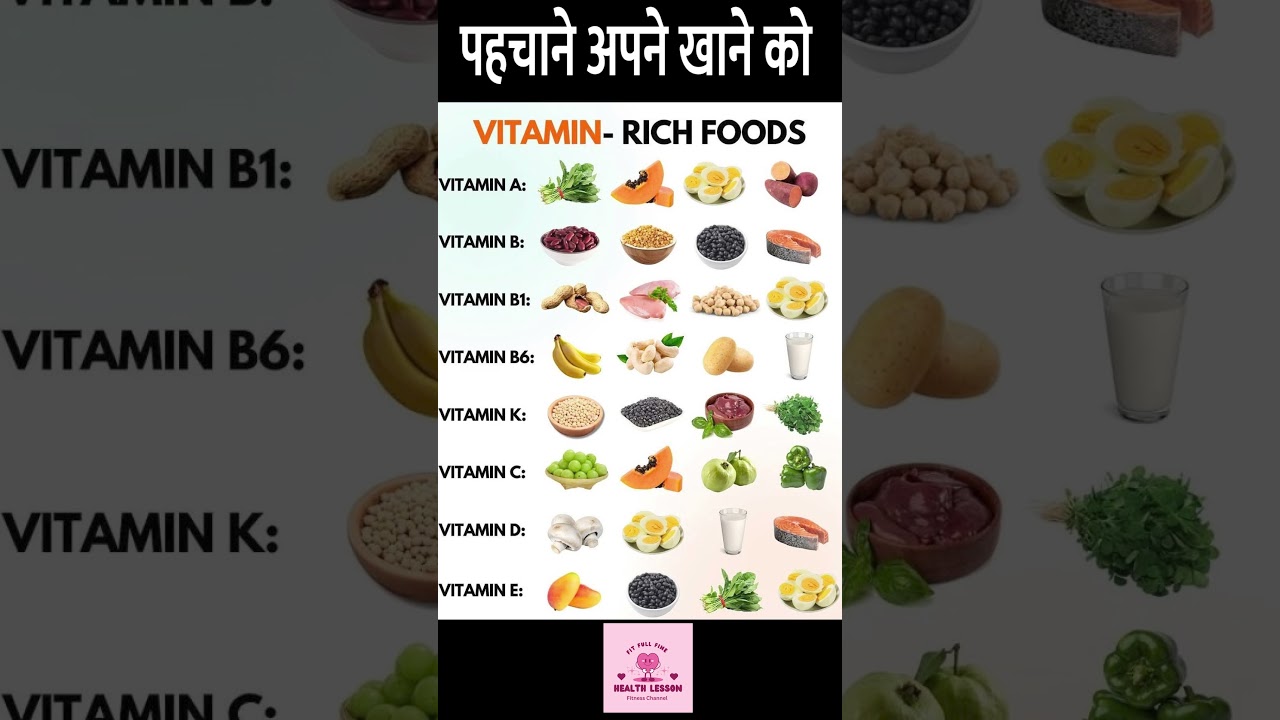
| Vitamin | Function | Sources |
| A (Retinol) | Vision, immune function | Carrots, sweet potatoes |
| D | Calcium absorption, bone health | Sunlight, fortified milk |
| E | Antioxidant, skin health | Nuts, seeds, spinach |
| K | Blood clotting | Leafy greens, broccoli |
2. Water-Soluble Vitamins
Not stored in the body; excess is excreted in urine.
| Vitamin | Function | Sources |
| C (Ascorbic Acid) | Immune support, collagen synthesis | Citrus fruits, bell peppers |
| B-complex (B1–B12) | Energy production, brain function | Whole grains, meat, legumes |
⚙️ Functions of Vitamins
– 🧠 Brain health: B6, B12, and folate support cognitive function.
– 🦴 Bone strength: Vitamins D and K regulate calcium and bone metabolism.
– 🛡️ Immunity: Vitamins A, C, and D enhance immune responses.
– 💅 Skin & hair: Vitamins E and C promote skin repair and hair growth.
⚠️ Deficiency & Toxicity
– Deficiencies can lead to diseases like scurvy (vitamin C), rickets (vitamin D), and night blindness (vitamin A).
– Toxicity is more common with fat-soluble vitamins due to storage in the body (e.g., excess vitamin A can cause liver damage).
🎥 Want to Learn More Visually?
Here are two engaging videos:
– Khan Academy: Introduction to Vitamins and Minerals – A clear breakdown of vitamin types and their roles.
– TED-Ed: How Do Vitamins Work? – A beautifully animated explanation of vitamin absorption, storage, and function.
Would you like a structured essay, a presentation outline, or a printable chart on vitamins next? Or perhaps a deep dive into a specific vitamin like B12 or D?