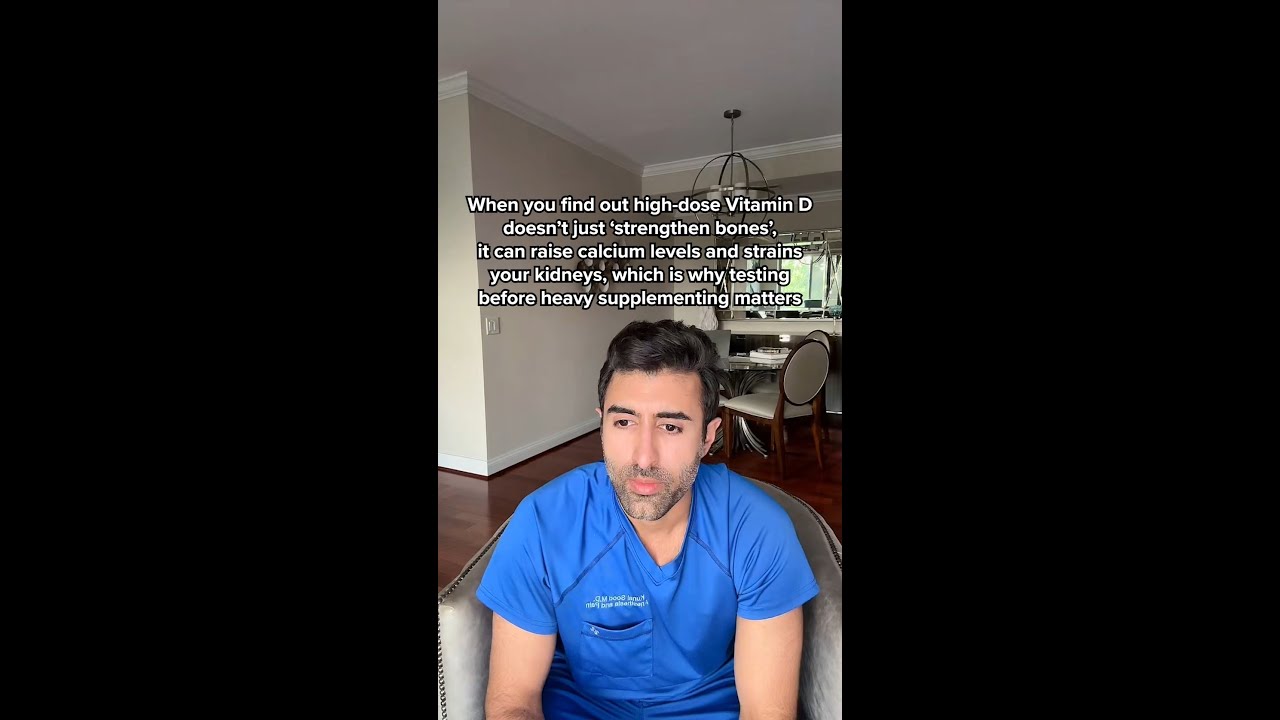
Vitamin D supports bone health by increasing calcium absorption. At high supplemental doses, that same mechanism can overshoot, raising calcium levels and stressing the kidneys. This is why testing before heavy supplementation matters.
Why vitamin D raises calcium
Activated vitamin D (calcitriol) increases intestinal absorption of calcium and phosphate. In deficiency, this supports bone mineralization. With high dose supplementation on top of normal intake, calcium can rise excessively, leading to hypercalcemia and hypercalciuria.
How this strains the kidneys
Hypercalcemia causes excessive urination and thirst, increasing dehydration risk and reducing kidney perfusion. High urine calcium raises the risk of kidney stones and nephrocalcinosis. Case reports describe vitamin D induced hypercalcemia causing acute kidney injury that improved only after stopping supplementation and correcting calcium (PMID: 39463498).
Typical lab pattern in toxicity
Supplement related vitamin D toxicity commonly shows very high 25 hydroxyvitamin D levels, often above 150 ng/mL, elevated total calcium frequently above 11 mg/dL, and suppressed parathyroid hormone. This pattern helps distinguish vitamin D toxicity from primary hyperparathyroidism.
Why testing first is smart
Before high dose vitamin D, checking 25 hydroxyvitamin D, serum calcium, and kidney function helps avoid supplementing people who are already replete, hypercalcemic, or at higher renal risk. Clinical references recommend monitoring calcium and vitamin D levels during high dose therapy.
Dose context people miss
Most vitamin D toxicity comes from supplements, not food or sun exposure. The adult tolerable upper intake level is 4,000 IU per day. Toxicity is driven by hypercalcemia rather than added bone benefit.
#VitaminD #KidneyHealth #Supplements #Medical #Health