Jill Abramson, a former executive editor of The New York Times, teaches journalism at Northeastern University and is a contributing Globe Opinion writer.
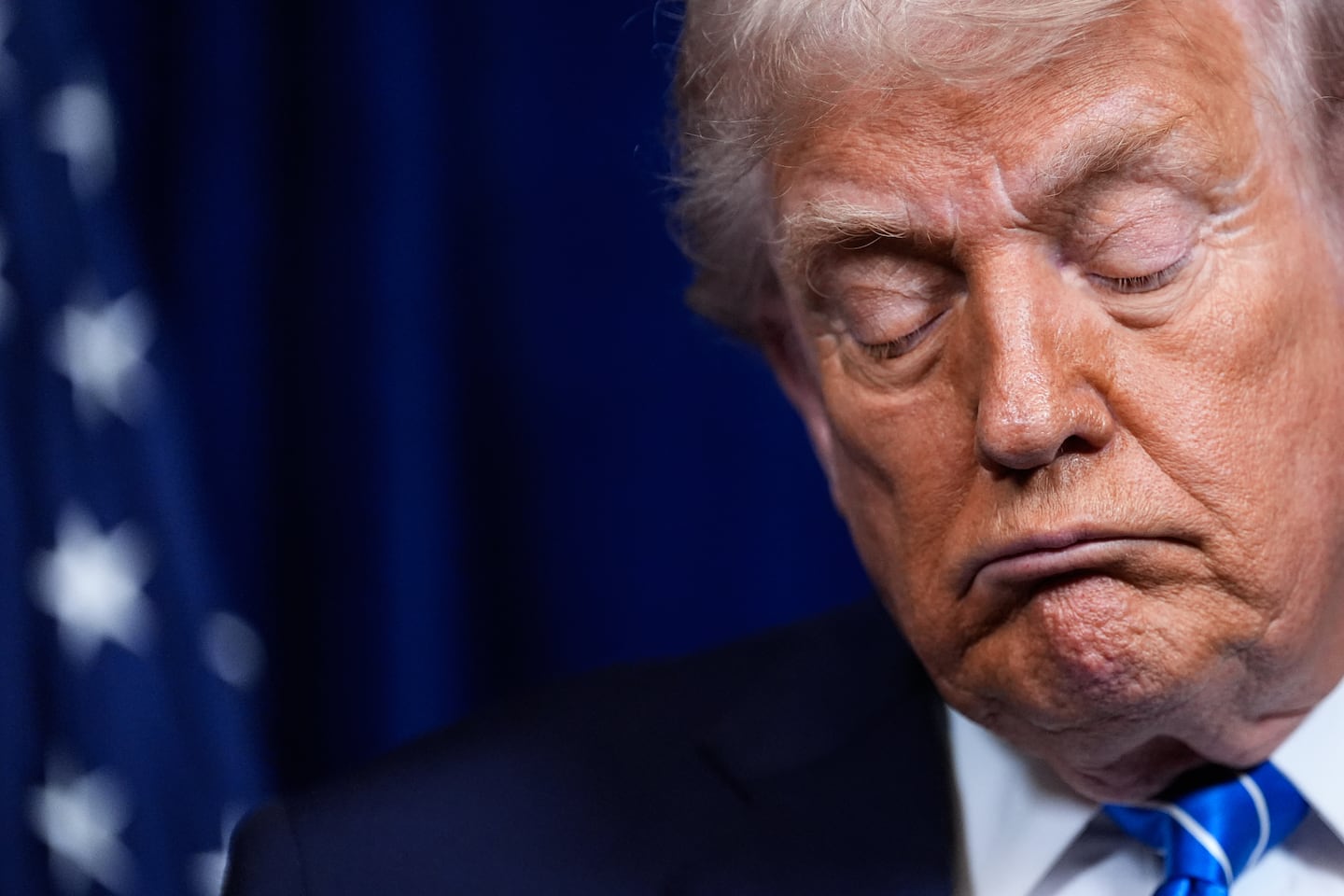
President Trump’s obvious signs of mental decline have not received the national news media attention that would be commensurate with the problems they pose to the world. Hopefully, that’s beginning to change.
Peter Baker, reporter for The New York Times, dug deeply into the president’s erratic, bizarre, and dangerous behavior, social media posts, and other statements for an article released this week. Baker’s article was chock-full of recent examples, including Trump’s threat to annihilate Iran (dangerous), his since-deleted AI-generated Truth Social post portraying himself as Jesus and his fight with Pope Leo XIV (bizarre), and his out-of-the-blue discourses on Sharpies and White House drapes (erratic). The article showed definitively a president in decline and — though it stopped short of saying it — a man who, many believe, is losing his mind.
The news media were accused of helping cover up former president Joe Biden’s slipping mental acuity until a halting, disastrous debate performance put it on national display and forced Biden out of the 2024 election.
It seems strange and troubling that the mental capacities of Trump, almost 80, are yet to command a rigorous and concerted examination from more mainstream news organizations.
The Times story could be a sign of the dam breaking. So, too, are the defections of MAGA celebrities like Candace Owens, Tucker Carlson, and former representative Marjorie Taylor Greene, who said, “President Trump has gone mad” and called for the 25th Amendment to be invoked.
Ty Cobb, a former White House attorney during the first Trump administration, has also publicly stated that Trump is undergoing a “significant decline” in his mental faculties, citing alleged dementia and saying the president is “a man who is clearly insane.”
Though the traditional press, cable, and television networks no longer enjoy the reach, trust, or influence they once had, global publications like the Times can still set the news agenda. With an increasingly atomized news media landscape, it isn’t surprising to see the online subscription Substacks of individual journalists, other online sites, and the foreign press stepping up to fill gaps left by traditional US news organizations.
But they often lack the reporting muscle to investigate what happens inside the Trump White House or to pierce government stonewalling. Meanwhile the Trump administration has put unprecedented pressure on the media, making government reporting more challenging, even as some Trump administration anti-free press moves are withering in the courts.
With the earliest coverage of Trump’s mental decline often coming from new media, a sea change is visible. But writers on Substack and other new media platforms are not necessarily bound by traditional sourcing rules and reporting techniques. Because they may not have firsthand sources inside the White House who actually witness the president’s behavior, they tend to rely on opinion polls showing that a majority of the public doubts Trump has the mental capacity to govern, or medical experts who also lack firsthand knowledge.
That hasn’t prevented an array of mental health professionals from commenting on Trump’s apparent decline. In 2017, forensic psychiatrist Bandy X. Lee published an anthology, “The Dangerous Case of Donald Trump,” with essays by 27 psychiatrists, psychologists, and other mental health professionals describing the danger that they felt Trump’s mental health posed. A new edition, “The Much More Dangerous Case of Donald Trump: 50 Psychiatrists and Mental Health Experts Warn Anew,” came out in 2025. More recently, Dr. Vin Gupta, a medical analyst for NBC News, discussed the Trump family history of dementia, stating that he was observing a “trend line” with the president and “it seems like it’s getting worse.”
STAT, a health news site that shares a parent company with The Boston Globe, provided early coverage of Trump’s potential mental decline. Some Substacks have also smartly addressed the topic of Trump’s mental challenges. John Ellis, editor of the News Items Substack newsletter and a former columnist for Globe Opinion, cited a recent poll showing a majority of Americans believe Trump “lacks the mental sharpness to serve effectively” as president. Given that concern, he says, it’s odd that mainstream news organizations have not attacked the story more aggressively. “It is arguably the most important story in the world,” he told me.
Former New Yorker and Daily Beast editor Tina Brown, who has also written smartly about Trump’s mental health, said on her Substack, Fresh Hell, that “Trump’s psychosis is our biggest national export.”
During his first term in 2018, the president boasted of scoring 100 percent on a 10-minute cognitive test administered by his doctor. (More recently, he said he aced two other cognitive tests.)
It was laughable when Trump in 2018 reacted to a negative portrayal of himself in Michael Wolff’s book “Fire and Fury: Inside the Trump White House” by calling himself a “very stable genius.” Now, when he is leading a war of his own choosing and his troubling utterances and actions pile up, his apparent lack of mental fitness is no laughing matter.