




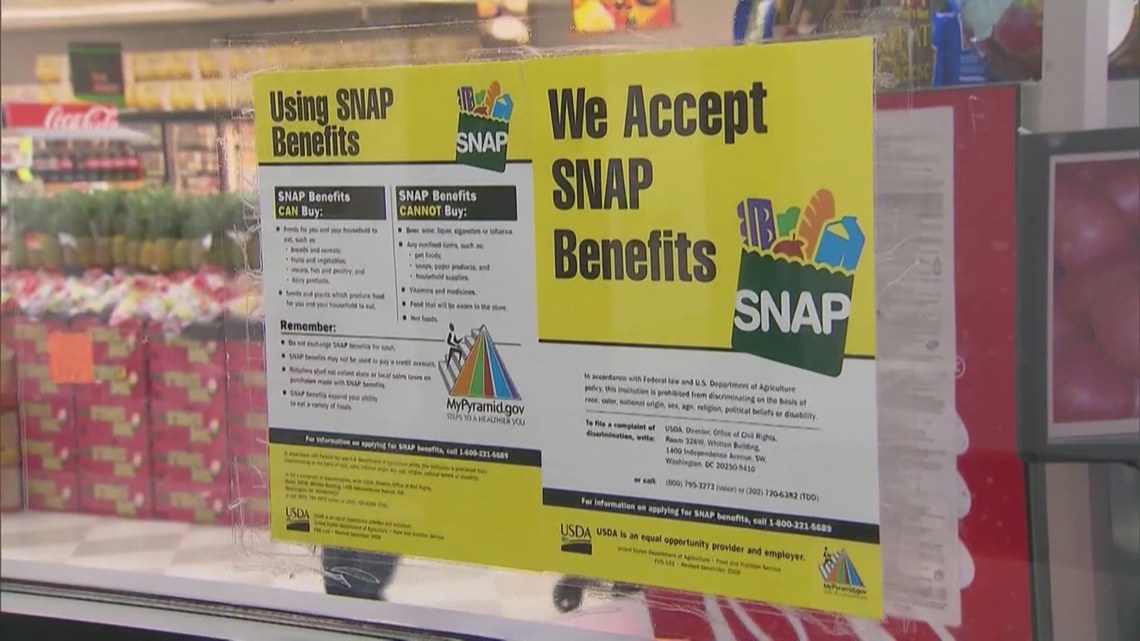
The federal agency that administers food, nutrition and other consumer services has announced intentions to move their SNAP offices to Indianapolis.
INDIANAPOLIS — The federal agency that administers food, nutrition and other consumer services has announced plans to refocus 16 assistance programs and the eventual relocation of the department’s Supplemental Nutrition Assistance Program office to Indianapolis.
On April 30, the U.S. Department of Agriculture said the effort will include “a reorganization and relocation, all to move program leadership and staff from Washington, D.C. to hub and program compliance locations” across the country.
“This reorganization is designed with those commitments in mind. I look forward to working with our partners as we continue to nourish children and families in need through nutrition programs that not only are provided by America’s farm families, but programs that pave a pathway to better health and economic stability,” Agriculture Secretary Brooke Rollins said.
In addition to SNAP operations moving to Indianapolis, USDA said the Child Nutrition Programs will be relocated to Dallas, the Supplemental Nutrition and Safety Programs will be moved to Kansas City, Missouri, and research programs will soon be headquartered in Raleigh, North Carolina. A Denver hub will serve as the Emergency Management and Continuity of Operations location, and retailer operations and compliance offices will open in Atlanta, Los Angeles, Dallas and New York City.
RELATED: Changes announced to Indiana’s SNAP benefits; here’s what they won’t pay for anymore
“This reorganization is long overdue,” Deputy Secretary Stephen A. Vaden said. “The Food, Nutrition, and Consumer Services mission area has not had a Senate-confirmed Undersecretary in nearly two decades, and the shift to the Food and Nutrition Administration will better align with other benefit programs administered across the federal government.”
The department also touted reducing “duplicative management and complexity within the agency” to more efficiently provide services and to fight waste and fraud.
Despite the decentralization effort, one administrator will remain in D.C., as well as “a small footprint to be responsive to Congress, interagency needs, regulatory work, and policy coordination,” the announcement said.