




 3 min read
Growing up, I noticed a few things, among them, that our thermostat was never set above 68 degrees (70 was for special occasions, like a blizzard or more major holidays) and that our family always skipped over the deodorant aisle in a grocery store. “We don’t need it,” my mother would explain about both, in the same way that she would steer us away from the chip section.
Nevertheless, as a teenager, I would sneakily raise the thermostat a few degrees and add deodorant into our family’s grocery cart, hiding it behind some leafy greens. I wanted to be like a teenage girl in a young adult movie, slathering it on in a locker room. I continued to wear it for years, until a dermatologist explained to me a few years ago that there are some people who are genetically programmed to have less-smelly armpits—a.k.a. my mother was right again.
Your earwax? Is it hard or soft? Your armpits? Are they smelly or (mostly) lacking odor? Among the things they don’t teach you in school about your body is that there is a surprising correlation between the texture of your earwax and your body odor.
A gene called ABCC11 determines your sweat gland type. A nonfunctional variant of ABCC11 results in sweat molecules being unable to “cross over the membrane barrier to reach the armpit,” explains The American Society for Microbiology (I don’t suggest clicking through on that link unless you want to see photos of bacteria). Studies show that this same gene variation correlates with your earwax—those with predominantly stiffer or hard earwax tend to have fewer odor-causing molecules, and those with softer or stickier earwax, well, there’s deodorant for that. Somewhere between 80 to 95 percent of East Asians purportedly have this gene variant of ABCC11. This has been a fun piece of weird knowledge that you now, too, can whip out at parties.
But my mother was only partially right—people like me, those who have a malfunctioning ABCC11 or who just believe that they smell less, can’t necessarily skip deodorant entirely. Humans have many types of sweat glands, including apocrine glands, which secrete sweat generated by stress or strong emotions. Like your emotions, these are powerful and fragrant and require some help to suppress odor.
There is a new market for artisanal-smelling deodorant with perfume-like ingredients, and while I support anyone who wants theirs to have “a scent story” or an inspiration, I like to keep things simple. I prefer to recall my youth, when I thought maintaining my own stance on deodorant was essential to my burgeoning independence. Dove’s Whole Body Deodorant is not chalky, goes on like a fine mist, and is safe to use in multiple areas of the body because it has evolved from the chalky powder of my teenage years (which is why the brand partnered this year with the Grammys for a campaign called Hot Seats). My particular pick is the Coconut Vanilla, which smells like a beach bag you packed for a vacation with your friends, with notes of creamy coconut and vanilla. Maybe I don’t necessarily need it, but I like to have it.
Dove Whole Body Deodorant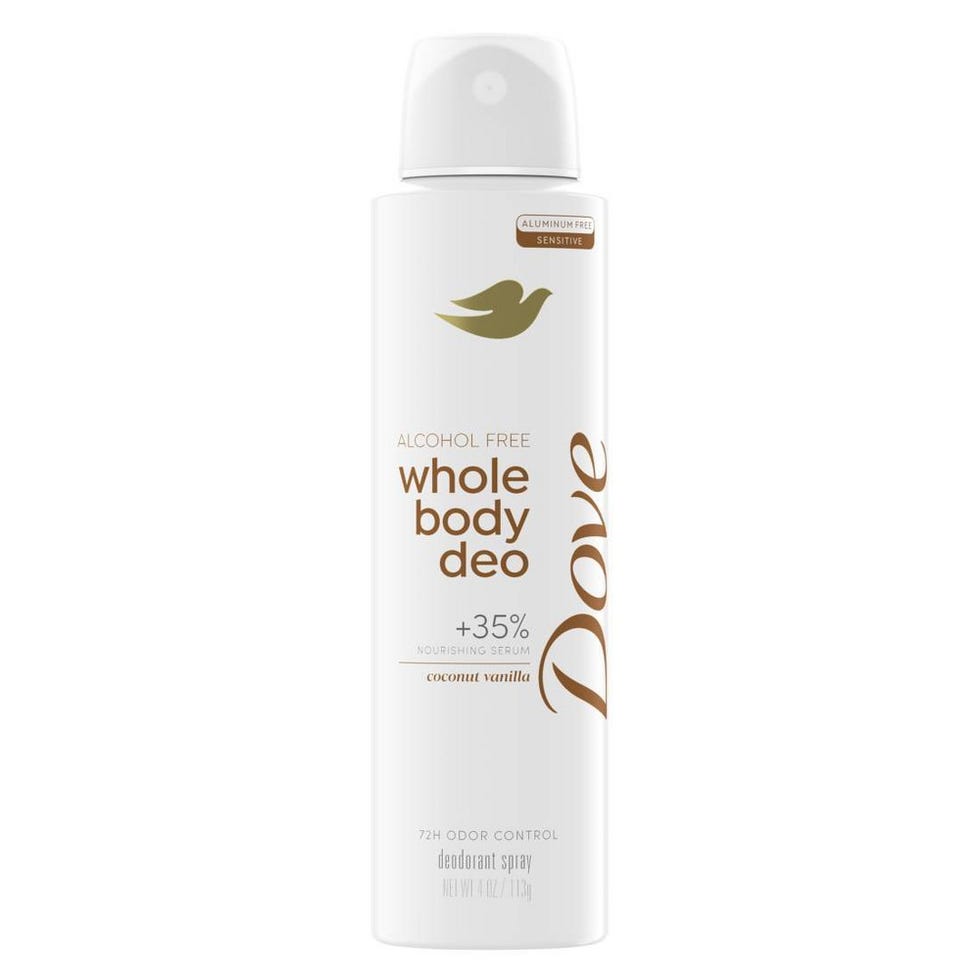 Dove Whole Body Deo Alcohol Free Deodorant Spray in Coconut Vanilla
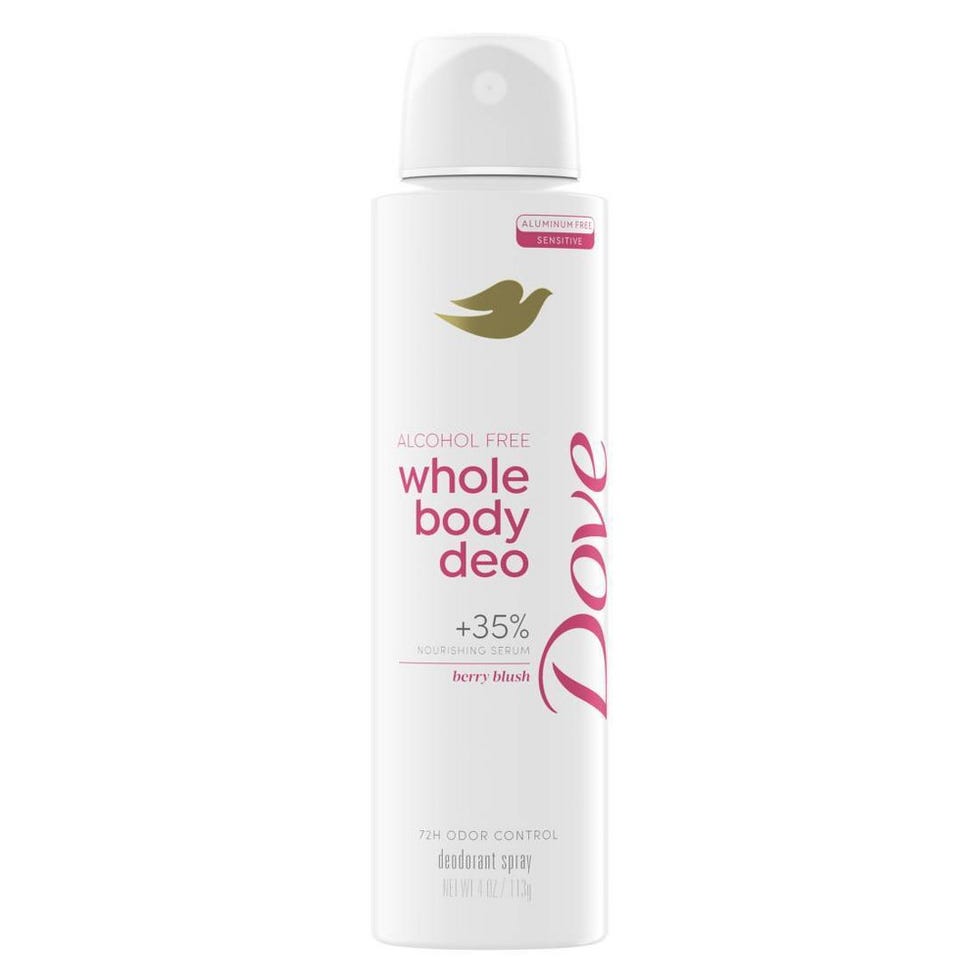 Dove Whole Body Deo Alcohol Free Deodorant Spray in Berry Blush
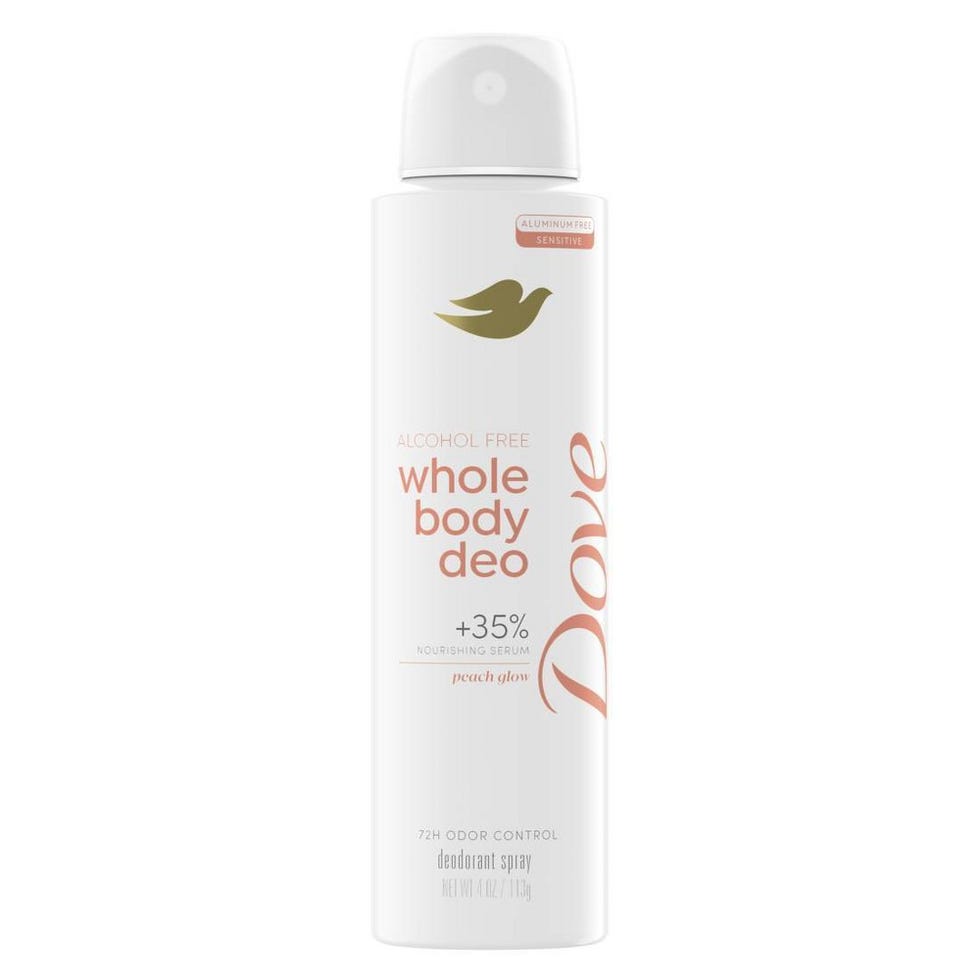 Dove Whole Body Deo Alcohol Free Deodorant Spray in Peach Glow