




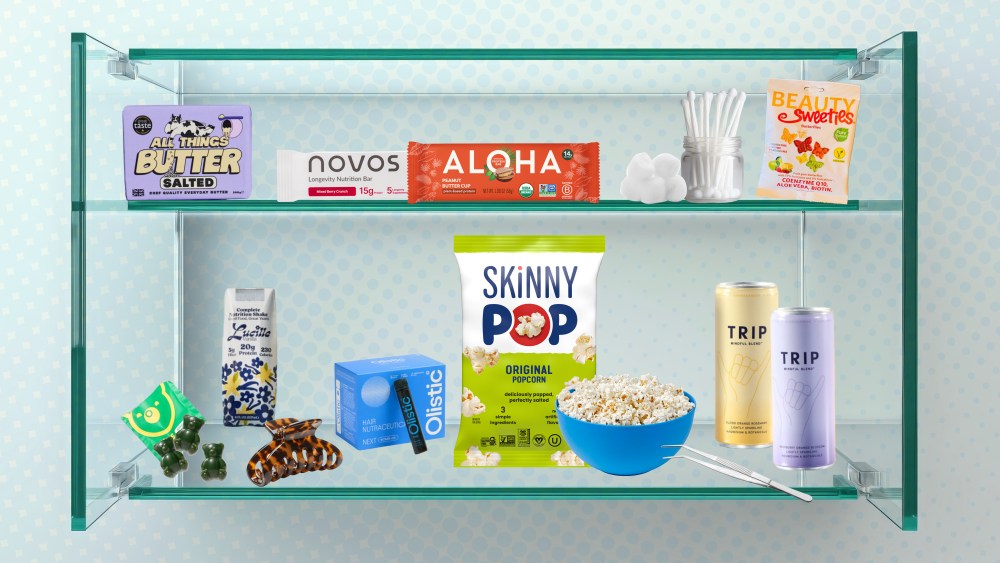
Beans, greens and dairy may have been kitchen staples for decades, bdeviut now those humble, whole products are in fashion with beauty investors, who see flavorful, nutrient-dense foods, shakes and drinks as the new wave in wellness.
Deals for products that fuse food, wellness and an inside-out approach to beauty have been multiplying, with a flurry of investment activity in the past month alone.
Unilever agreed to purchase Grüns, which sells gummy supplements filled with fruits, vegetables and prebiotic fiber, for an estimated $1.2 billion, while Iris Ventures led a multimillion-dollar round investment in Lucille Health. Lucille makes high-protein, high-fiber shakes targeting older people — a long-neglected demographic in the food space — who are coping with frailty, muscle loss and digestive issues.
The Equity Studio led a multimillion-pound investment into All Things, the U.K.’s fastest-growing dairy brand founded by London chef Thomas Straker and entrepreneur Toby Hopkinson. The company, which launched in 2023 with brightly packaged butter, has since expanded into cottage cheese, and there are more dairy products to come.
Earlier this year, L Catterton took a majority stake in the cottage cheese brand Good Culture for more than $500 million, while last year PepsiCo snapped up the functional, prebiotic soda brand Poppi for nearly $2 billion.
The list goes on.
The Whys
Such investments are the result of a confluence of factors. Post-COVID-19, people of all ages have become focused not only on health but on longevity, and how to achieve it through preventative medicine, exercise, mindfulness — and nutrition.
“Consumers are moving beyond surface-level results toward health-span optimization, where diet, supplementation and skin care work together to support cellular health, inflammation control and long-term vitality,” said Michael Nolte, senior vice president, creative director at Beautystreams, an insights platform for the global beauty industry. “This is strongly connected to the broader longevity movement, where nutrition plays a critical role in maintaining skin function and overall appearance over time.”
According to a report published last year by Iris Ventures, functional food and beverages are projected to grow at a 9.5 percent compound annual growth rate between 2025 and 2028. The report said consumers are increasingly viewing daily nutrition and supplementation as one, “seeking hybrid solutions that integrate functional benefits” into familiar formats, such as everyday meals, drinks and snacks.

Good Culture
Courtesy of
“Pharmacy and kitchen are merging into one,” said Montse Suarez, founder and managing partner of Iris, which has built up a beauty and lifestyle-focused portfolio that includes Vicio, a Spanish company that sells premium burgers online and in-store; Biomel, a plant-based gut health brand that specializes in drinks, powders and snack bars, and Olistic, a drinkable food supplement that treats hair loss.
“Ultimately, people want to eat well and feel good, and the brands that crack both are likely to emerge as winners in the long term,” she added.
The investments also follow the rise of GLP-1 weight-loss drugs, which have shaken up attitudes to food. People taking those drugs are eating less, and many are becoming more choosy about the food on their plates.
That fruit, vegetables, fiber and lean protein are good for you is no surprise. Popeye the Sailor Man has been guzzling spinach since 1931 to build muscle, while the apple-a-day advice derives from a 19th-century Welsh proverb. In Britain, a person who’s “full of beans,” is brimming with energy and enthusiasm.
What has changed is the packaging, the recipes and the cultural messaging around basic foods. Nolte noted the influence of natural, food-based remedies and “raw” wellness rituals.
“We’re seeing strong traction around simple, plant-based solutions, often rooted in traditional practices but amplified through social media,” Nolte explained. “For example, viral behaviors like olive oil and lemon ‘wellness shots’ on TikTok at the beginning of 2026 illustrate how consumers associate gut health and internal balance with visible skin benefits, even when the science may not always be fully validated.”
Hybrid formats that come packed with vitamins, minerals, fiber and protein, and that blur the line between edibles and topicals are also emerging.
“Product innovation is moving toward ingestible beauty, functional foods and even ‘touch-to-taste’ or edible skin care concepts, where nutrition and topical application coexist in a single experience,” Nolte said. “This reflects a broader shift toward multisensory, ritual-driven self-care that integrates pleasure, function and efficacy.”
NielsenIQ reported the wellness aisle isn’t confined to pills and powders anymore. “Today, it’s spilling into the snack shelf and beverage cooler, creating a convergence that’s reshaping consumer expectations — and redefining what ‘healthy’ looks like,” it wrote in a recent analysis.
Nielsen IQ, which created the study “Blurring Wellness Boundaries” with Spate, said functional beverages and snacks are no longer just “trending,” but now dominate. “Consumers are signaling a clear shift: wellness is now a lifestyle, not a category,” it wrote.
The functional snacks segment averaged a popularity score of 112 million per month from April 2025 to March 2026, up 37 percent year-over-year, according to Spate, the consumer insights platform that pulls signals from Google, TikTok and Instagram.
“Unsurprisingly, the biggest driver really still is protein,” said Alyssa Williams Atkinson, category insights manager of Spate’s wellness and functional snacks vertical.
In bar form, there’s the likes of Built and Aloha, while Novos is billed to be the daily longevity bar for complete nutrition.
“Fifty-seven percent of consumers are looking to increase protein intake, and 82 percent say they control protein consumption specifically to improve skin benefits,” according to Innova Market Insights, Global Market Researcher. “This highlights its evolution beyond muscle health into appearance-led outcomes.”
It found 65 percent of consumers now pay attention to prebiotics, probiotics and postbiotics in their diets. “While traditionally associated with digestive health, these ingredients are increasingly positioned around skin clarity and overall skin condition,” Innova said.
What’s popular, too, is collagen. “That’s where we are seeing this beauty side merge into functional snacks,” Williams Atkinson said. “They’re taking it more for the skin health and the skin benefits.”
Creatine, magnesium and melatonin are also entering the food space. “That plays into this idea that consumers have about sleep as a whole being about recovery, and this idea of ‘beauty sleep,’” she said, referring to the latter ingredient.
Functional drinks — a category that includes Vita Coco, for hydration; Ryze Mushroom Coffee, for immunity and gut health; Trip, which uses cannabidiol to promote calm and well-being, and Armra Colostrum Soda, said to be the first ready-to-drink beverage powered by colostrum — averaged a popularity score of 1 billion, according to Spate.
With functional snacks and drinks, people get more bang for their buck.
These can come in many forms, such as Devin’s Good Glow Yogurt, which is meant for gut health with probiotics and prebiotics. Beauty Sweeties is considered “lifestyle confectionary,” containing coenzyme q10, aloe vera and biotin — all found in skin care products. Skinny Pop popcorn, with its high level of dietary fiber, is said to promote digestive health and enhance satiety.
Devin’s Good Glow Yogurt
Courtesy
There are many reasons consumers are increasingly turning to such multipurpose foods.
“Budgets are getting tighter, people want more for their money, so the more functional ingredients added to a snack, the better, because they’re getting [increased] use cases out of one product,” Williams Atkinson said. “That’s another thing that’s driving this category forward is people are looking at how to condense routines and maximize products — because products are getting expensive to buy.”
Ingredients appearing in supplements morph quickly into other food categories today.
“Maybe a year or so later, you start seeing that showing up more in traditional CPG packaged food,” Williams Atkinson said.
Nolte further noted food is playing a role in the positioning of cosmetics products’ efficacy claims.
“Concepts like microcirculation, metabolic health and chrono nutrition are influencing how brands talk about radiance — framing it as a direct outcome of internal biological processes rather than purely cosmetic intervention,” Nolte said. “Overall, food is not just a new category extension, it’s redefining the logic of beauty itself, moving the industry toward a more holistic, preventative and system-based approach.”
“Beauty, wellness and longevity are no longer three separate categories — they’re one unified consumer behavior,” said Alban Gérard, a partner at Experienced Capital. “The person buying a premium serum is the same person training, eating clean, taking carefully curated supplements, sleeping better and rethinking how they age.
“Consumers have internalized that there’s no meaningful boundary between how you look, how you feel, and how well you live,” he continued. “That convergence creates a massive addressable market and one of the most compelling spaces in consumer investing today.”
An Apple a Day Keeps the Doctor Away 2.0
Many would argue that to be successful, functional foods have to taste good, and be part of a daily routine.
Unilever’s well-being chief executive officer Jostein Solheim said the company bought Grüns because it offers science-backed products “that people genuinely enjoy, trust and consistently use. This combination of efficacy and experience is powerful, and together we see a significant opportunity to scale the brand.”
Anna Sweeting, founder of The Equity Studio, pointed out that functional food has an enormous growth advantage because, unlike fashion or many beauty products, it’s accessibly priced, widely distributed and fits easily into people’s daily meal routines.
“For the past decade, wellness was something you added on — think supplements, powders and routines,” said Sweeting, who last year took a multimillion-pound stake in Trip, which creates vitamin and plant-powered drinks, supplements and oils that have been formulated to deliver a sense of calm, and to support mental and physical well-being.
“Today, wellness is being absorbed into consistent, everyday behavior, and the flywheel you get from that repeatable behavior is unlike any other category,” she said.
Poppi
Courtesy of Poppi
Sweeting also argues that the look and messaging around these basic or functional foods has also changed, and that entrepreneurs are using beauty’s playbook to promote their brands and deepen their relationship with an already enthusiastic customer base.
“Wellness kind of crept into the beauty and fashion space, and we started to see food using beauty’s codes, and its language about self-optimization,” she said.
Sweeting added that in food wellness, founder-led storytelling, newness and a steady flow of product drops are all key drivers of success. She said food brands are asking themselves the same questions as beauty ones, such as, “Who are we collaborating with? Are we identifying with the right subcultures? Do we have credibility?”
Food and beauty are aligned in other ways, too.
Ariel Ohana, a cofounder and principal at boutique investment firm Ohana & Co., said both industries follow a similar logic. In food and beauty, indie brands have the ability to disrupt their markets, which sometimes causes strategics to feel threatened, and so they buy indie brands. Private equity players often get in the middle and invest in the indie brands before the major players acquire them.
“That cycle is very interesting,” Ohana said, adding the only other vertical where indies are as disruptive is in tech. And there, Google and Meta are acquiring.
He believes the beauty industry’s slowdown in growth is naturally leading executives to consider what’s the next growth driver.
“They’re looking to possibly expand the scope of what it means to be a beauty and personal care player,” said Ohana, explaining that many companies are starting to look beyond beauty products and into the realm of well-being. “But the reality is, people are still struggling with what that really means.”
The Medium-term Belongs to Wellness
Consumers are thinking along similar lines, and their spend is pivoting quickly to wellness.
“People are really valuing preventative health and food as medicine, and so wallet share is growing in the category,” said Florian Wojewodzki, partner at Iris Ventures.
According to Global Data, consumers are willing to spend on good nutrition, especially if they can consume it on the go.
Global Data, the London-based analytics and consultancy firm, conducted a consumer survey in the fourth quarter of last year. Some 66 percent of respondents across more than 40 countries said their food and beverage purchasing decisions were influenced by “perceived health impact.” Some 61 percent said they wanted their functional foods “delivered in convenient, accessible formats.”
Unilever is one company that’s already reaping the benefits of the wellness trend.
Earlier this year, Unilever revealed that Liquid I.V., an electrolyte and vitamin drink mix acting as a re-hydrator, became a billion-dollar brand in 2025.
Liquid I.V.
Courtesy
Olly, another Unilever brand that specializes in vitamin and superfood gummies, delivered sales of more than $500 million last year.
Although private equity investors may be keen on spotting the next superfood or supplement, they’re not limited themselves to the category and will continue to tap into emerging consumer lifestyle trends.
Suarez said Iris is “hyper-focused on backing propositions that solve real problems” often with products that did not exist before.
The Equity Studio also wants to stay in tune with the customer. “If we’re seeing structural shifts in the way that people are consuming, then we’ll definitely lean into those” products and categories, said Sweeting.