




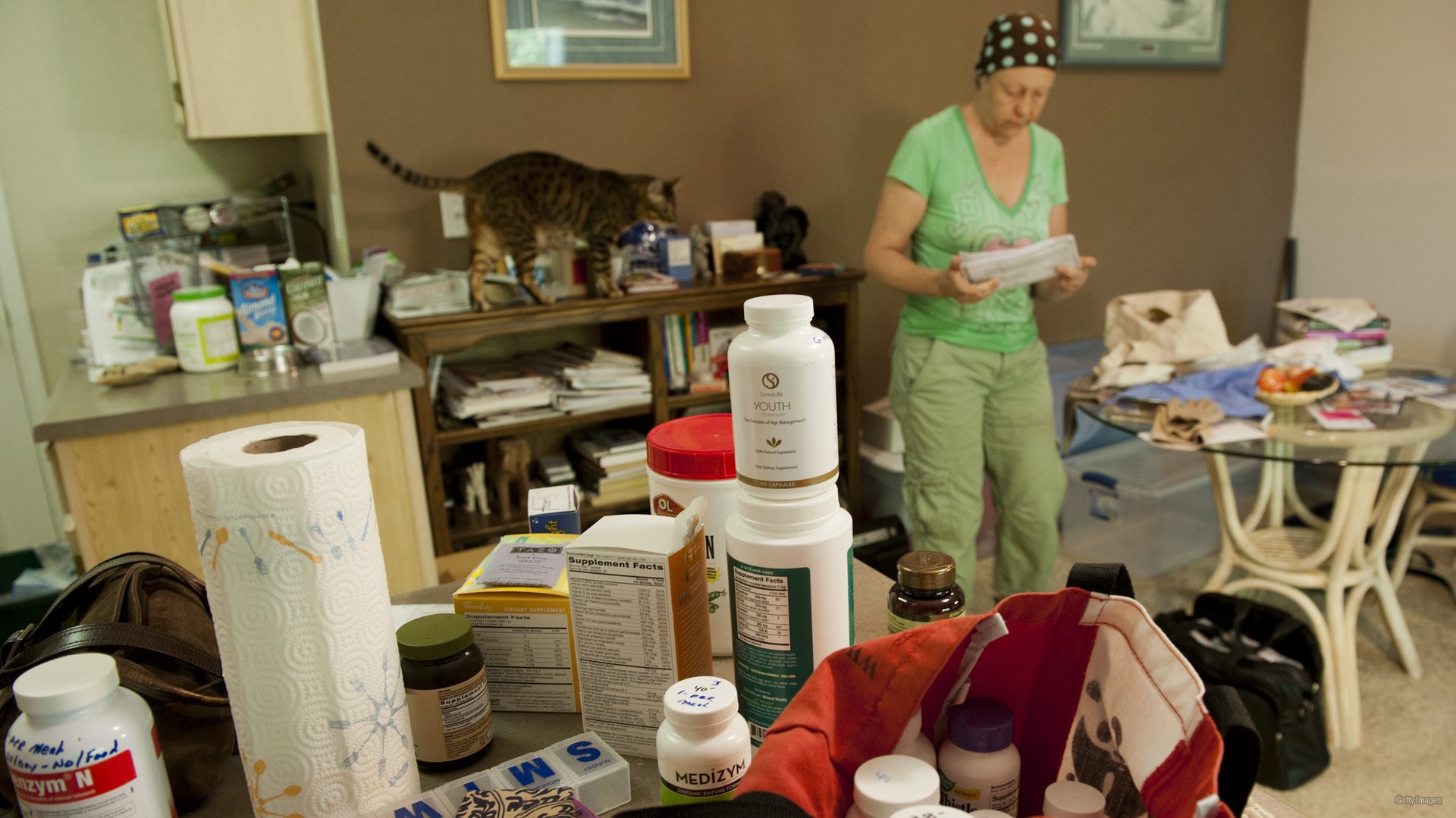
Women who took vitamin D during chemotherapy were nearly twice as likely to have no detectable breast cancer remaining after treatment, a recent study found. The study adds to a growing, though still heavily debated, body of research suggesting that some vitamins and supplements may influence how well some cancer treatments work.
Researchers in Brazil randomly assigned 80 women with breast cancer to receive either a daily vitamin D supplement or a placebo during chemotherapy. After six months, 43% of patients taking vitamin D had achieved a pathological complete response — meaning doctors could no longer detect invasive cancer in tissue removed during surgery — compared with 24% of patients in the placebo group.
Although the study was small, it was a randomized controlled trial, which researchers consider the gold standard for evaluating medical treatments.
At the same time, other studies have raised concerns that certain supplements could interfere with therapy or make some treatments less effective.

Download the SAN app today to stay up-to-date with Unbiased. Straight Facts™.
Point phone camera here
Why researchers think vitamins might matter
Scientists are still trying to understand whether vitamins can directly improve cancer treatment or whether correcting nutritional deficiencies simply helps patients respond more effectively to therapy. Many cancer patients develop low levels of key nutrients during treatment because chemotherapy can affect appetite, digestion and metabolism, while the cancer itself can place heavy demands on the body.
Vitamin D has drawn particular interest because it acts more like a hormone than a traditional vitamin and plays a central role in immune function. Immune cells throughout the body contain vitamin D receptors, and laboratory studies suggest the nutrient may help regulate inflammation, influence how cells grow and die and shape the body’s response to damaged or cancerous cells. Some researchers suspect adequate vitamin D levels could help the immune system clear tumor cells after chemotherapy.
Other scientists are studying whether certain nutrients might affect the tumor microenvironment — the ecosystem of blood vessels, immune cells and signaling molecules surrounding a tumor. In theory, some vitamins could make cancer cells more vulnerable to chemotherapy or help healthy tissue recover from treatment. But researchers caution that the biology is complex, and supplements that help in one setting could potentially interfere with treatment in another. Some scientists have suggested that supplements could benefit tumor cells in the same way they support normal cells and should therefore not be recommended for cancer patients.
The supplement debate
Beyond the new vitamin D trial, a small but growing body of research suggests some vitamins and supplements may influence how well cancer treatments work; however, the body of evidence is mixed. Some studies have reported conflicting and sometimes concerning results.
A small randomized clinical trial found that patients with advanced pancreatic cancer who received high-dose intravenous vitamin C alongside chemotherapy lived longer than patients who didn’t receive the supplement. Patients given the vitamin C infusions survived a median of 16 months, compared with 8.3 months in the standard treatment group. They also went longer before their cancer progressed. Researchers reported that the treatment did not appear to worsen quality of life or increase serious side effects.
The study had limitations; it only included 34 patients, and researchers used extremely high doses of intravenous vitamin C, not standard oral supplements.
A 2013 study that followed more than 2,000 women after a breast cancer diagnosis found that frequent use of vitamin C and vitamin E supplements was associated with a lower risk of breast cancer recurrence, while vitamin E use was also linked to lower overall mortality. However, women who frequently used combination carotenoid supplements — antioxidant supplements made from pigments found in brightly colored fruits and vegetables — were more likely to die from breast cancer and had a higher overall risk of death.
Another study of more than 1,100 breast cancer patients found that women who took antioxidant supplements — including vitamins A, C and E, carotenoids and coenzyme Q10 — before and during chemotherapy were more likely to experience a recurrence of their cancer and, to a lesser extent, die during the study period. However, those findings were not statistically significant, meaning researchers could not rule out the possibility that the differences occurred by chance.
The study also found that taking vitamin B12 supplements before and during chemotherapy was associated with significantly poorer survival outcomes, while iron supplementation during chemotherapy was linked to a higher risk of cancer recurrence.
Multivitamin use was not associated with differences in survival.
In a separate study, German researchers interviewed more than 2,200 breast cancer survivors about their supplement use and found that women who took antioxidant supplements while undergoing chemotherapy or radiation therapy were significantly more likely to die and more likely to experience a recurrence of their cancer. However, the researchers found no association between supplement use overall after diagnosis and breast cancer outcomes. The researchers grouped several supplements — including selenium, multivitamins, zinc, and vitamins A, C and E — into a single broad antioxidant category, making it difficult to determine whether any individual supplement drove the findings.
None of the studies linking vitamins and supplements to poorer cancer outcomes were randomized controlled trials; instead, they relied on observational data, meaning researchers tracked patients’ supplement use and outcomes without randomly assigning treatments. As a result, the studies could identify associations but could not prove that the supplements themselves caused the worse outcomes.
Straight Arrow identified only one randomized controlled trial involving cancer treatment that reported adverse effects from supplements. (Other randomized trials that focused on cancer prevention linked vitamin use to increased risk of certain cancers.)
In 2005, researchers in Canada randomly assigned 540 patients with early-stage head and neck cancer undergoing radiation therapy to receive either high-dose supplements containing alpha-tocopherol (a form of vitamin E), and beta-carotene (an antioxidant related to vitamin A) or a placebo. Researchers stopped giving beta-carotene partway through the study because of safety concerns.
At the end of the study period, patients who took supplements were significantly more likely to develop a second cancer or experience a recurrence of their cancer while actively taking the supplements. The increased risk appeared to fade after patients stopped taking the supplements.
Risks during treatment
Oncologists have widely debated the use of vitamins and supplements during cancer treatments.
Despite some promising findings, major cancer organizations today caution that taking supplements during treatments may carry risks. The National Cancer Institute has said that antioxidant supplements — including vitamin C and E — could reduce the effectiveness of chemotherapy or radiation and may lower the chances of remaining cancer-free. The American Cancer Society similarly warned that certain supplements may cause severe skin reactions during radiation therapy, while others can alter how the body metabolizes cancer drugs, potentially making them less effective or increasing toxicity.
Round out your reading