




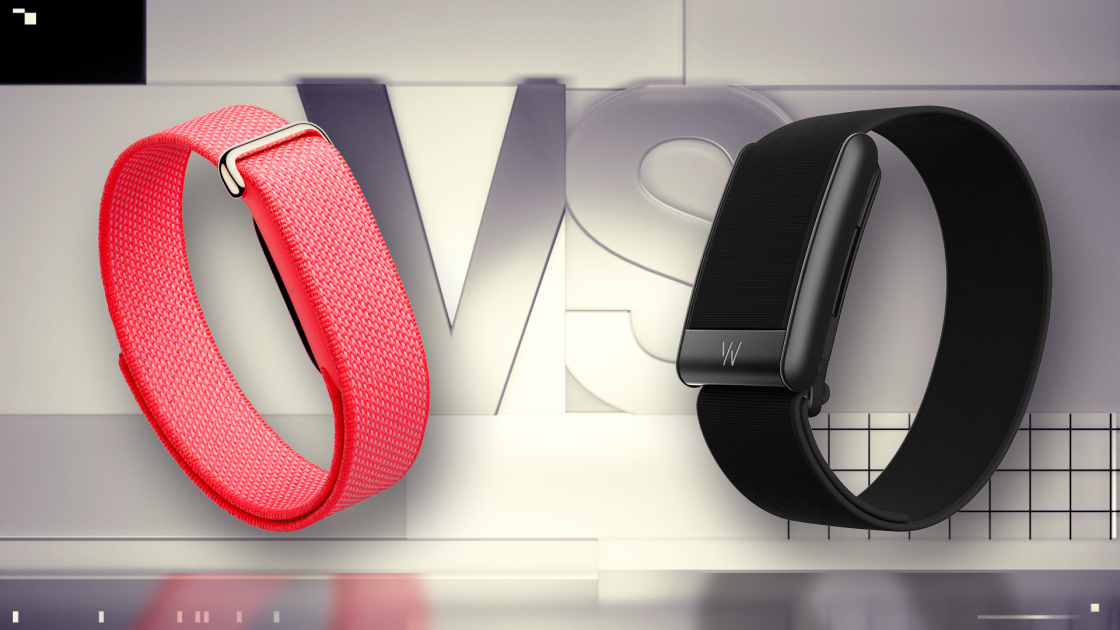
Price: A Big Difference in the Long Term
The Fitbit Air costs $99. Without a subscription, it provides access to your basic health data, such as activity and sleep details, in the Google Health app (formerly the Fitbit app). The Premium app experience costs an extra $9.99 per month or $99.99 per year (after a three-month free trial with the Air), and unlocks Google Health Coach, which offers fitness plans, sleep advice, and health and wellness overviews. With a Premium membership, you’ll pay 198.99 for the first 15 months (the cost of the device plus the subscription after three months), then $99.99 for each subsequent year.
The Whoop 5.0 isn’t priced like a normal device because you can’t purchase it without a subscription. Instead, it’s included with Whoop’s Peak membership for $239 per year. This price includes the Whoop 5.0 with a black SuperKnit band and a wireless power pack that lets you recharge the tracker while it’s still on your wrist. The Peak membership is Whoop’s best offering, as the lower One tier ($199 per year) comes with the older Whoop 4.0 that suffered accuracy issues in testing, and the higher Life tier ($359 per year) comes with the “medical grade” Whoop MG, which doesn’t add enough to the experience to warrant the premium price.

(Credit: Whoop)
For the first year, the price of owning the Whoop 5.0 or the Fitbit Air with Google’s Premium app experience is relatively comparable. After the first year, you’ll be paying less than half the price of the Whoop to maintain a Premium membership with Fitbit.
Winner: Fitbit Air
Design: Both Put Utility First
The Whoop 5.0 tracking module measures 1.37 by 0.94 by 0.42 inches (LWD) and is rated IP68 for submersion to approximately 32 feet of water for up to two hours. The Fitbit Air sensor measures 1.4 by 0.7 by 0.3 inches, so the two are comparable in size. Google doesn’t list the Air’s water-resistance rating, but says it can withstand submersion to 164 feet.
In testing, the Whoop 5.0’s SuperKnit band felt comfortable to wear for weeks at a time, and never irritated my skin. It’s a hardy material that held up well to my sweaty gym routine and the rigors of everyday life. Overall, the Whoop 5.0 is very utilitarian in appearance, and while it fit in well at the gym, it detracted from my look when dressing up for a night on the town. On the plus side, Whoop offers various band styles and apparel with a pouch that you can slip the sensor into.

The Fitbit Air’s Active Band is made of sturdy plastic (Credit: Google)
I haven’t tested the Fitbit Air yet, but its included Performance Loop band looks like it’s made of a comfortable, lightweight cloth. The Air comes in multiple colors, and like Whoop, there are multiple band styles available, including a more rugged plastic material. While still utilitarian at a glance, the more colorful included cloth options add some vibrancy that’s missing from the Whoop 5.0, but I’ll need to get my hands on the device before I can attest to its comfort level over time.
Winner: To be determined
Sensors and Features: Similarly Equipped
The Fitbit Air and the Whoop 5.0 have a similar set of sensors, and both track activity, exercise, sleep, and stress. Specifically, Whoop has a built-in accelerometer for movement tracking, a photoplethysmography (PPG) sensor for heart rate measurements, and a skin temperature sensor. It can also measure blood oxygen saturation (SpO2), heart rate variability, and respiratory rate. It tracks a wide range of exercises, from gym activities to sports to household chores, and lets you log strength-training exercises like back squats and bench presses.

Whoop’s unobtrusive sensors (Credit: Andrew Gebhart)
The Fitbit Air uses an optical heart rate monitor, a three-axis accelerometer, a gyroscope, a temperature sensor, and red and infrared sensors for health tracking. It monitors heart rate, movement, and SpO2 and can detect atrial fibrillation (AFib, an irregular heartbeat). The Air also has a wide range of trackable activities and exercises in its repertoire. With Google Health Premium, you can import the data from other services like Peloton, or even just snap a picture of the daily workout on a gym whiteboard and let the AI parse the details.
Like the Whoop, the Air supports both automatic and manual workout tracking. The Whoop proved reliable at automatically tracking workouts in testing. The Air will need to be just as responsive to supplement its impressive AI capabilities.
Winner: To be determined
Battery Life: One Week vs. Two
According to Google, the Fitbit Air lasts seven days on a single charge. Five minutes on the charger will give it a day of battery life, and a full charge from 0 to 100% takes 90 minutes. That weeklong battery life puts the Air well ahead of Fitbit’s last tracker, the Charge 6, which only lasted three days in our testing with the always-on display enabled.
While a week of power between charges is impressive, the Whoop 5.0 doubles that. It lasted over two weeks on a charge in testing, and it comes with a wireless rechargeable battery pack that can juice up the device while you’re wearing it. In other words, you never need to take it off. The Whoop 5.0 remains unmatched on the battery front, both in terms of longevity and convenient recharging.
Winner: Whoop 5.0
Activity and Exercise Tracking: Capable Coaching
Whoop offers three holistic scores to help you quickly assess your activity and health: Sleep (grading your shut-eye), Strain (which combines activity and stress), and Recovery (based on your Strain, sleep, and resting heart rate). In its app, you can tap any of these scores for details, including how it was calculated. Whoop tracks long-term metrics like physiological age (which may differ from your chronological age) and your pace of aging.
In testing, the Whoop 5.0 provided accurate heart rate data for both CrossFit and running workouts. For outdoor workouts, it tracks key stats like pace and distance using your phone’s GPS. That said, it doesn’t offer the level of detail you can get from GPS-equipped wearables, which typically measure more exercise-specific stats like cadence, oscillation, and power for running.
The Air also lacks integrated GPS, but previous Fitbit and Google wearables, like the Pixel Watch 4, offer more detailed, exercise-specific stats than you get from Whoop. Fitbit also offers similar holistic health scores to Whoop, including Daily Readiness (which indicates how hard to push that day based on your recent workouts and recovery status) and Cardio Load (reflecting the total strain on your body from activity and exercise).

Onboarding with the Google Health Coach (Credit: Google)
With a Premium subscription, the Fitbit Air will have access to the Google Health Coach, which impressed me when I tested it in preview last fall. You can check your stats, converse with the AI about them, and get a customizable fitness plan including workout recommendations that adapt to your schedule. Following the preview period, Google says the Health Coach is now more conversational and better at long-term workout planning.
Recommended by Our Editors
Winner: Fitbit Air
Sleep Tracking: Different Approaches
The Whoop 5.0 is a capable sleep tracker that monitors sleep duration, time spent in each stage, efficiency, and overnight stress. With these metrics, it calculates ongoing sleep debt and recommends a bedtime to help you catch up. Its recommendations and assessments of your needed rest take up the bulk of its sleep page. It doesn’t show individual values for your overnight respiration, skin temperature, or even your average heart rate on its sleep page, though it monitors all three.

The Whoop app tracks your sleep debt and recommends a bedtime accordingly (Credit: Whoop/PCMag)
When testing the Google Health Coach preview, it fell short in terms of sleep advice. Google claims to have addressed this category for the full launch and refined the accuracy of both nap and sleep tracking.
While I find Whoop’s sleep tracking to be more prescriptive than descriptive, and have trouble finding specific stats to make my own assessments, it could prove to be the superior option if you’re looking for advice. I expect the Fitbit Air to deliver accurate, thorough sleep stats, and it’s possible that Health Coach has significantly improved its guidance for getting a better night’s rest.
Both trackers have haptics built in, so they can wake you up in the morning with a gentle vibration, but I don’t like Whoop’s implementation of the smart alarm feature, which aims to rouse you once you’ve hit your nightly recovery goal. To enable this, you need to set a wide time frame for when it can wake you up, and I was always already out of bed before the alarm activated. The Fitbit Air could be the superior option for your morning routine if it offers a more flexible alarm feature, but I’ll need to test it to know for sure.
Winner: To be determined
Outlook: What the Fitbit Air Needs to Win
I’ll need to spend some time with the Fitbit Air and test it thoroughly to see how it stacks up against the Whoop 5.0 for accuracy and comfort. Whoop is still likely to lead in battery life, but the Fitbit Air comes in at a much lower price.
I expect Google’s AI features to make the Air a more useful day-to-day fitness coach, though I’m especially interested in seeing whether its upgraded sleep tracking can rival Whoop’s detailed recovery insights while still providing in-depth data for users who like to dig into the numbers themselves. If the Fitbit Air delivers dependable automatic workout detection as well, it could outshine the Whoop 5.0 while costing roughly half as much.
The Fibit Air comes out May 27. I’ll update this article once I’ve completed my review of it, so stay tuned.