




As a health-conscious mom, I know that I should avoid throwing ultra-processed snacks like potato chips, gummies, and packaged cakes into my kids’ lunchboxes. But what about minimally and moderately processed foods, like a pouch of apple sauce or a package of hummus—are they really that much healthier?
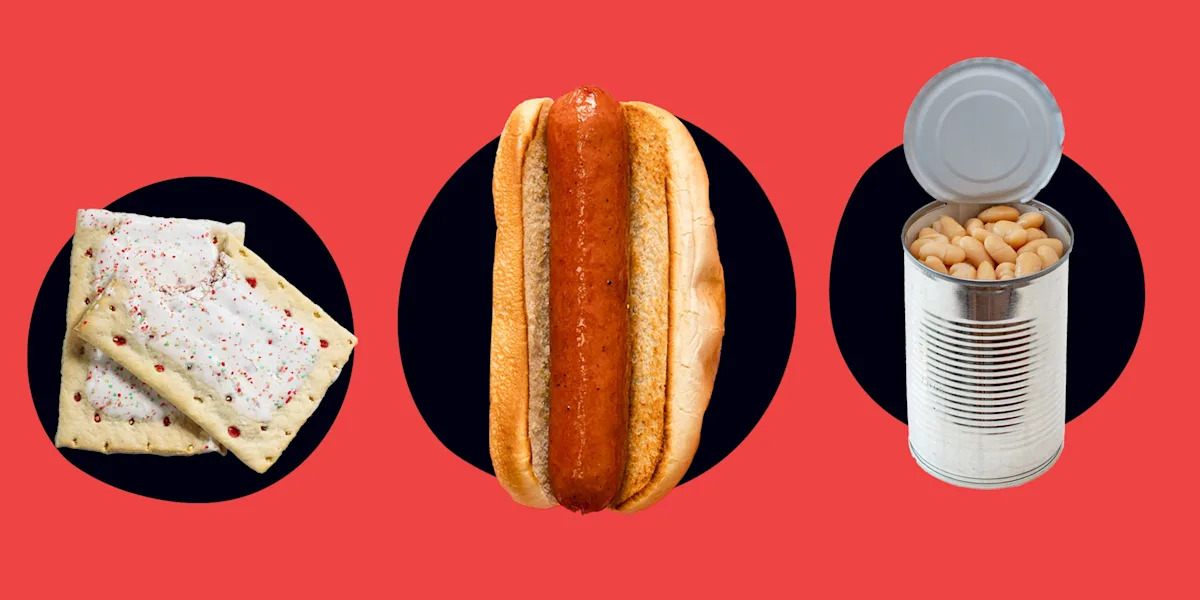
Let’s back up: “The term ‘processed food’ is often used in a negative way, but processing itself isn’t inherently bad,” says Morgan Walker, RD, a registered dietitian and adjunct professor at Lebanon Valley College in Annville, Pennsylvania. “It just means that a food has been altered from its natural state.” So, frozen vegetables, canned beans, plain yogurt, peanut butter, hummus, dried fruit, pastas, and canned soups all count as minimally and moderately processed foods.
Meet the experts: Morgan Walker, RD, is a registered dietitian and adjunct professor at Lebanon Valley College in Annville, Pennsylvania. Brannon Blount, RDN, is a registered dietitian in Danville, Virginia. Kelsey Kunik, RDN, is a registered dietitian and founder of Graciously Nourished in Mid-Michigan.
Processing a food can make it safer to eat, extend shelf life, improve convenience, or preserve nutrients. It’s when a food goes through multiple processing steps that include adding refined starches, sugars, oils, protein isolates, and additives that it becomes an ultra-processed food (UPF), which can be pretty unhealthy when eaten in excess, says Brannon Blount, RDN, a registered dietitian in Danville, Virginia. (See: cereals, candy bars, sausages, and sodas.)
So, when it comes to the minimally and moderately processed foods, are some healthier than others? Ahead, registered dietitians explain how to evaluate your favorite snacks on grocery store shelves.
What to Look at When Evaluating Processed Foods
First, a caveat: There’s no USDA- or FDA-recognized definitive ranking system or clear definition to classify processed foods, and many exist on a spectrum rather than in a clear bracket. “This is mainly due to the wide range of different processing levels and what is still considered nutritious and beneficial for your health after it’s processed,” says Walker. So, there’s no hard and fast rules on the healthiest and least healthy processed foods.
Still, there are a few factors to look at when you’re scanning a nutrition label that may mean a food is better for your health:
Ingredients
You’ll want to look for a short, simple list of recognizable ingredients—like oats, milk, beans, nuts, or whole grains—as that means it’s less processed, says Walker. However, a few additives shouldn’t scare you away.
“Certain ingredients that might sound unfamiliar, such as citric acid or ascorbic acid—also known as vitamin C—are often used to maintain freshness, prevent spoilage, or preserve color,” says Walker. They’re frequently used in healthier processed options like canned or frozen fruits and vegetables, as well as jams, cheese, and more. You might also see tocopherol (vitamin E), cyanocobalamin (vitamin B12), niacinamide (vitamin B3), and thiamin mononitrate (vitamin B1) added into snacks for the same purpose.
Just stay wary of artificial sweeteners, emulsifiers, and stabilizers. These additives, which are used to improve palatability and extend shelf life, are more common in UPFs and may lead to gut issues, according to a 2025 review of articles on food additives and gut health in The FASEB Journal.
Added Sugar
Natural sugars—found in fruit, dairy, and grains—often come along with fiber, vitamins, and minerals, and can provide stable energy throughout your day, Blount says. However, added sugar, found under the “total sugar” bar on a nutrition panel, are often considered “empty” calories and may lead to health issues.
A 2022 paper in Missouri Medicine looked at the effect of added sugar on insulin resistance, hypertension, type 2 diabetes, and coronary heart disease. It found that those who consume 10 to 14.9 percent of their calories from added sugar have a 30 percent higher risk of mortality from cardiovascular disease in comparison to those who got less than 10 percent of their calories from added sugar. It’s not that added sugar directly causes heart disease, but it can lead to weight gain, and being overweight can lead to heart problems.
Additionally, a 2024 study in The Journal of Nutrition looked at added sugar intake in over 196,000 participants who consumed between 20 and 60 grams per day in the United Kingdom over three years. It found that those who consumed the most added sugar per day (around 60 grams) had a 21 percent higher risk of all-cause mortality, three percent higher risk of hypertension, 15 percent higher risk of ischemic heart diseases, and 14 percent higher risk of cerebrovascular diseases.
According to the FDA, you should limit your intake to 50 grams or less per day. But when it boils down to your snack choices, aim to eat foods that account for five percent or less of the added value for added sugar, meaning it’s a “low source” of it, per the Academy of Nutrition and Dietetics. After all, higher levels of added sugar (as well as sodium!) usually indicate higher levels of processing, Kunik explains.
Look out for added sugar in drinks like coffee and tea, plus foods like nut butters, pasta sauces, cereal, and granola. “Even foods that seem healthy can be surprisingly high in added sugar,” says Blount. Of course, sweet treats like popsicles and ice cream may have higher levels of added sugar—so just make sure you eat them in moderation, Kunik adds.
Sodium
The American Heart Association recommends that the average adult eats no more than 2,300 milligrams of sodium per day, which is equivalent to about 1 teaspoon of table salt. While we need some sodium (or salt) for our bodies to function, regularly exceeding this amount is associated with an increased risk of cardiovascular diseases, gastric cancer, obesity, osteoporosis, kidney disease, and more, according to the World Health Organization. But there are exceptions for active people—more on that soon.
So, how much salt should you look for on a package? Lower-sodium foods will typically contain less than 140 mg per serving, while higher-sodium foods, such as beef sticks and jerky, have over 500 mg per serving and should be limited, says Blount.
Some people need higher or lower levels of sodium and sugar. “A lot of my clients—competitive athletes—benefit from sugary foods at times around intense exercise,” Walker says. Similarly, athletes who sweat a lot may need more salt, while others (like those with hypertension or higher cardiovascular risk) may need to limit their sodium intake. If you have questions about levels of sugar or sodium in your diet, talk to your doctor about your individual needs.
Protein and Fiber
Protein can enhance satiety and stimulate muscle growth (especially when combined with resistance training), while fiber can improve blood sugar regulation and gut function, and reduce risk of chronic diseases. When it comes to how much protein to look for in a snack, first, chat with your doctor about what your daily protein goal should be. However, here at WH, we recommend at least 30 to 35 grams per meal to stimulate muscle growth—which means you’ll want to look for snacks that contain at least 10 to 15 grams of protein per serving, says Blount.
With fiber, women 50 or younger need 25 grams a day, while women over 50 need 21, per Mayo Clinic. So, try to aim for foods that contain at least 10 percent of the recommended daily value—that means it counts as a good source of that nutrient, according to the Academy of Nutrition and Dietetics. For a 50-year-old, that would be 2.5 grams of fiber per serving. That might seem like a small amount, but it’ll add up fast during the day, Kunik says.
Nutrients
In the United States, many people fall short on a number of key micronutrients like iron, calcium, potassium, and vitamin D, Kunik says. So, again, make sure your snacks have at least 10 percent of the daily value for those vitamins and nutrients. (Of course, those numbers are estimated by the average person who eats 2,000 calories per day, and your nutrient requirements vary based on your individual needs.)
While you should definitely limit some processed foods—especially UPFs—all of them can still have a place in an overall healthy diet. Just make sure that your diet contains as many whole foods as possible, in addition to processed snacks here and there, and you’ll be golden.
You Might Also Like