


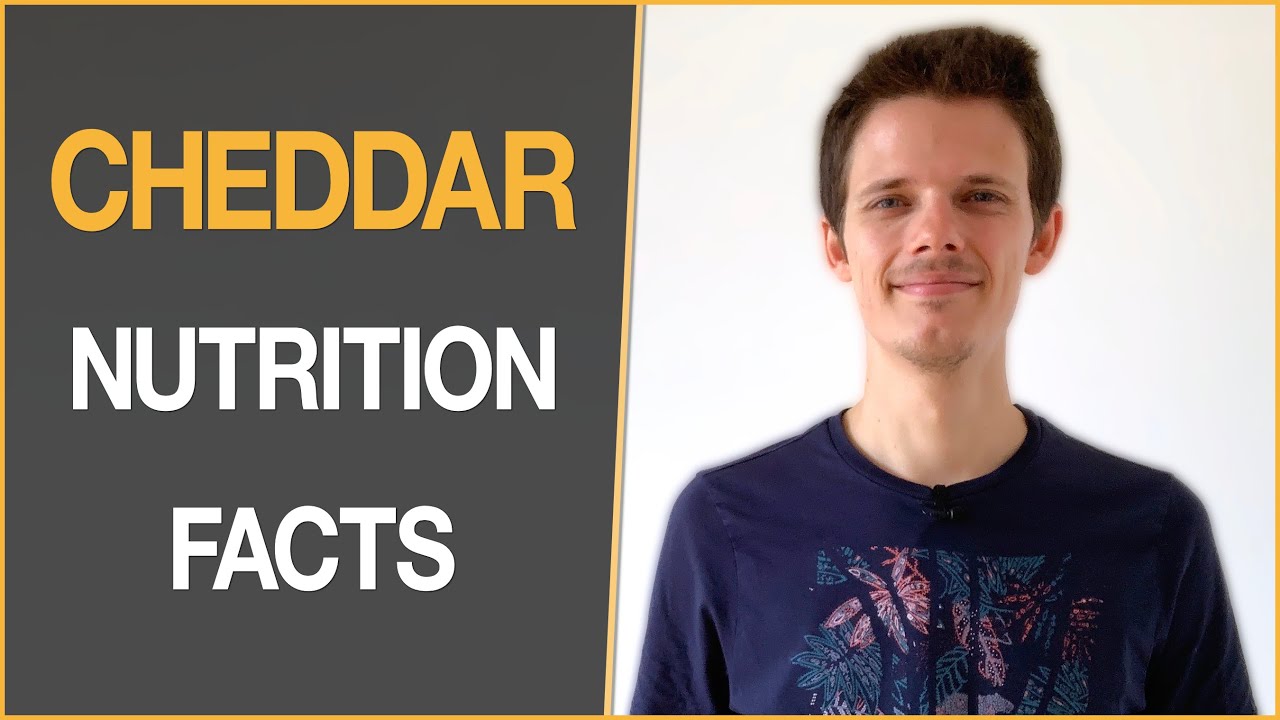
Here are some of the main nutrition facts about cheddar:
#CheddarNutritionFacts
First, cheddar, like other hard cheeses, is a really good source of protein. 100g contains around 55% of the daily recommended amount for women and 45% for men.
It is also a great source of fat. 100g provides 36% of the total fat men should eat each day and 45% for women. The downside of cheese is that it is rich in satured fat which we should try to consume in moderation. Even though there is some evidence that satured fat from dairy isn’t as harmful as other sources (Macciochi, 2020).
Cheddar provides us with energy, since 100g contains around 400 calories.
It is very rich in vitamin B12 which notably helps to make red blood cells. It provides 160% of the daily recommended amount per 100g.
Cheddar, like cheese in general, is a great source of calcium and phosphorus which notably helps build strong bones and teeth. 100g contains between 90% and 110% of the daily recommended amount.
Lastly, it provides us with loads of nutrients. Cheddar is rich in vitamin A (retinol), zinc, B vitamins such as, niacin, riboflavin, folate and vitamin B6. It is also a good source of chloride, sodium, iodine, vitamin E, magnesium and selenium.
References:
– Macciochi, J. (2020). Immunity: The Science of Staying Well. London: Thorsons.
– Public Health England. (2016). Government Nutrition Requirements. Available at: (Accessed: 14 July 2020).
– Public Health England. (2019). McCance and Widdowson’s composition of foods integrated dataset. Available at: (Accessed: 14 July 2020).
Contains public sector information licensed under the Open Government Licence v3.0.
As an Amazon Associate I earn from qualifying purchases.
Please share this content if you found it useful. You can also subscribe to my channel for more videos about nutrition.
Find the content of this video and more on my website:
Disclamer:
The content of the videos I publish is for educational purposes only. I am not a qualified health professional. The information contained in my videos is not intended to provide medical advice and should not be treated as a recommandation for any health decision. Consult a qualified health professional if you have questions about your diet or your health. The information I give comes from the sources that you can find in the description of each video.