




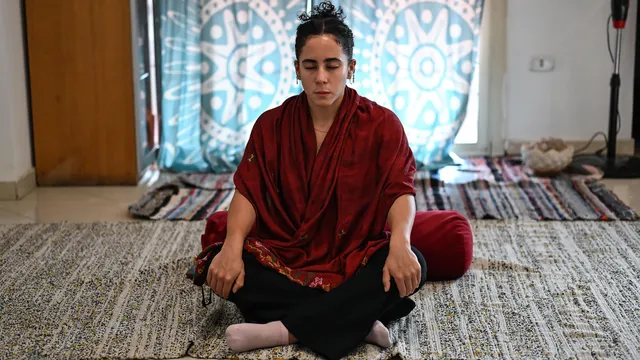
The study followed 20 healthy adults who attended a seven-day retreat.
Just seven days of meditation and mind-body integration techniques can lead to measurable changes in how the brain and body function, according to a new study from the University of California, San Diego, published in Communications Biology. Researchers note that the findings point to a deep interconnection between conscious experience and physical health.
The study followed 20 healthy adults who attended a seven-day retreat led by neuroscience educator Joe Dispenza, during which they completed approximately 33 hours of guided meditation, along with lectures and group healing activities. Researchers scanned participants’ brains using functional MRI (fMRI) and collected blood samples before and after the week. The sessions employed an “open-label placebo” approach—participants were aware that some practices were presented as placebos, yet previous research suggests such exercises can still produce real effects.
After the retreat, brain scans showed reduced activity in regions associated with mental “background noise.” Participants’ blood plasma was linked to neuroplasticity, their cells exhibited increased metabolic activity, and levels of endogenous opioids—the body’s natural painkillers—rose. Immune signaling shifted in what researchers described as a “balanced and adaptive” manner, with increases in both pro-inflammatory and anti-inflammatory responses. Average scores on the Mystical Experience Questionnaire (MEQ-30) increased from 2.37 to 3.02 out of 5.
Researchers noted that the observed patterns of brain connectivity resemble those associated with psychedelic substances. “We are seeing the same mystical experiences and neural connectivity patterns that typically require psilocybin, now achieved through meditation alone,” said Professor of Anesthesiology Hemal H. Patel. The authors, however, acknowledged limitations—the study lacks a control group, and the small sample size makes it difficult to generalize the findings. “This is not just about stress relief; it is about fundamentally changing how the brain engages with reality,” Patel added. Co-author Alex Hinich-Diamant of UC San Diego emphasized that the results represent “an exciting step toward understanding how conscious experience and physical health are interconnected, and how we might harness this connection to promote well-being in new ways.” | BGNES