




The Army has unveiled its new physical fitness test in response to Defense Secretary Pete Hegseth’s push for gender-neutral standards and tougher requirements for frontline troops.
The new assessment, the Army Combat Field Test, will supplement the service’s existing Army Fitness Test, which will remain the annual baseline measure of health and fitness. Soldiers in combat arms specialties will also be required to complete the additional combat-focused assessment annually.
Not passing fitness tests can result in soldiers being removed from service. For the new test, that consequence will start being enforced in April 2027 as units start becoming more familiar with it.
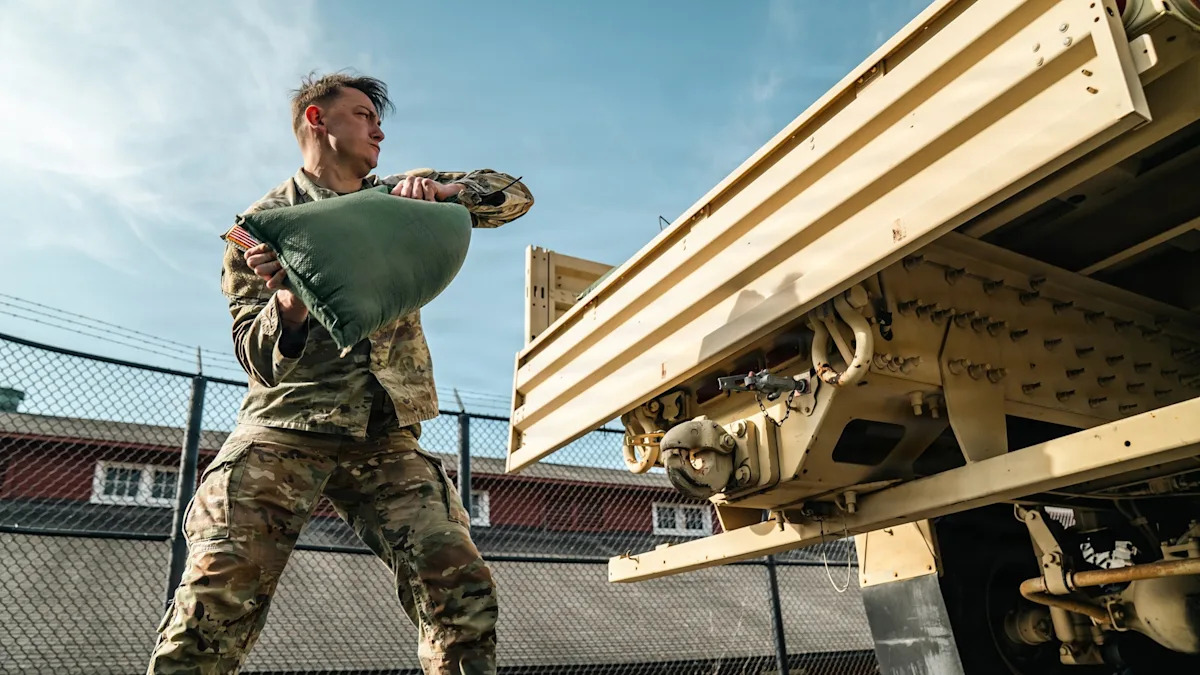
Sgt. Aaron Troutman/U.S. Army – PHOTO: U.S. Army Sgt. Christopher Smith assigned to 1st Battalion, 3d U.S. Infantry Regiment (The Old Guard) lifts a 40-lbs sandbag during the new Combat Field Test (CFT), at Joint Base Myer-Henderson Hall, Va.
“We’re asking more of our combat arms soldiers, and this test validates their ability to meet that high standard,” Sgt. Maj. of the Army Michael Weimer, the service’s top enlisted leader, said in a statement on Wednesday.
Hegseth rails against ‘woke,’ lays out standards in speech to top generals, admirals
For the Combat Field Test, soldiers must complete the following within 30 minutes:
16 lifts of a 40-pound sandbag onto a 65-inch platform.
A 50-meter carry of two five-gallon Army water cans weighing 40 pounds each.
A 50-meter movement drill consisting of a 25-meter high crawl and a 25-meter, three- to five-second rush.
The new assessment largely mirrors the physical portion of the Army’s expert infantry, soldier, and medical badge tests — demanding evaluations that combine fitness events, weapons proficiency and other combat tasks, with successful troops earning prestigious badges worn on their uniforms.
On average, soldiers complete those expert badge fitness events in roughly 22 to just under 27 minutes and have a half-hour to complete it, according to Army data reviewed by ABC. But those assessments are conducted while wearing body armor, while the new combat fitness test will be performed without it.
Last year, Hegseth ordered gender-neutral fitness standards for ground combat jobs and has made physical readiness a central theme of his tenure.
“It’s tiring to look out at combat formations, or really any formation, and see fat troops,” Hegseth said during a September speech at Marine Corps Base Quantico, addressing hundreds of senior military leaders. “Likewise, it’s completely unacceptable to see fat generals and admirals in the halls of the Pentagon and leading commands around the country and the world. It’s a bad look. It is bad, and it’s not who we are.”
The new test lands after nearly 15 years of Army efforts to rethink how it measures whether soldiers are physically prepared not only for combat, but for the day-to-day demands of military life and the long-term risk of injury.
Much of that push was driven by lessons from the wars in Iraq and Afghanistan, Army officials have explained, where service planners concluded the service’s old fitness model, centered largely on running, pushups and situps, was ill-suited for grueling operations in rugged terrain while carrying heavy equipment over long distances.
Hegseth ends mandatory flu vaccine for US military, says shot is now optional
After years of experimentation and multiple redesigns, the service ultimately fielded a CrossFit-inspired assessment, the Army Fitness Test, in 2020, that required soldiers to complete a three-rep deadlift, as many hand-release push-ups as possible in two minutes, hold a plank for as long as possible, run two miles for time, and finish a shuttle event that includes sprints, a 40-pound kettlebell carry and dragging a 90-pound sled. That test has seen several iterations since its debut as service planners frequently sought to refine how it measures fitness, and will still be conducted every year by all soldiers, including ground combat troops.
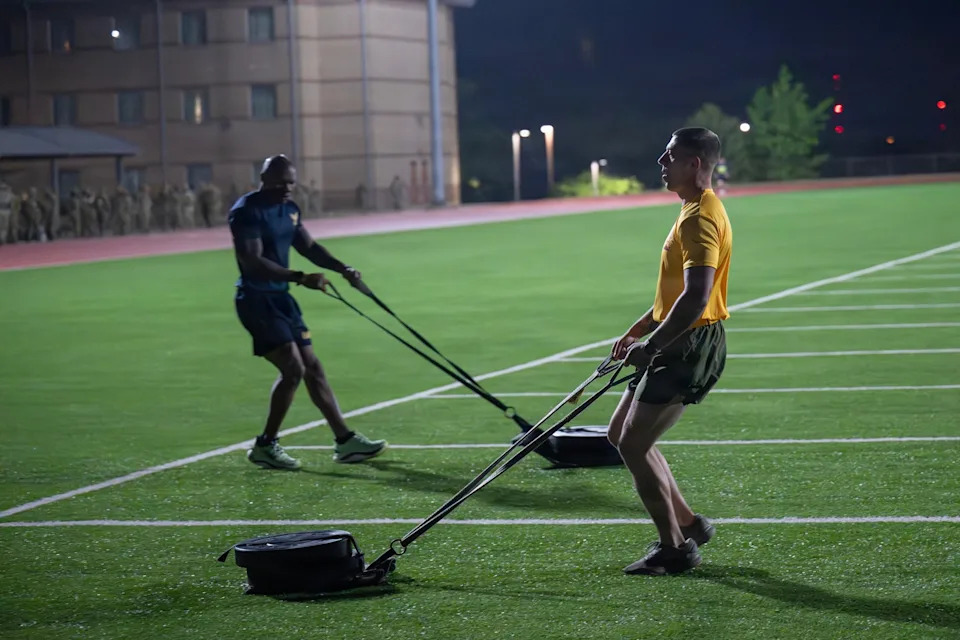
Nathan Clinebelle/U.S. Army – PHOTO: 2026 Fort Jackson & U.S. Army Drill Sergeant Academy Drill Sergeant of the Year competition
The service has also rolled out its Holistic Health and Fitness program, which trains soldiers in units to advise commanders on physical fitness plans tailored to mission needs, ranging from weight training and mobility work to yoga, nutrition guidance and mental health support.
At the same time, weight and overall fitness have remained persistent concerns across the ranks. Roughly 70% of the force was considered overweight, according to a 2023 study by the American Security Project.
The Army, and other military services, have also long struggled to feed their forces with healthy food, and military bases, where troops sometimes have limited food options, are often populated with fast food restaurants. Army data also shows roughly a quarter of its troops have self-reported issues with alcohol abuse.