




Market Overview
Quinoa is a nutrient-rich grain known for its high protein content, essential amino acids, fiber, vitamins, and minerals. Often categorized as a “superfood,” quinoa is widely used in salads, bowls, snacks, and health-focused recipes. It is gluten-free and suitable for various dietary preferences, including vegetarian and vegan diets.
In Japan, quinoa is gaining popularity as part of a broader shift toward healthier eating habits. Consumers are increasingly interested in functional foods that provide nutritional benefits beyond basic sustenance. As awareness of balanced diets and wellness grows, quinoa is being incorporated into both traditional and modern Japanese cuisine.
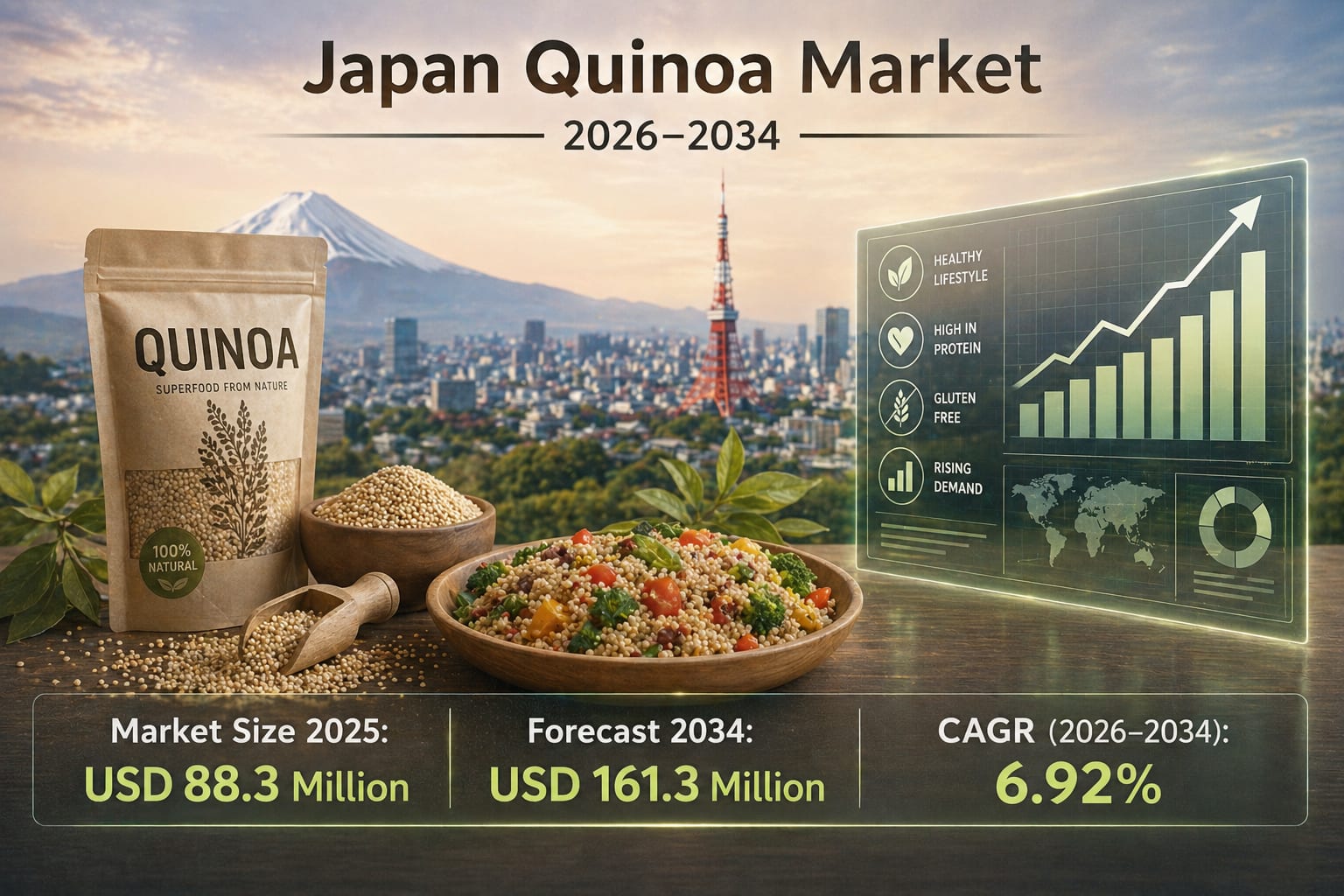
The Japan quinoa market reached approximately USD 88.3 million in 2025. Looking ahead, the market is projected to grow to around USD 161.3 million by 2034, exhibiting a compound annual growth rate (CAGR) of 6.92% during 2026–2034. Growth is driven by increasing health consciousness, demand for plant-based foods, and expansion of health-oriented retail channels.
Role of Innovation in Market Development
Development of Value-Added Quinoa Products
Manufacturers are introducing a variety of quinoa-based products, including ready-to-eat meals, snacks, breakfast cereals, and flour. These innovations make quinoa more accessible and convenient for everyday consumption.
Integration into Local Cuisine
Quinoa is being adapted into Japanese dishes such as rice blends, sushi variations, and bento meals. This localization helps increase acceptance among consumers who prefer familiar flavors.
Organic and Sustainable Sourcing
Consumers are increasingly seeking organic and sustainably sourced food products. Quinoa producers are responding by offering certified organic options and promoting environmentally friendly practices.
Japan Quinoa Industry Trends and Drivers
Growing Health and Wellness Awareness
Consumers in Japan are becoming more focused on nutrition and preventive healthcare. Quinoa’s high nutritional value makes it an attractive option for health-conscious individuals.
Rise of Plant-Based Diets
The increasing popularity of vegetarian and vegan diets is supporting demand for plant-based protein sources. Quinoa serves as a versatile and nutrient-dense alternative to traditional grains.
Expansion of Health Food Retail Channels
Health food stores, supermarkets, and online platforms are expanding their offerings of quinoa and related products. Increased availability is helping drive market growth.
Japan Quinoa Market Segmentation
By Product Type
• White quinoa
• Red quinoa
• Black quinoa
• Others
By Form
• Whole grain
• Flour
• Flakes
• Others
By Application
• Food and beverages
• Nutritional supplements
• Others
By Distribution Channel
• Supermarkets and hypermarkets
• Convenience stores
• Online retail
• Specialty stores
By Region
• Kanto Region
• Kansai / Kinki Region
• Chubu Region
• Kyushu–Okinawa Region
• Tohoku Region
• Chugoku Region
• Hokkaido Region
• Shikoku Region
This segmentation highlights how quinoa consumption varies across product types, applications, and distribution channels in Japan.
Competitive Landscape
The Japan quinoa market includes food manufacturers, importers, distributors, and health-focused brands. Competition is driven by product quality, nutritional value, pricing, and brand positioning.
Companies are focusing on expanding product portfolios, improving sourcing practices, and increasing consumer awareness through marketing and education initiatives. Innovation in product development is also helping differentiate offerings.
Market Outlook
The outlook for Japan’s quinoa market remains positive as consumers continue to prioritize health, nutrition, and sustainable food choices. Increasing adoption of plant-based diets and growing interest in superfoods are expected to support steady market growth.
As awareness of quinoa’s nutritional benefits expands and its integration into local cuisine increases, the market is likely to continue evolving, offering new opportunities for innovation and growth in Japan’s food industry.