




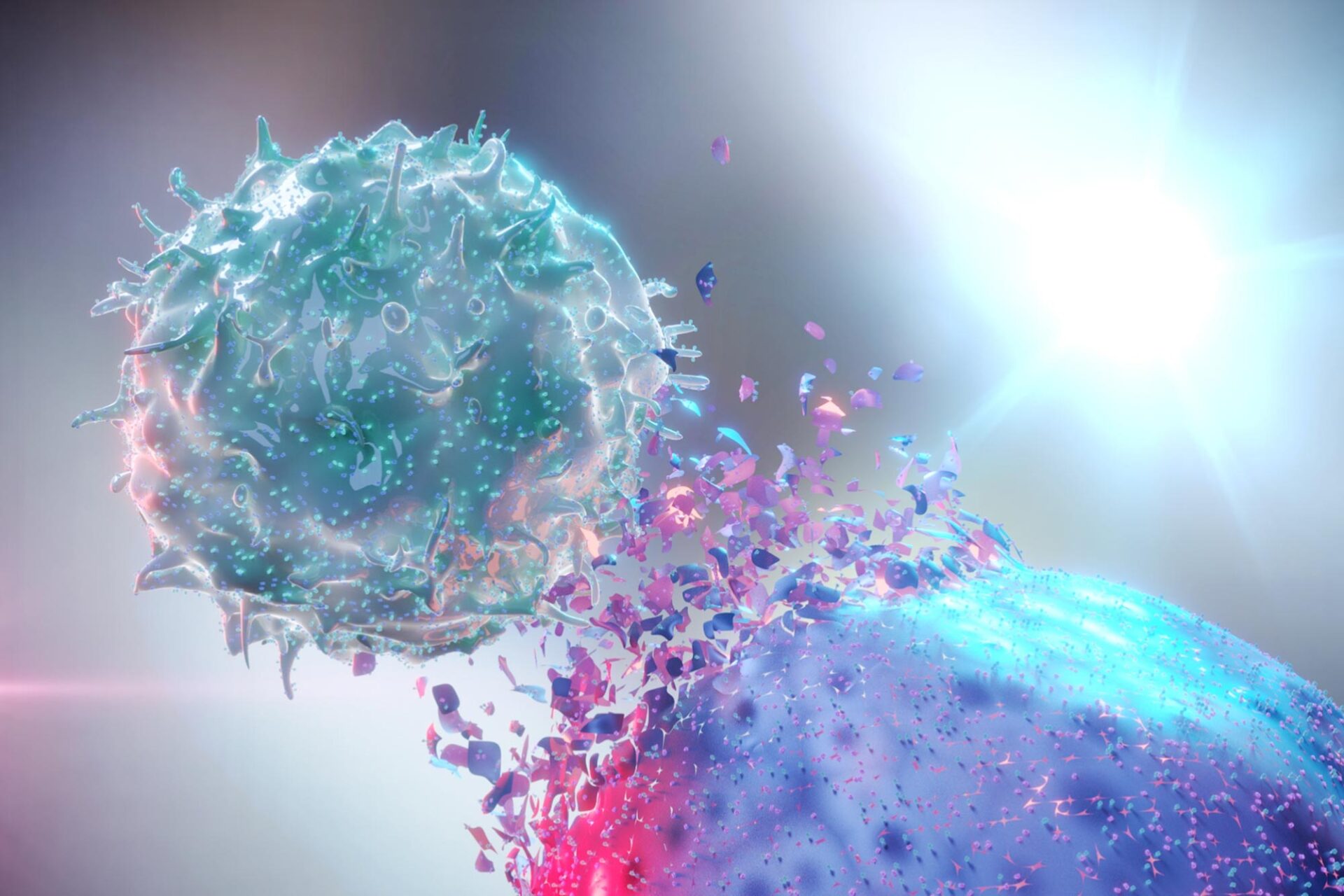
 Can a vitamin help the immune system push back against an aggressive brain cancer? Early clinical results suggest it might. Credit: Shutterstock
The findings suggest that vitamin B3 may help strengthen and restore a weakened immune system.
Edward Waldner knew something was wrong. At 55 years old, he felt constantly drained. No matter how much he rested, the fatigue lingered. He began to question whether sleep apnea might be the cause. He also noticed subtle changes in his movement. His heels occasionally dragged when he walked. When his symptoms intensified one day, he decided to seek care at the Emergency Department.
“The doctor said I had a mass on my brain and needed to see an oncologist,” says Waldner.
The diagnosis was glioblastoma, one of the most aggressive forms of brain cancer. Standard treatment typically involves three steps: surgery to remove as much of the tumor as possible, followed by radiation and chemotherapy. Despite decades of research and advances in oncology, the disease almost always returns.
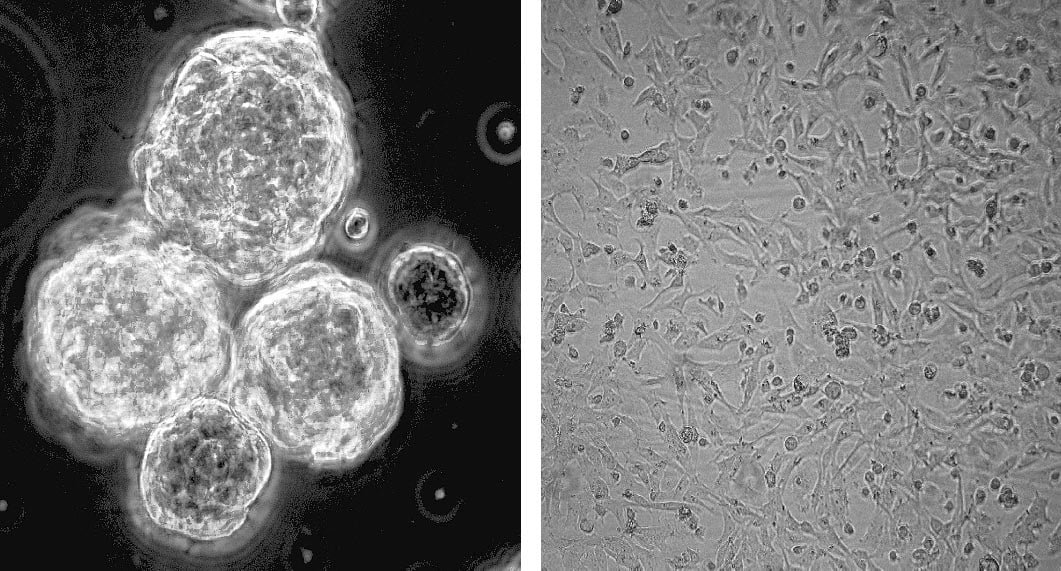 The clustering of cancer cells in glioblastoma without treatment, left, and how the niacin stops cells from clustering. Credit: Courtesy Yong lab
Adding vitamin B3 to standard care
Researchers at the University of Calgary are now studying whether high doses of vitamin B3, also known as niacin, could improve outcomes when added to conventional treatment. Waldner was invited to participate in the clinical trial.
“I have no problem trying to help anybody. I agreed. I want to help myself too,” says Waldner. “I can tell you, being part of this research helps me mentally because we’re trying. When I left the hospital after surgery, I was told, that’s it, that’s all we can do.”
The study is led by Dr. Gloria Roldan Urgoiti, MD, an oncologist specializing in brain cancers, and Dr. Wee Yong, PhD, a neuroscientist who studies immune responses in the brain. Both are affiliated with the Hotchkiss Brain Institute and the Arnie Charbonneau Cancer Institute. Their goal is to determine whether niacin can restore the function of weakened immune cells so they can better attack tumor cells.
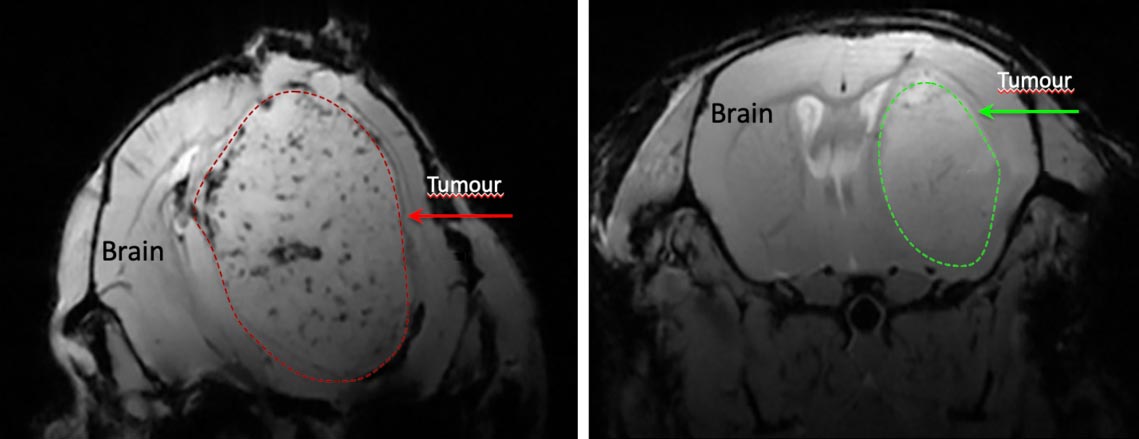 Unrestricted tumor growth in the mouse brain, left, compared to the tumor growth in a mouse that received niacin treatment, right (both after 42 days). Credit: Courtesy Yong lab
The research began with laboratory experiments in mice, where niacin was shown to extend survival. Those findings laid the groundwork for a Phase I and II clinical trial in patients.
Restoring immune attack on tumors
“Normally, the immune system will try to counter and prevent tumor growth; however, this brain cancer suppresses the immune system,” says Yong, a professor at the Cumming School of Medicine (CSM). “Niacin treatment rejuvenates immune cells so they can do what they are supposed to do, attack and kill the cancer cells. I see it as an ongoing ‘battle for the brain’.”
The clinical trial was designed to establish the highest safe dose and assess whether controlled-release niacin could enhance the effects of standard chemotherapy and radiotherapy.
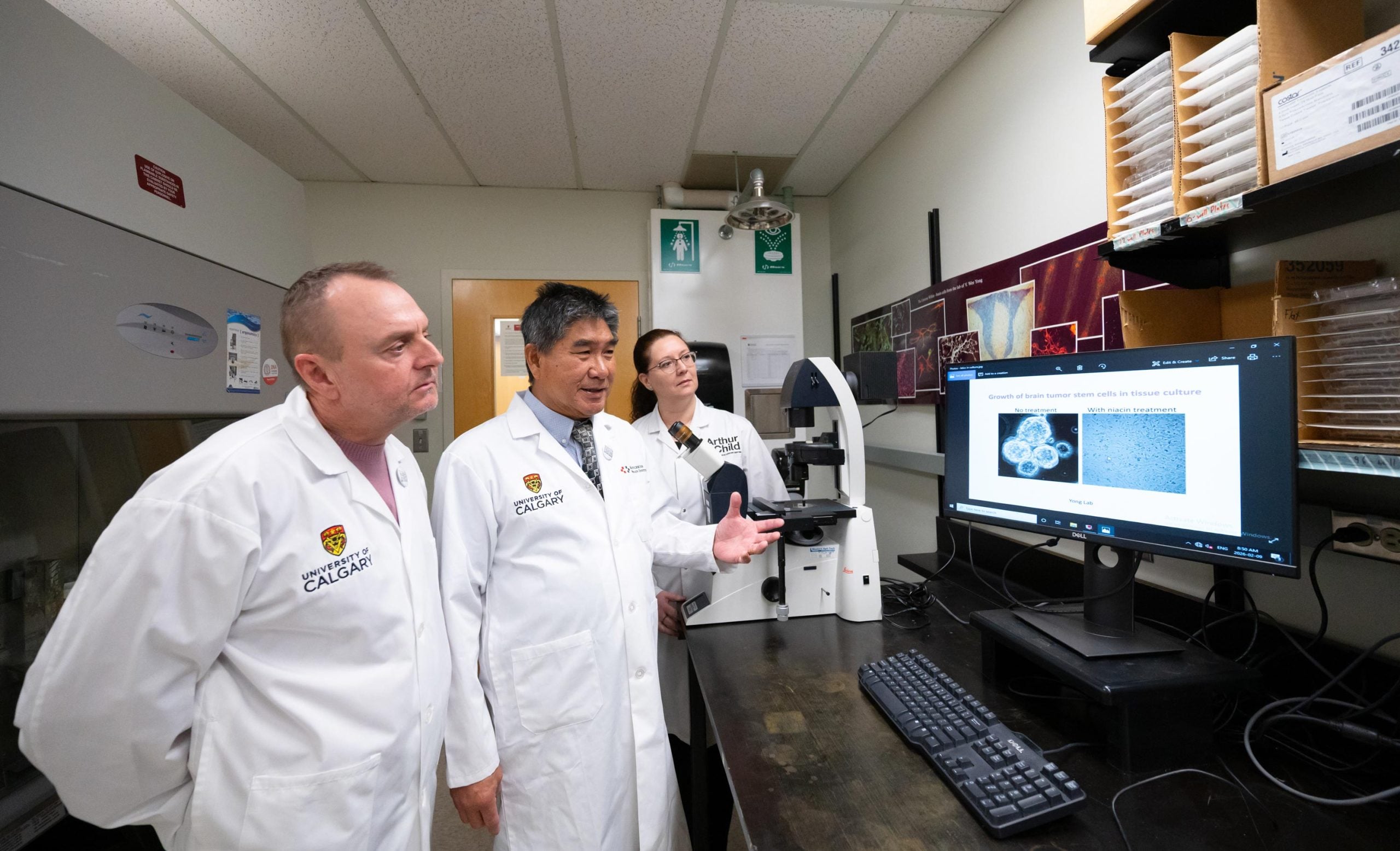 Left to right: Edward (Ed) Waldner (study participant), Dr. Gloria Roldan Urgoiti, MD, (oncologist), Dr. Wee Yong, PhD, (scientist). Credit: Riley Brandt, University of Calgary
Researchers set a benchmark: the study would continue only if progression-free survival at six months improved by at least 20 percent compared with historical data. Early results from 24 patients showed that 82 percent had no disease progression at six months.
This represents a 28 percent improvement over previous studies, suggesting potential benefit in a cancer that remains difficult to treat.
Early results warrant caution
Even so, investigators stress the need for caution. “Glioblastoma is the most aggressive brain cancer in adults. Survival of patients with this condition hasn’t changed significantly for 20-years,” says Roldan Urgoiti, a clinical associate professor at the CSM. “Anything that may help should be explored, but it requires strict protocols and safety monitoring.”
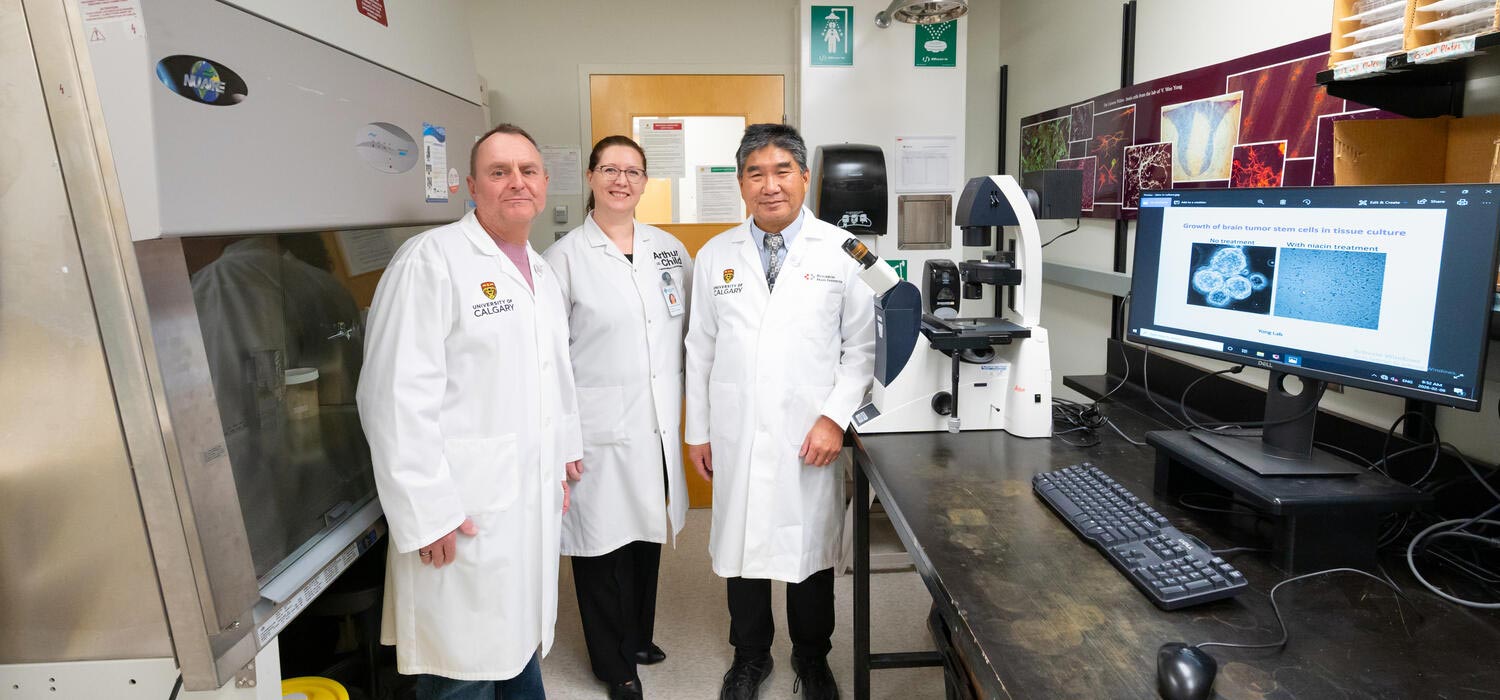 From left: Edward (Ed) Waldner, Gloria Roldan Urgoiti, Wee Yong. Credit: Riley Brandt, University of Calgary
Researchers also warn that high doses of vitamins, including niacin, can cause harmful side effects if not carefully supervised by medical professionals.
The team plans to complete the final analysis once enrollment reaches 48 participants, which is expected by the end of 2026 or early 2027.
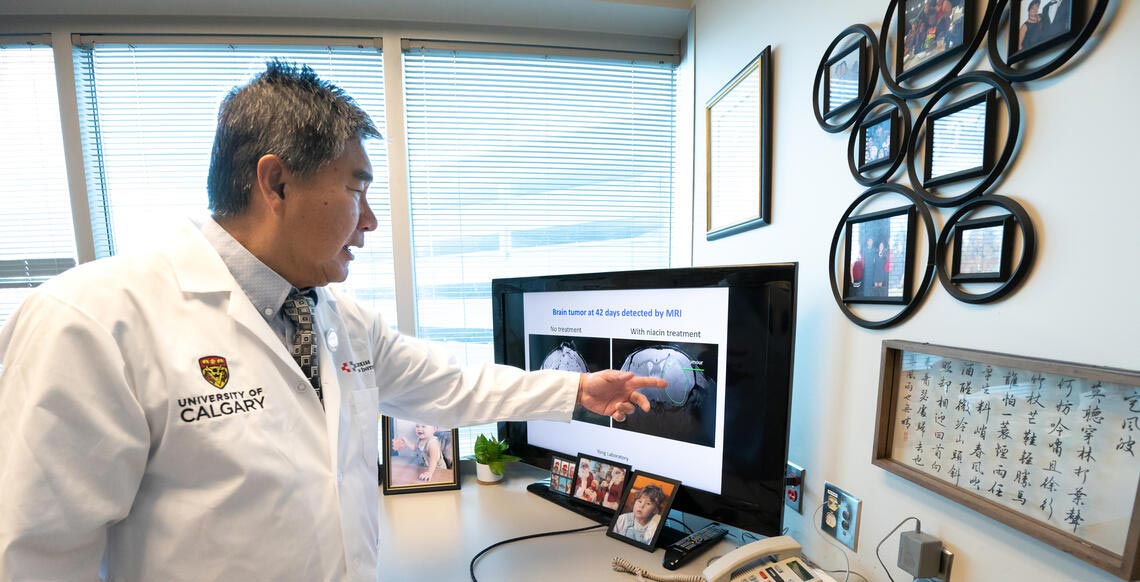 Wee Yong. Credit: Riley Brandt, University of Calgary
For now, Waldner focuses on each follow-up scan. He says he feels well and is grateful each time he hears the word stable.
Reference: “A phase I-II study of niacin in patients with newly diagnosed glioblastoma: safety and interim phase II analysis” by Gloria Roldan Urgoiti, Paula de Robles, Roger Y. Tsang, Morgan Willson, Sunita Ghosh, Muhammad Faruqi, Gerald Lim, Shaun Loewen, Robert Nordal, Gregory Cairncross, Catriona Leckie, Candice C. Poon and V. Wee Yong, 28 November 2025, Journal of Neuro-Oncology.
DOI: 10.1007/s11060-025-05351-z
The research is supported by the Canadian Institutes of Health Research and the Alberta Cancer Foundation.
Never miss a breakthrough: Join the SciTechDaily newsletter.
Follow us on Google and Google News.