





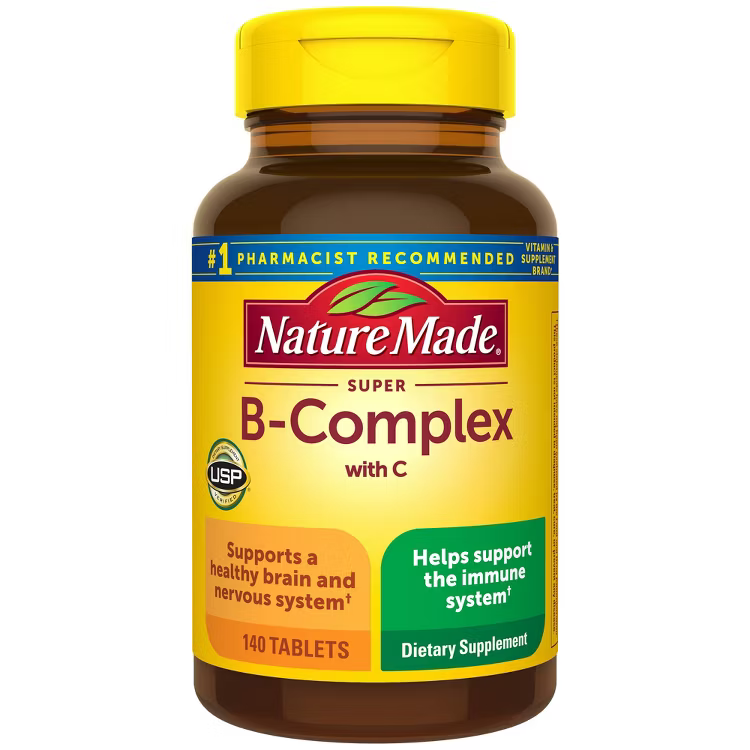
People at risk of developing glaucoma or progression of the disease may benefit from vitamin B supplementation. There is increasing evidence that these vitamins may be important for OAG prevention due to their roles in neuroprotection, vascular health and the regulation of homocysteine metabolism, which may influence optic nerve integrity and IOP. Photo: Nature Made. Click image to enlarge.
As B vitamins play an important role in proper mitochondrial function, reducing oxidative stress and improving neuronal health, they may be of interest for neurodegenerative disorders. Previous research has suggested deficiencies in certain B vitamins and related metabolites may play a role in the pathogenesis of glaucoma. Overall, evidence on the association of the different B-vitamins with open-angle glaucoma (OAG), intraocular pressure (IOP) and other OAG-associated parameters such as retinal nerve fiber layer (RNFL) and ganglion cell layer GCL thickness is not yet conclusive.
Researchers based in the Netherlands recently assessed these associations thoroughly, using data from the large prospective population-based Rotterdam Study. They found that higher dietary intake of niacin (vitamin B3) and cobalamin (vitamin B12) was associated with lower risk of OAG. Moreover, a significant trend was observed between higher intake of these vitamins and lower intraocular pressure. In line with these findings, participants with high intake of cobalamin had thicker ganglion cell layers.
“The protective effect of niacin intake was particularly strong in participants with a high genetic predisposition for OAG,” the researchers wrote in their paper, which was published in American Journal of Ophthalmology. “Although there appeared to be a trend with decreased IOP, there may also be IOP-independent mechanisms by which niacin and cobalamin protect against incident OAG.”
Data from the Rotterdam Study included participants who were free of OAG at baseline, had at least one ophthalmic follow-up and complete data on dietary intake. Among 6,742 participants (mean age, 62.4 years; 58.2% female), 162 developed incident OAG.
Dietary intakes of niacin (vitamin B3; odds ratio [OR]: 0.94 per mg/day) and cobalamin (vitamin B12; OR: 0.90 per µg/day) were significantly associated with decreased OAG incidence. Participants with the highest niacin intake (Q5, mean crude intake: 23.27mg/day) had a significantly lower risk of incident OAG (OR: 0.43) compared to those with the lowest intake (Q1, mean crude intake: 9.98mg/day). A similar association was observed for cobalamin (Q5, mean crude intake: 10.47µg/day vs. Q1, mean crude intake: 0.19µg/day; OR: 0.25). Other B vitamins (intake of thiamine, riboflavin and pyridoxine) were not associated with incident OAG or the OAG-associated outcomes.
Unfortunately, the researchers were unable to determine the source of B vitamin intake (dietary vs. supplements). This distinction may be important because it may be difficult to achieve high intake through diet alone, and the effects of dietary vs. supplemental intake could be noticeable. They noted that future studies should explore both observational and interventional approaches to determine whether cobalamin supplementation could serve as a viable strategy for glaucoma prevention or progression control.
“Niacin supplementation may be recommended to individuals with a high genetic susceptibility for OAG,” the team concluded. “More research on cobalamin is warranted.”
Click here for the journal source.
This article was developed by the editorial staff in conjunction with experts in the field. In the process, AI may have been among the editorial tools used to meet the goals of human editors, who approved all content.