




While everyone’s experience with chemotherapy is different, the treatments can pose some pretty severe side effects. Nausea, vomiting, and diarrhea are common, and all three rob the body of crucial nutrients and may lead to dehydration.
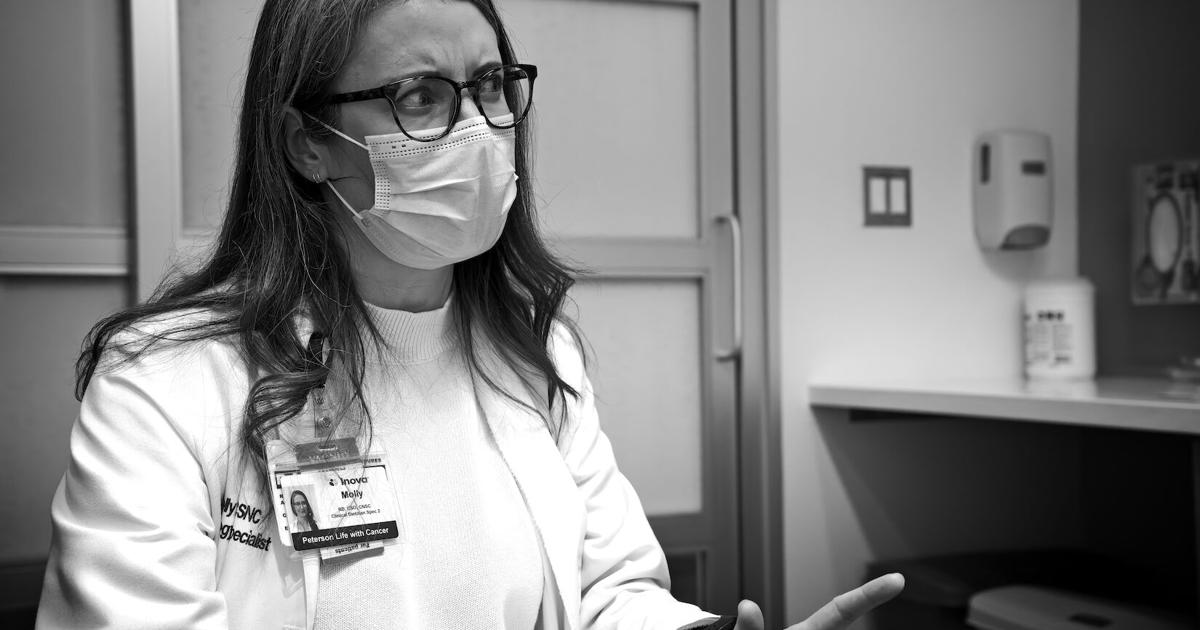
That’s when someone like Lauren Fay steps in. She’s an oncology registered dietitian and clinical nutrition manager for Inova Schar Cancer and Peterson Life with Cancer. Her goal is to help patients optimize their nutrition intake.
“We do an in-depth assessment of each patient to make sure we are providing the resources specific to their individual needs,” she said. Registered dietitians evaluate what a patient is functionally able to consume, and then decide how they can support the patient’s needs. That might mean recommending different types or textures of foods, liquids, or in some cases, feeding tubes or IV nutrition support.
Helping a patient stay healthy enough to tolerate treatment can take a contingent of doctors and medical experts working together.

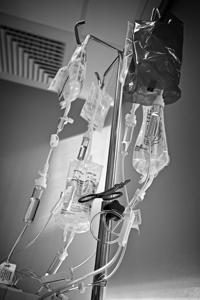
An infusion tree at the Schar Cancer Center.
Douglas Graham
In Doug’s case, with a tumor in his esophagus, his treatment team included a speech-language pathologist who helped him learn a special swallowing technique that coordinates breathing with swallowing and muscle control.
Can Good Nutrition Help Prevent Cancer?
Although cancer cannot be fully prevented by lifestyle choices, there is clear, evidence-based guidance on ways to reduce risk.
Fay points out that risk factors for cancer can be separated into those we can modify and those we can’t. Common risk factors within our control include physical activity, UV light exposure, tobacco use, alcohol use, and diet/nutrition.
“Together, current research estimates these modifiable risk factors account for about 40 percent of cancers,” she said.
Recommendations published by the American Institute for Cancer Research provide a roadmap to a healthy lifestyle shown to reduce cancer risk. The cornerstone is a predominantly plant-based diet made up of vegetables, fruits, whole grains and legumes, supplemented by lean meats and fish.
Even though we may be able to reduce our cancer risk through lifestyle changes, roughly 60 percent of cancers arise from factors out of our control.
“Cancer is an error in cell replication, and our cells are constantly replicating themselves,” Fay said, “so an error can occur for no apparent reason.
“It’s an unfair disease.”
To learn more about ways to reduce your cancer risk, explore resources at aicr.org.