




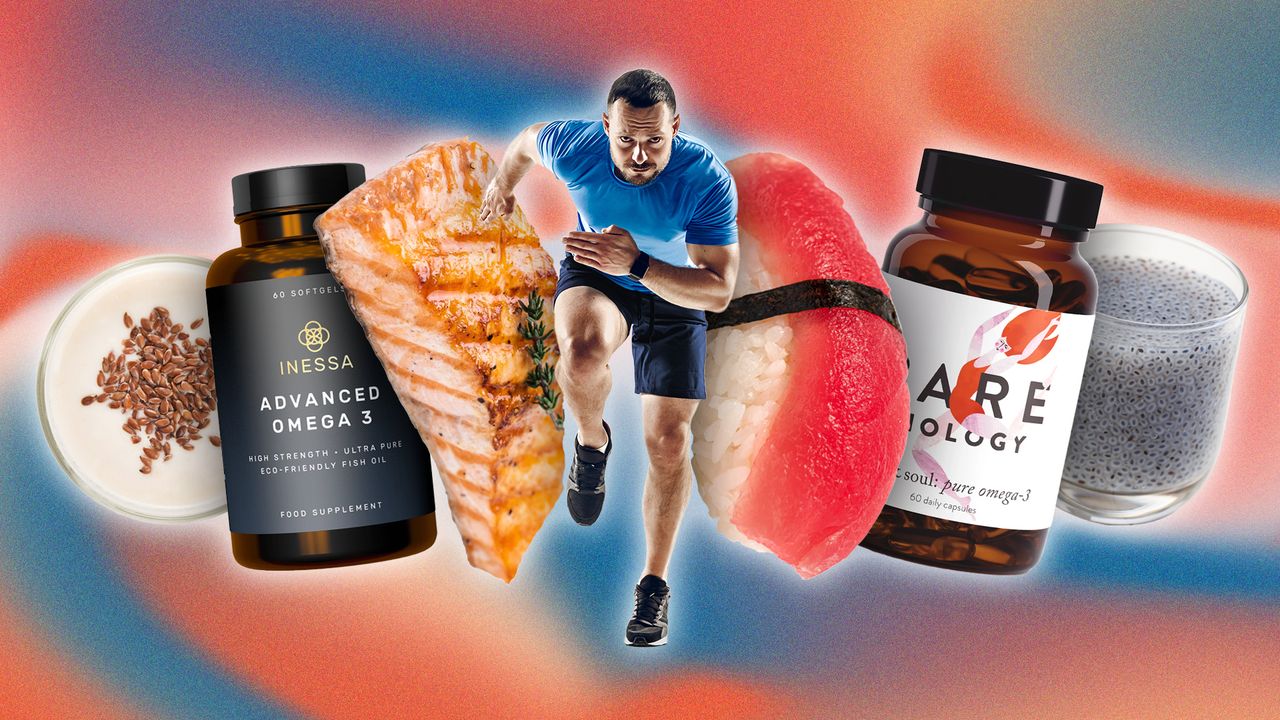
Omega-3. You’ve probably seen it lurking on the shelves at your local health food shop, plastered across Bird’s Eye fish fingers packets, or maybe buried deep in your old science notes. But despite its ubiquity, the benefits of this nutrient still hover in the blind spot of most fitness conversations.
Too often omega-3 gets relegated on gym menus below usual gym suspects protein and carbs, leaving its impressive fitness benefits largely untapped. Yet, omega-3 is one of the most underrated nutrients out there and can play a crucial role in everything from enhancing recovery and endurance to sharpening mental clarity. In short, it’s the game-changer you need in your locker.
Bodybuilders have been onto this for years, swigging (or popping) fish oil as part of their pre-workout ritual. With its high omega-3 content, this virtually tasteless oil helps fuel harder and more effective workouts, while soothing post-sesh soreness. And since omega-3 is an essential nutrient, getting more of it is something you should be doing anyway, regardless of your fitness goals.
The catch? Western diets often skimp on healthy fats and plant-based foods – vital ingredients for boosting fitness, as backed by studies on the Mediterranean diet. But this doesn’t mean upping your intake is a far-off mission. With the right foods, a bit of focus, and maybe a new MyProtein subscription, you’ll be well on your way to reaping the benefits. Here’s the lowdown.
What is omega-3?
Pub quizzers would probably scramble to come up with anything more succinct than ‘a healthy fat’. That’s because the answer itself isn’t the easiest concept to grasp. Luckily, Kirsty Thomas, registered nutritionist at Prowise Healthcare can simplify it for us. Rather than being a specific nutrient, she explains that “omega-3 refers to the class of essential polyunsaturated fats known as omega-3 fatty acids,” and that getting them into your system is essential for “the overall functionality of the body”.
Under the omega-3 umbrella, there are three different types: DHA, EPA and ALA, each with unique properties vital for sports performance, as Thomas breaks down below:
DHA
“DHA is an omega-3 fatty acid that is abundant in fish and algae. It affects cognitive skill, memory and mental sharpness. It also reduces oxidative stress due to exercise, thus serving to maintain concentration and reaction times during high-performance activities.”
EPA
“EPA (also found in fish) is known for its anti-inflammatory effects and in conjunction with DHA, it serves to increase post-workout recovery.”
ALA
“ALA appears in plant sources and utilises energy towards heart health and widespread inflammation management.”
How can omega-3 improve your training?
Reducing inflammation (aka faster recovery)
We all know recovery can be a real drag. But omega-3s actually keep the aches and pains at bay – thanks to their well-known anti-inflammatory properties. “Omega-3 fatty acids show impressive results for reducing delayed onset muscle soreness (DOMS),” says Michael Betts, PT and director of TrainFitness. “Research consistently demonstrates that supplementing with omega-3 before and after strenuous workouts decreases muscle pain intensity and duration following exercise and less muscle fibre damage after intense training. This means quicker return to normal function and less stiffness.”
“Omega-3s don’t block the recovery process but rather optimise it,” adds Betts. “Your body can build stronger tissues without the negative effects of too much or prolonged inflammation.” In fact, Betts says that you are likely to feel a reduction in muscle soreness in as little 3-4 weeks after beginning omega-3 supplementation.
Enhancing endurance
“Omega-3 enhances mitochondrial function which helps in fighting fatigue during cardio and HIIT workouts,” explains Thomas. For those with a particularly demanding fitness regime, loading up on omega-3 could help you push harder for longer. “Your heart rate variability improves with adequate omega-3 levels so your automatic nervous system is working better,” says Betts. For endurance athletes, omega-3s help preserve muscle glycogen stores by promoting greater fat utilisation during moderate-intensity exercise, potentially extending time to exhaustion in longer events.”