




 6 min read
A creepy thing to ask a chatbot is: “How to look human?” AI will give helpful tips like “not forgetting to breathe.” It also informs you, the very person with eyes reading this story, that your eyeballs are always located in the middle of the head and that the width of the nose is typically equal to the distance between them (feel free to look at your own reflection to check).
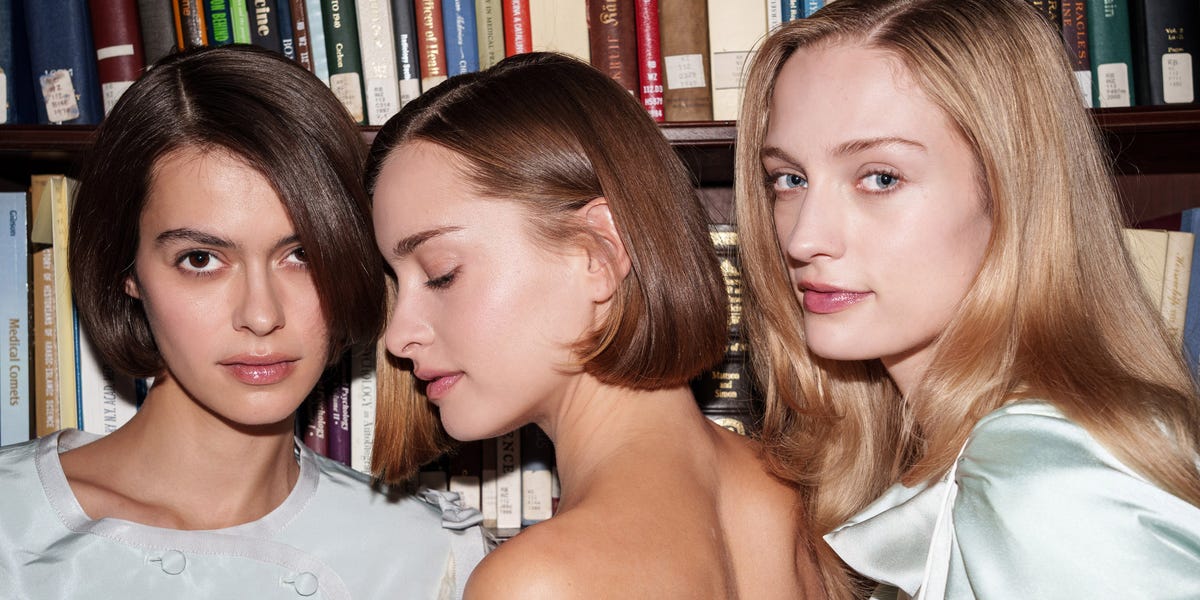
You know how to be human. But how do you continue to look human, in this age of terrifyingly adaptive AI, Photoshop, and filters? The past few years in beauty have been characterized by human intervention in service of an un-human look—overly pillowy lips, puffy faces, complexions buffed to a robot-like shininess, sharply contoured cheeks, the bland sameness of no-makeup makeup, and jutting butts. Now, judging by evidence from runway beauty trends and doctors’ offices, we are back in an era of looking merely mortal.
Part of looking more human comes from what we can call the Great Undoing, seen in the bodies and faces of people across America. You can read stories like “25 Famous People Who Kissed Their Filler Goodbye,” and follow along with content creators as they get their Brazilian butt lifts and other fillers taken out. “I used to have 10 to 15 percent reversals. Now it’s up to 20 to 30 percent. Many people are reverting back and trying to make their faces more normalized,” says Daniel Gould, MD, a plastic surgeon in Beverly Hills, who saw the trend starting around five years ago across all kinds of aesthetic procedures. When New York City plastic surgeon Melissa Doft, MD, walks me through her morning schedule on a Friday, there are already two revision cases. Darren Smith, MD, a plastic surgeon in New York City, has seen a 30 percent uptick in breast reductions over the past 18 months.
The words that people are using to describe their desires for their faces go beyond just “natural.” “I want to look like my authentic self” is what Beverly Hills facial plastic surgeon Babak Azizzadeh, MD, has heard. “They say that they don’t like it being so obvious anymore,” Smith adds, with his office observing a trend in BBL deflations. “They don’t want their butt to be the first thing people notice.” “I have a lot of patients who are like, ‘Okay, I feel like I’ve gone too far; bring me back,’” Doft says. Sometimes, the realization that they’ve crossed into uncanny valley territory comes from others. “Their faces have been so distorted that their friends and family are asking them, ‘What happened?’” Gould says. Azizzadeh weighs in with a vivid comparison: “It’s like getting that bad tattoo when you’re drunk in the middle of the night and regretting it in the morning. It’s like, ‘Oh my God, what do I need to do about this?’”
“Their faces have been so distorted that their friends and family are asking them, ‘What happened?’”
The regret can be multifold, because an unnatural appearance no longer just communicates poor taste or an overdose of procedures, but also invites value judgments about a person’s worldview. The so-called “Mar-a-Lago face” was coined to describe the artificial appearances of Trump’s inner circle. When the former secretary of Homeland Security was fired, Salon.com proclaimed, “Even Mar-a-Lago Face Couldn’t Save Kristi Noem”; Karoline Leavitt’s seeming puncture wounds from what appear to be fresh lip injections, seen in Vanity Fair’s December 2025 issue, implied there was nothing natural about “machine-gun lips.” At an awards show in Paris this winter, the infrequently seen Jim Carrey accepted an Honorary César Award. But his appearance was so smooth that an online conspiracy theory began speculating that Carrey himself did not attend, but an impostor. (Someone on Reddit joked of the response, “If I was just a little more insane I too could be tricked into believing everyone who has bad filler is a clone who eats babies.”) His publicist later issued a statement confirming that Carrey was there. “Anytime there’s something in the news or on social media that portrays one of these more exaggerated aesthetics, there’s definitely backlash, and people want to make sure they don’t fall into that category,” Smith says.
 launchmetrics.com/spotlight
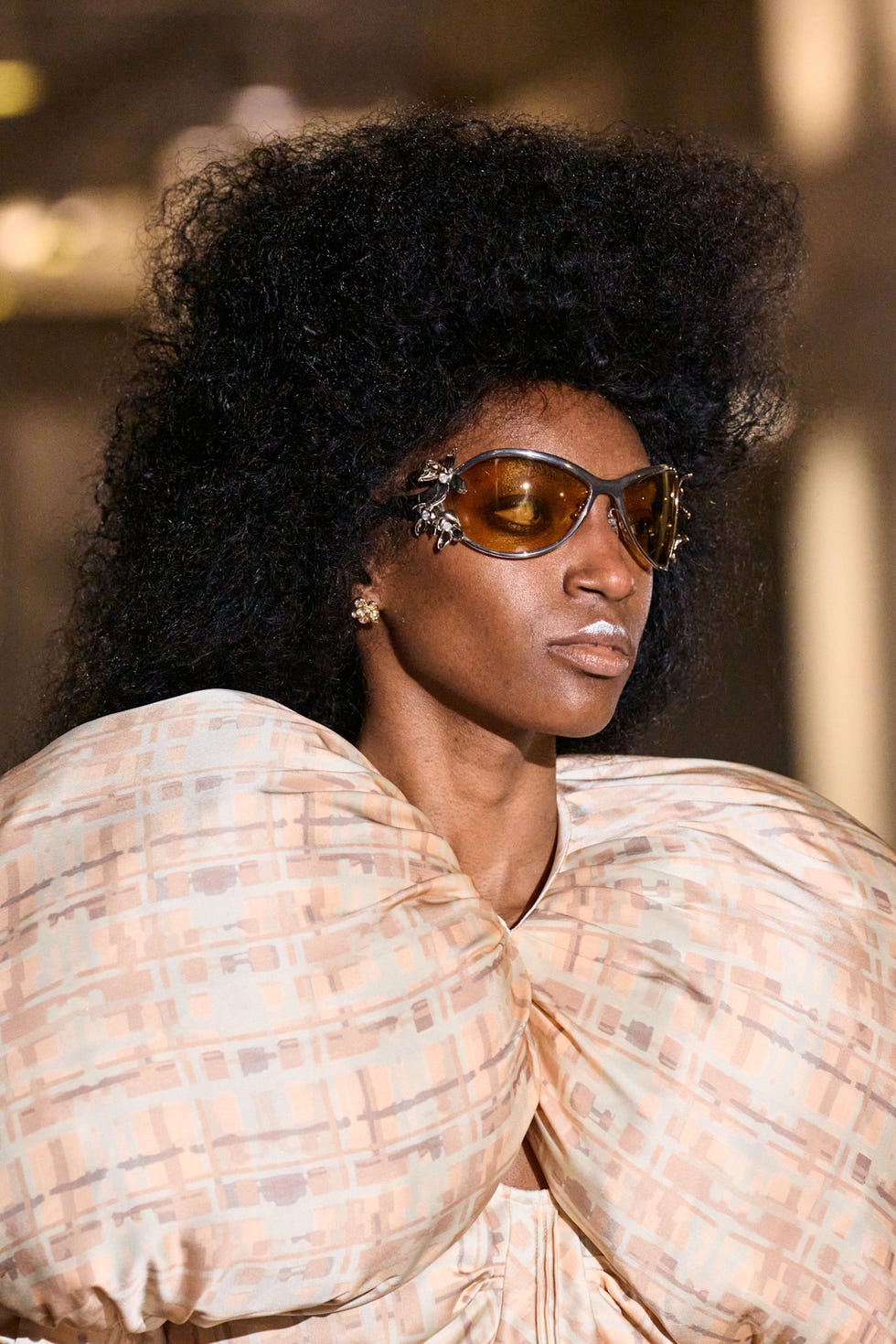
Collina Strada fall 2026 beauty had makeup simulating an upper lip latte smudge.
During the fall 2026 fashion month shows, the desire to look more human was interpreted in an artful way, with makeup artists creating looks that purposefully didn’t look too perfect. This is a hard left from the “clean girl” makeup aesthetic of no-makeup makeup and pulled-back hair (not unlike Alicia Vikander’s beauty look as a robot in Ex Machina), popularized on TikTok by celebrities like Hailey Bieber. Collina Strada had models walking down the runway with makeup-simulated latte foam smears above their upper lip. Makeup artist Romy Soleimani created a “sleepy girl” makeup look using mauve-and-brown eyebrow pencil, to celebrate the bleariness that comes from just waking up.
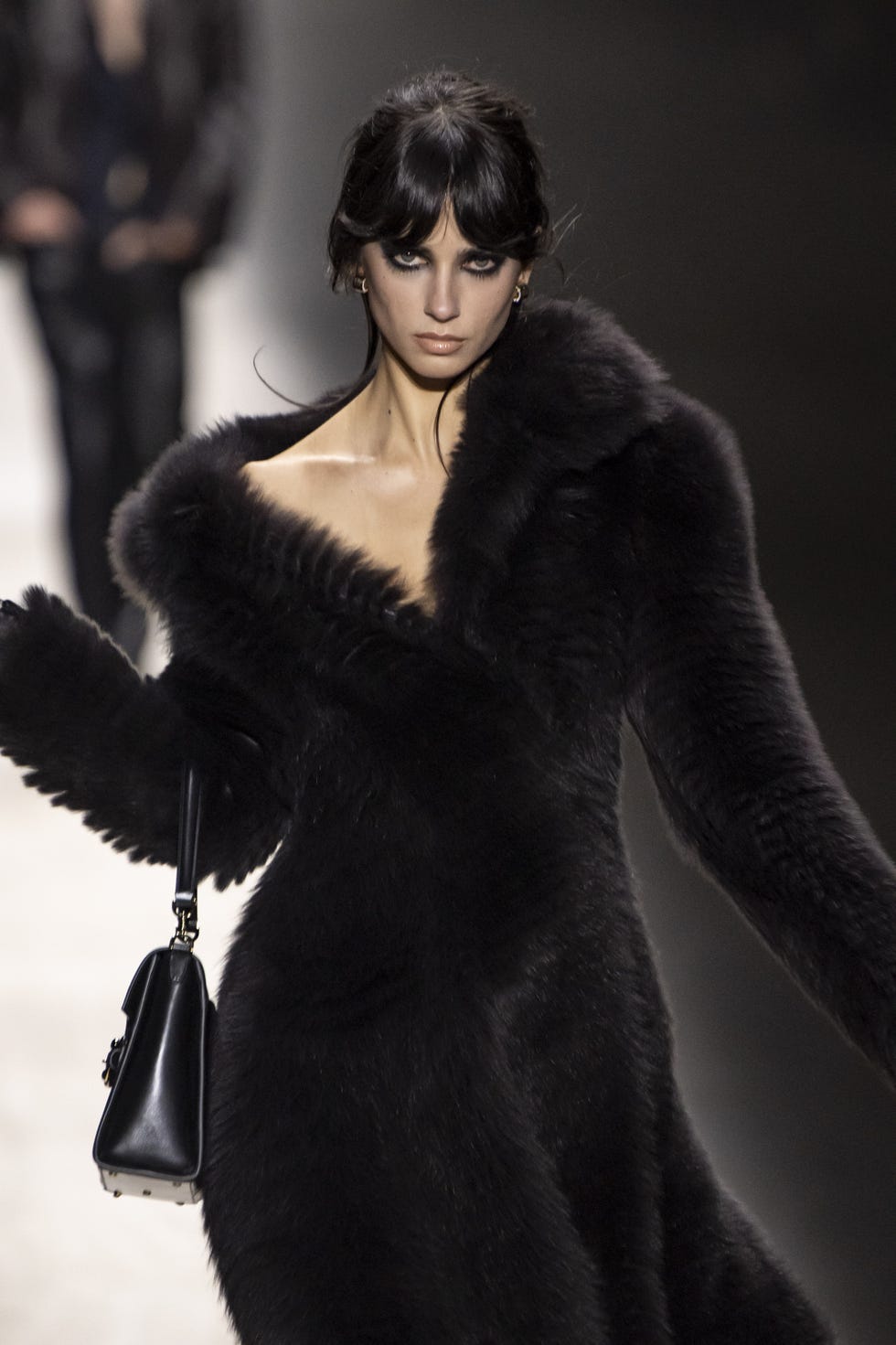
“Seeing people move away from something that felt very uniform and controlled into something more colorful and individual feels exciting to me. It reminds me why I fell in love with makeup in the first place,” says YSL Beauty makeup artist Sam Visser. In Paris, Visser created a series of high-impact looks for the Gucci show, with gray smoky eyes blown out to the brows and red, glossy lips (makeup a robot could never do or wear). Zoom in on pictures of models like Amelia Gray and Emily Ratajkowski walking the show, and you’ll notice small flecks of eye shadow fallout under the eye or a slight smudge. When I ask Visser if the effect was intentional, he says, “When I do makeup, I am not chasing perfection so much as I am chasing an idea. Imperfections naturally happen during the process, and I tend to leave them in. If mascara gets a little clumpy or an edge becomes slightly smudged, I often like that. There is a realness to those moments that makes the makeup feel alive instead of overly polished. This approach was faster and a little looser. The focus was on the feeling of the look rather than absolute perfection, which creates that sense that the person simply exists in the makeup rather than having been constructed by it.”
 Victor Virgile//Getty Images
Gucci’s fall 2026 show featured makeup a robot could never do.
As humans, we have to decide how much perfection we want to chase, so that we aren’t subsumed by it. Although many people are opting for reversals, doctors say that most patients don’t want to return to their baseline. “They want to go back to, say, 30 or 40 percent of what they have now,” Azizzadeh reports. He points to a 2004 study that asked subjects to appraise 48 side profile and forward-facing photos of women and found that the image judged most attractive was a composite of everyone’s features. Unlike what models or even male “looksmaxxers” would suggest, being “average” (and, the study points out, not even being symmetrical) is actually the most pleasing. “When people start having features that are outside the natural average of human beings, some people may think you’re exotic and you may become a model. But once you start having features that are way past the appearance of a humanoid, then you start looking eerie,” Azizzadeh says.
AI itself has even started to course-correct. Some platforms are producing images with pores and acne that make the skin look more real, Gould says. Regardless, there is one thing that AI or doctors or makeup artists can’t take away: the inner essence that makes you, you. “People seem more interested in personality again,” Visser says. “They want to see the person underneath the image. In a world where so much is edited, generated, or hyper-controlled, a face that feels alive and expressive becomes much more interesting.” What a time to be—and look—alive.
A version of this story appears in the May 2026 issue of ELLE.