



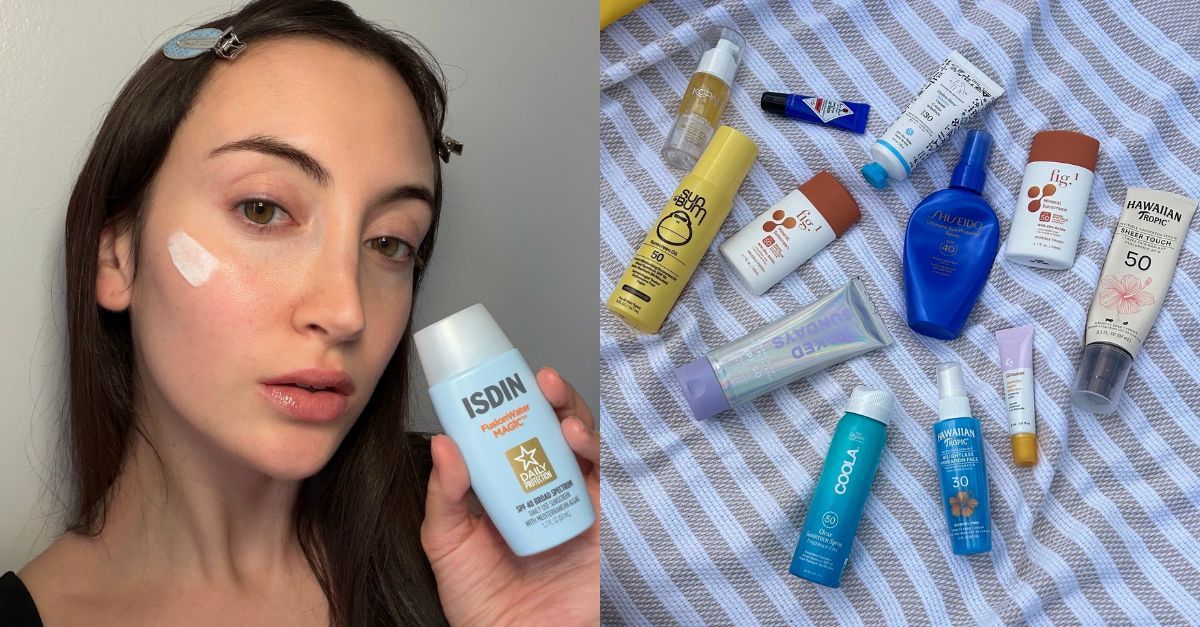
If you’re like me, you likely wear a hat, SPF 50, and sunglasses in order to shield your sensitive skin from the sun. My generation (Gen Z) knows and cares far more about sun protection than my mother’s did, but she always taught me to slather myself in the stuff 20 minutes before hitting the lounge chairs. However, it didn’t take long for us to realize that products with avobenzone (a common ingredient in chemical sunscreens) were causing my skin to break out in eczema patches as a child. Though my skin has since learned to tolerate chemical sunscreens, it’s caused me to approach SPF testing much differently.
Since beginning my career as a beauty editor, I’ve been cautiously trying different types of sunscreens—from sunscreen milks to SPF-infused makeup and tinted formulas—to see which could properly protect and soothe my irritable skin. “Sunscreen is very personal—it should match your skin type, sensitivity, and how long you’ll be in the sun,” says Kseniya Kobets, MD, board-certified dermatologist and director of cosmetic dermatology at Montefiore Einstein Advanced Care. The derm also recommends looking for formulas that are fragrance-free, non-comedogenic, and contain barrier-supporting ingredients such as glycerin, hyaluronic acid, and ceramides. If this sounds like a laundry list, buckle up.
After much trial and error, I’ve found that these eight perform the best on sensitive, dry skin. Keep reading to discover which formulas outshone the others.

The 8 Best Sunscreens for Sensitive Skin, At a GlanceBest Overall: EltaMD UV Clear Broad-Spectrum SPF 46
Elta MD
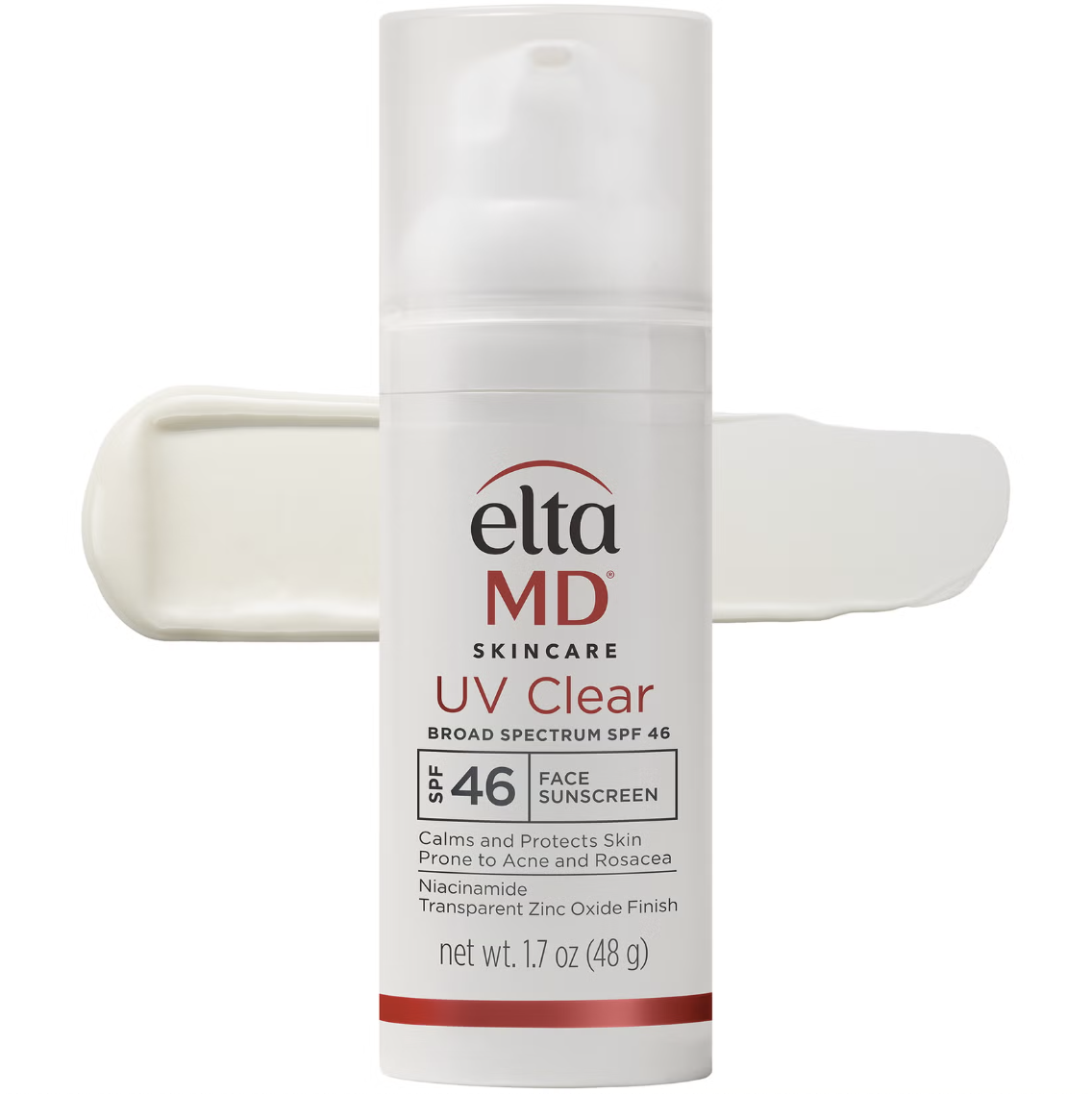
UV Clear Broad-Spectrum SPF 46
Pros: Gentle hybrid formula, calming ingredients, supports skin barrier
Cons: Pricey for a relatively small bottle
Type: Hybrid | SPF level: 46 | Key ingredients: Zinc oxide, octinoxate, niacinamide
“I’ve recommended EltaMD UV Clear Broad-Spectrum SPF 46 for years,” says Kobets. “It’s a hybrid formula (zinc oxide with octinoxate) but is very well-tolerated,” she adds. This sunscreen is a go-to for my 54-year-old mom and I, who both use it to hydrate and protect our dry, irritable skin. “It’s lightweight and contains niacinamide, which helps calm inflammation, regulate oil, and support the skin barrier, making it especially useful for acne- and rosacea-prone skin,” the dermatologist adds.
Customer review: “Life changing! I have rosacea and every sunscreen would irritate it; Finally got smart enough to ask my dermatologist for a recommendation, which was Elta MD. I use it every day and have not had any reactions. I’ve been touting this miracle to everyone—THANK YOU Elta MD.”
Best Mineral: Ultra Violette Future Screen SPF 50 Mineral Sunscreen Serum
Ultra Violette
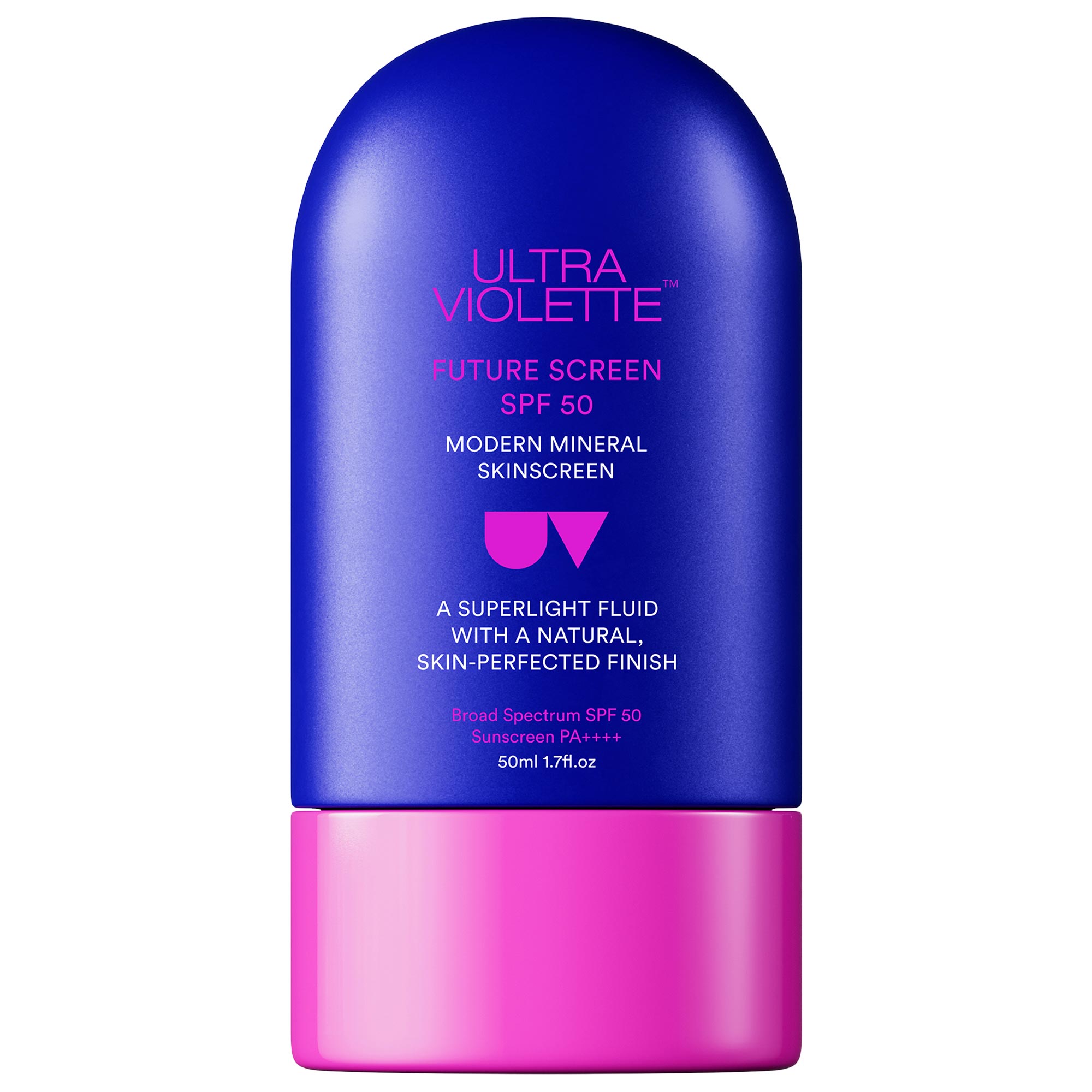
Future Screen SPF 50 Mineral Facial Sunscreen Serum
Pros: Free from common irritants, high SPF content, very lightweight texture, no white cast
Cons: Similarly pricey
Type: Mineral | SPF level: 50 | Key ingredients: Zinc, squalane, vitamin E
It’s safe to say that WWW beauty editors were excited when the Australian suncare brand Ultra Violette hit the U.S. market last year, and this mineral SPF remains one of the top choices for sensitive skin. Kobets explained that she usually recommends mineral sunscreens between SPF 30 and 50 “since they are less likely to cause irritation or allergic contact dermatitis,” and the Future Screen perfectly fits this bill. It’s fortified with skin-shielding zinc, nourishing thanks to squalane and vitamin E, and extra-safe for reactive skin due to its ultra-light texture and fragrance-free formula. Basically, it’s a home run.
Customer review: “I’ve been using the Ultra Violette Future Screen SPF 50 for a while now, and it really surprised me in a good way. The texture is lightweight for a mineral sunscreen and blends into the skin without that heavy, chalky feel you usually expect. It evens out my complexion slightly and gives a soft, natural finish without looking greasy. It sits comfortably on the skin throughout the day and layers well under makeup without pilling. I also like that it doesn’t dry my skin out, which is often an issue with mineral SPFs.”
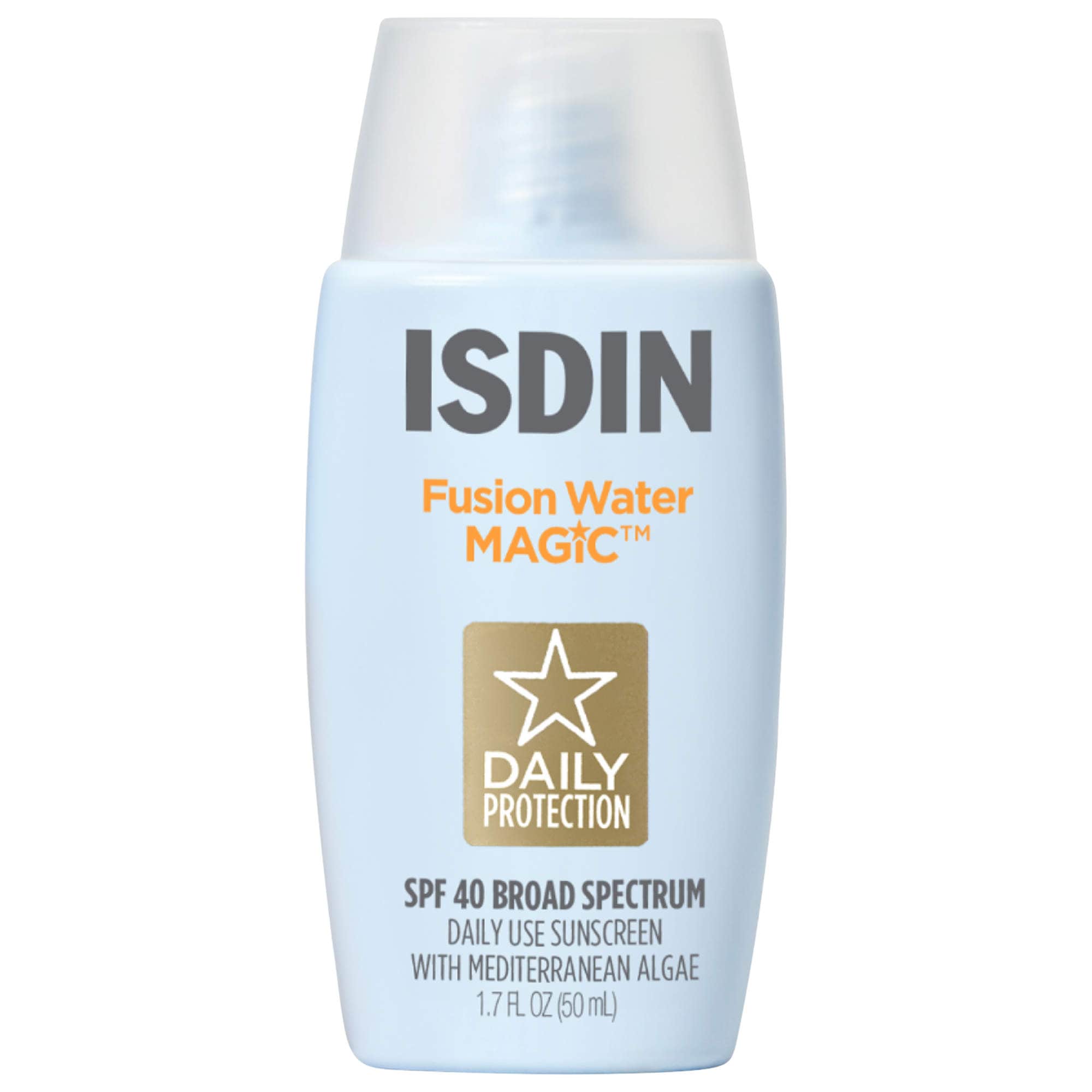
Best Chemical: Isdin Fusion Water Magic SPF 40 Sunscreen
Isdin
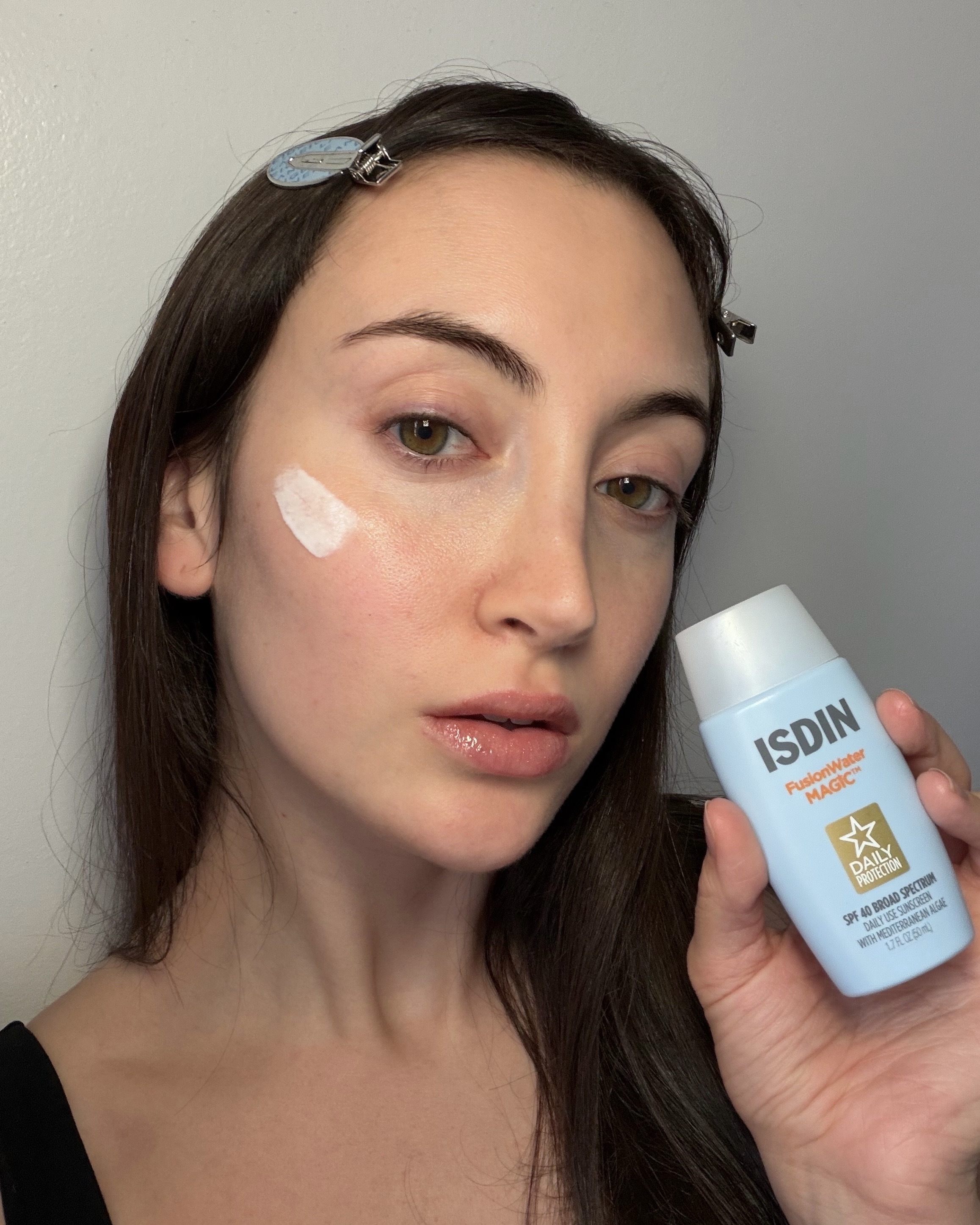
Fusion Water Magic SPF 40 Sunscreen
Pros: Deeply hydrating, works fabulously as a makeup primer, protects against environmental stressors
Cons: Not a mineral formula
Type: Chemical | SPF level: 40 | Key ingredients: Hyaluronic acid, vitamin E, Mediterranean algae
Though mineral formulas are widely considered to be the best types of sunscreen for sensitive skin, this chemical SPF is coming for the throne. I’ve been testing this multitasking sunscreen on my irritable skin for over two months and find myself reaching for it day after day thanks to its deeply smoothing formula, hydrating results, and makeup-perfecting powers. The SPF blocks not just UVA/UVB rays, but also protects the skin from blue light, photoaging, heat damage, and so much more, all while enriching the skin with hyaluronic acid and Mediterranean algae (which hydrates the skin for up to 12 hours!), plus vitamin E for protection. I can’t go a day without it.
Customer review: “I’m honestly obsessed. It feels like water on the skin… super lightweight, non-greasy, and no white cast at all. My skin looks hydrated, glowy, and it layers perfectly under makeup. This is a daily MUST for me. It gives full protection without ruining that clean, aesthetic skin vibe. If you hate heavy sunscreens, this is the one. 10/10.”
Best Budget: Banana Boat Sheer Sensitive SPF 50
Banana Boat
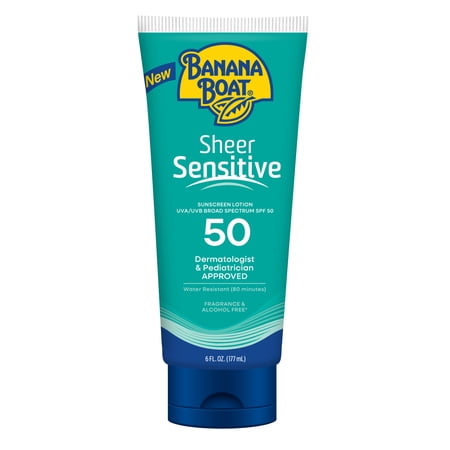
Sheer Sensitive Sunscreen Lotion SPF 50
Pros: Low price, works on both kids and adults, no white cast, water-resistant for 80 minutes
Cons: Lacks hydrating skincare benefits
Type: Chemical | SPF level: 50 | Key ingredients: Aloe, vitamin E
This is as good a beach sunscreen as you’re going to find at the drugstore, especially where it concerns sensitive and dry skin. Board-certified dermatologist Anthony Gaspari, MD, recommends this budget-friendly pick not only because of its low price point (though that’s always a perk), but for its near-invisible and irritant-free formula. “It easily blends into your skin without leaving a white cast behind, [and] it’s also noncomedogenic, fragrance-free, and it won’t clog pores.” This not only makes it a great option for those with eczema and inflammation, but also for acne-prone skin, too.
Customer review: “Sheer and lightweight. Blends in beautifully, creamy but not heavy, and blends well on the skin, also leaves a pearlized finish. Very faint scent, virtually unscented, I’d say. Coverage is great and didn’t irritate my rosacea. I would say for the size and value of purchase again, I like Banana Boat products and have used many types and times.”
Best Drugstore: CeraVe Tinted Sheer Mineral SPF 30
CeraVe
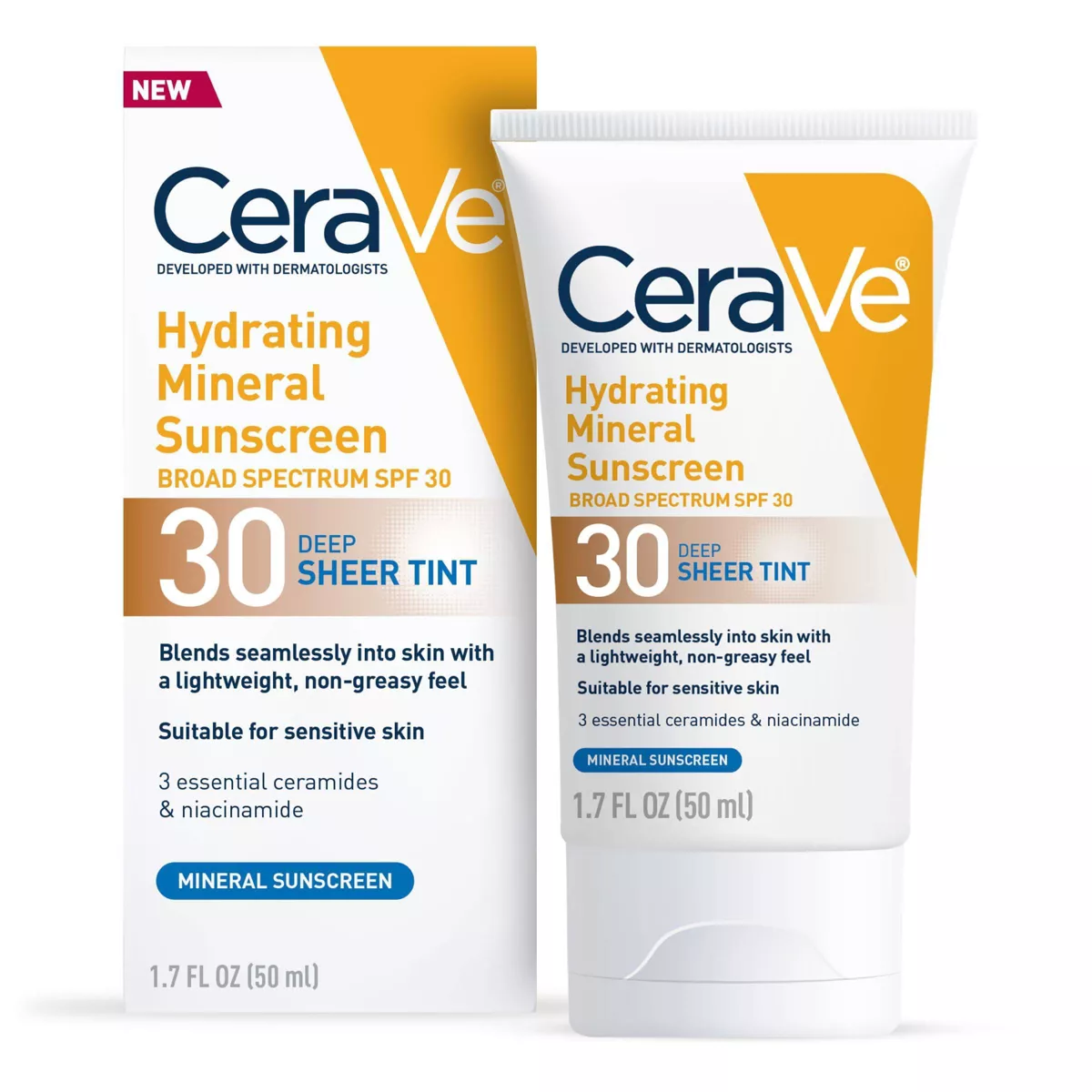
Tinted Sheer Mineral SPF 30
Pros: Offers shades for deeper skin tones, budget-friendly price, hydrating formula
Cons: Honestly, none
Type: Mineral | SPF level: 30 | Key ingredients: Hyaluronic acid, niacinamide, ceramides
If you’re looking for a sunscreen that works wonderfully with your sensitive skin and looks even better on top of it, stop scrolling. Kobets recommends this drugstore tinted SPF for anyone looking for a bit of tone-evening in their daily SPF, especially if white sunscreen tends to leave a white cast on your skin tone. The dermatologist specifically recommends this option for those with warmer or yellow skin tones (she says Neutrogena’s Mineral UV Tint Face Liquid Sunscreen SPF 30 is great for cool and red undertones), but also lauds its moisturizing and barrier-protecting ingredients list.
Customer review: “I have tried multiple tinted moisturizers, both mineral and not; both very high-end and drugstore. They never worked, and I always got freckles. I use Rx Trentinoin and other Rx face treatments, so I’m very careful in the sun. I thought I’d give this a try for our trip to the Caribbean. Well, we spent ALL DAY in the sun at the beach, in pools, and at the waterpark. NOT ONE FRECKLE, (which my derm says are indicators of sun damage/exposure). Granted, I religiously reapplied, but even after 6 days, the tube still had a good amount left. BUY!”
Best Tinted: Drmtlgy Universal Tinted Moisturizer SPF 46
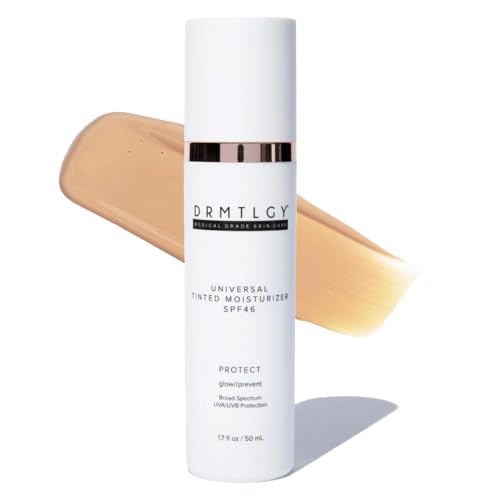
DRMTLGY
Universal Tinted Moisturizer SPF 46
Pros: Filters block the sun and signs of aging, corrects uneven tone, doesn’t leave a white cast on deep skin
Cons: Wish it came in deeper shades, still
Type: Hybrid | SPF level: tk | Key ingredients: Niacinamide, vitamin E, sodium hyaluronate
We can’t discuss tinted SPF without bringing up this dermatologist-loved formula. Kobets describes Drmtlgy’s Universal Tinted Moisturizer as a great middle-of-the-road (price-wise) product that can hydrate, perfect, and protect the skin in one fell swoop. “It combines zinc oxide with octinoxate, giving you mineral protection with a more cosmetically elegant finish,” she explains of the hybrid chemical-mineral blend formula. “It’s lightweight, layers well, and offers a subtle, polished look for everyday use.” My mom swears by this sunscreen and has since turned her 50+ aged friends onto it, too.
Customer review: “Love this—so happy with this product! I’ve been using it a little over a year now, and it’s such a lifesaver. I have very sensitive, older, still acne-prone skin, and (sad to say) I avoided wearing sunscreen on my face for decades due to almost *everything* else irritating my face. […] But this—THIS!—is amazing! So light, glides right on, dries quickly, and leaves just a soft, dewy glow that doesn’t look oily at all, even though you feel the moisturizing all day. And I get enough sheer coverage to even out my skin tone, ease some of the redness, and, I dare say, I just look healthier.”
Best Lightweight: La Roche-Posay Anthelios Light Fluid Sunscreen SPF 50
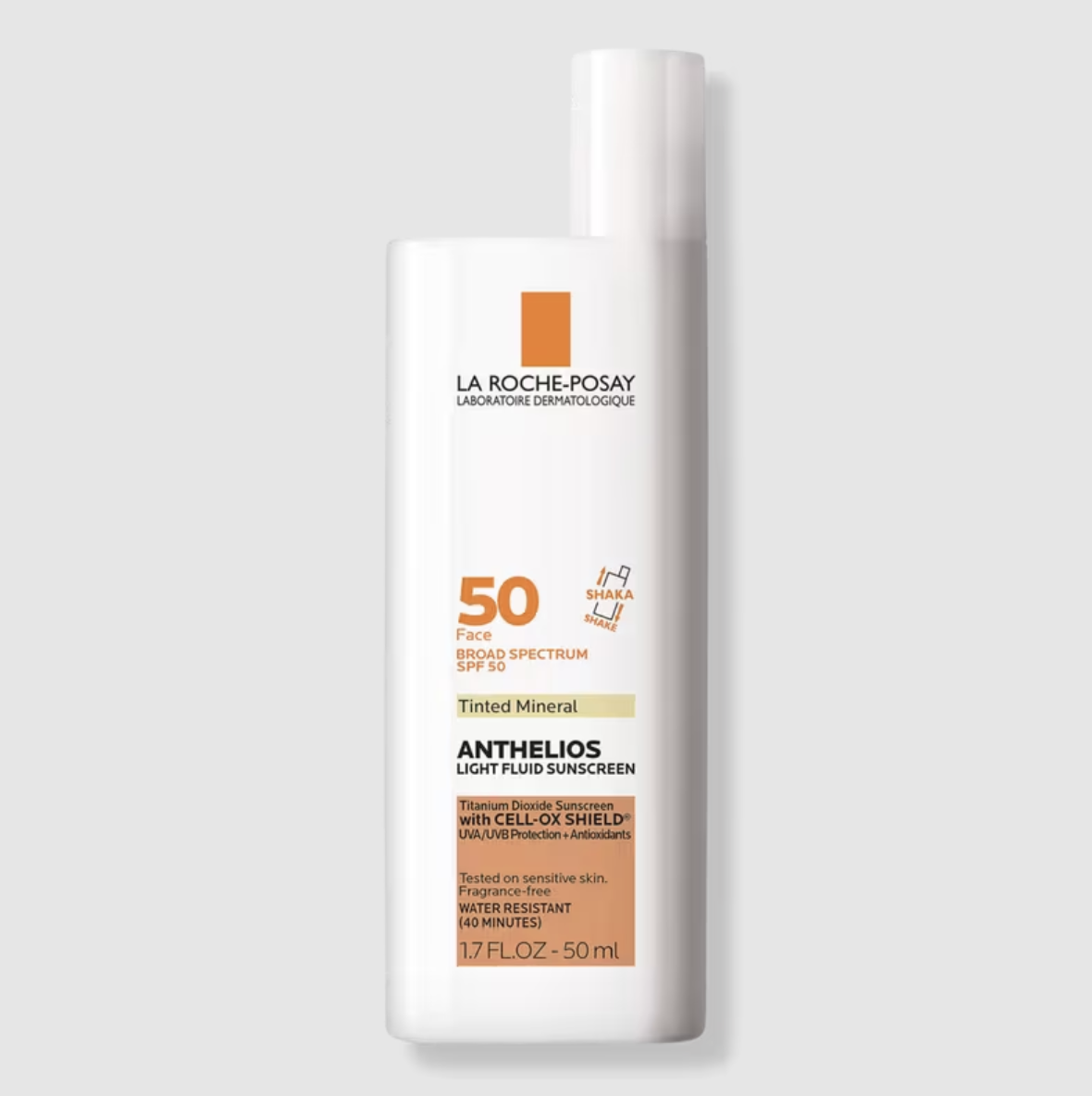
La Roche-Posay
Anthelios Mineral Tinted Light Fluid Sunscreen SPF 50
Pros: Comes in a wider shade range, featherlight texture, non-greasy feel
Cons: Slightly expensive
Type: Mineral | SPF level: 50 | Key ingredients: Antioxidants, titanium dioxide, iron oxides
This SPF also excels in the tinted department (it comes in several shades for a wider range of skin tones), but it’s highly revered for its barely there texture and serum-like consistency. The formula is fortified with UV-blocking mineral filters and tone-blurring pigments while also offering protective, skin-enriching benefits via a blend of antioxidants. “It relies more on titanium dioxide, which is slightly less comprehensive for UVA coverage than zinc oxide,” says Kobets, “but with proper application and reapplication, it still provides effective daily protection.”
Customer review: “It’s pricey but completely worth it. No white cast, no orange tones, and it doesn’t irritate or break out my sensitive, acne-prone skin. I have light-medium skin, and this is basically the perfect shade for me. When my skin is in good shape, this sunscreen doubles as foundation. When I have acne and scarring to cover, it adds some extra coverage. This sunscreen does such a great job of protecting my skin when I’m out and about, even when it’s super hot out. I usually don’t repurchase sunscreens, but I’ve bought at least five of this one.”
Best for Mature Skin: Doctor Babor Mineral Face Sunscreen SPF 30
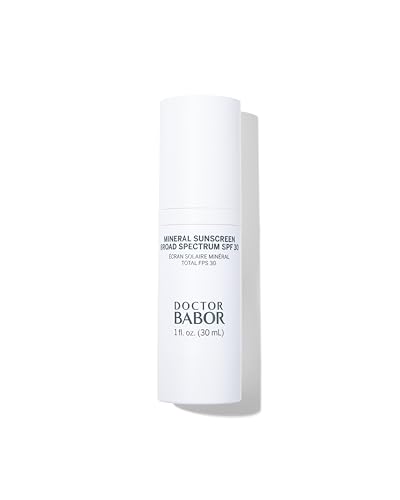
Doctor Babor
Mineral Face Sunscreen SPF 30
Pros: Plays well with other formulas, very hydrating, prep skin well for makeup
Cons: Quite pricey
Type: Mineral | SPF level: 30 | Key ingredients: Zinc oxide, bisabol, winter cherry
“For patients who want something more lightweight, elegant, and skincare-like, Doctor Babor’s Mineral SPF 30 is a nice option,” says Kobets. “It uses zinc oxide and includes supportive ingredients like inositol for barrier protection, along with calming and antioxidant ingredients like bisabolol, vitamin E, beta-carotene, and winter cherry extract.” The dermatologist appreciates that it’s lightweight, can absorb into the skin quickly, and holds up throughout the day. “I tend to think of this as more of a layering sunscreen,” she explains. “It works well under a tinted SPF or foundation when applying to the face and neck.”
Customer review: “I have struggled for years to find a sunscreen that didn’t cause breakouts on my face. I have been using this daily for about 6 months without any irritation. It does have an odd sort of chemical smell, but I prefer that to weird fragrances. There is no white cast, and it wears well on its own or under foundation.”
What to Look For in Sunscreen for Sensitive SkinSensitivity identification: “Those with sensitive skin should have dermatologic assessments to determine if there is an underlying allergy (allergic contact dermatitis),” says Gapari. “Irritation (non-allergic) represents intolerance, but not an allergic condition, and is much more common than skin allergy. If an allergy is identified, dermatologic guidance will provide detailed information about the product(s) to avoid.”Formula type: Most sunscreens fall under the mineral or chemical umbrellas, though there are a few unicorn hybrid options on the market (and this list). “The biggest difference between mineral and chemical sunscreens is that some consumers can develop allergic reactions to chemical sunscreens, meaning it can chemically react with structural components of the skin,” explains Gapari. “There is no evidence that mineral sunscreens can cause allergic reactions, and thus are considered safer for the consumer with sensitive skin and those with known skin allergies.”Hydration: “Ingredients like glycerin, hyaluronic acid, ceramides, and squalane help maintain hydration and improve tolerability,” says Kobets. “I also look for hypoallergenic, fragrance-free botanical ingredients that can help calm and soothe the skin. Well-hydrated skin looks smoother overall, so I tend to avoid overly matte or drying formulas that can disrupt the barrier.”How We Chose
After testing several sensitive skin-friendly sunscreens on her own irritable skin type, WWW associate beauty editor Alyssa Brascia interviewed two board-certified dermatologists for their professional recommendations—and hot takes—on the topic. Considering underlying skin conditions, other symptoms that usually accompany sensitive skin types (dryness, acne, etc.), we compiled this list of the best sunscreens for sensitive skin to streamline your shopping experience.
At Who What Wear, we know that beauty isn’t one-size-fits-all. Over the years, our editors have tested thousands of products—including skincare, makeup, haircare, and nails—while also working closely with trusted experts, like renowned dermatologists, celebrity makeup artists, and other leading industry insiders. Together, this ensures every guide is well-researched, inclusive, and relevant to you.
We focus on formulas that deliver, whether they’re affordable favorites or luxury investments. Our product selection is based on tangible results, ingredient know-how, and what we’d truly recommend to our closest friends and family members.