





If you’re in the supermarket grabbing supplies to enjoy in the park, it’s easy to end up with a basket full of ultra-processed foods (UPFs). From crisps and dips to sausage rolls and chicken skewers, plenty of convenience picnic food comes laden with additives, processed textures and engineered combinations of salt, carbs and fat to make it hard to stop eating, even when you are full. Wash it down with a canned drink and you could be ingesting a cocktail of additives that have been shown to negatively affect gut health, as well as high levels of sugar and artificial sweeteners.
But it’s not all bad. Pick carefully — nutrient-rich prawns over the heavily processed meat in a sausage roll; hummus made with extra virgin olive oil over a chive dip full of engineered cheese — and you’ll do your health no harm. There are even some decent fizzy drinks out there. I like Dash, which has little sugar and zero artificial flavourings. Even your choice of ice cream will make a difference. It is more expensive, but I love a portion of Ice Cream Union. After all, summer food doesn’t just have to be about virtuous salads.
Dr Federica Amati is the nutrition lead at Imperial College School of Medicine and head nutritionist at Zoe. Her latest book, The Appetite Reset, is available to pre-order
Hummus, dips, crisps and dippers
What you need to know
Check for additives such as emulsifiers, preservatives, artificial flavourings and colourings — they disrupt your gut microbiome. The fewer the ingredients, the better.
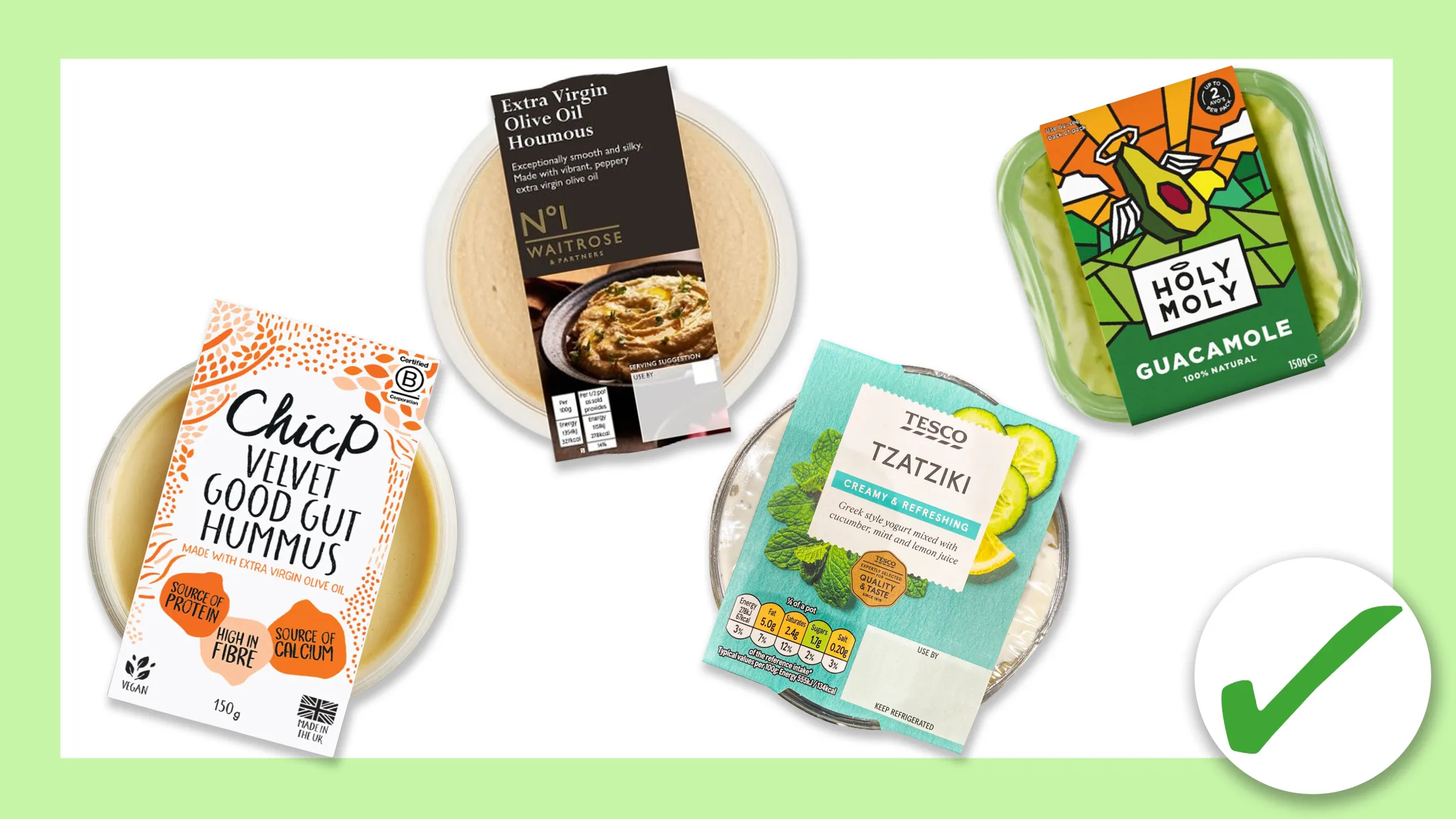
ChicP Velvet Good Gut hummus ✔
Processing risk scale Low
Nutrition per 100g Sat fat, 2.2g. Sugar, 0.8g. Salt, 0.6g. Protein, 8g. Fibre, 9.6g. Cals, 222
One of the best supermarket hummus options. The base is strong: chickpeas (64 per cent) and tahini (15 per cent) deliver meaningful fibre, protein and minerals (magnesium and iron). It’s made with extra virgin olive oil, which has anti-inflammatory and antioxidant properties.
Waitrose No 1 extra virgin olive oil hummus ✔
Processing risk scale No risk
Nutrition per 100g Sat fat, 4.1g. Sugar, 0.6g. Salt, 0.69g. Protein, 6.4g. Fibre, 3.8g. Cals, 327
Another great hummus made with extra virgin olive oil. This provides monounsaturated fats, which are better for metabolic health and inflammation. There are no additives and no attempt to stretch shelf life at the expense of food quality.
Food newsletter
Restaurant reviews, insider insights and recipes from the best chefs in the business.
Sign up with one click
Tesco tzatziki ✔
Processing risk scale No risk
Nutrition per 100g Sat fat, 4.7g. Sugar, 3.4g. Salt, 0.41g. Protein, 4.6g. Fibre, 0.6g. Cals, 134
It’s not quite as good as making tzatziki yourself with Greek yoghurt — “Greek style” usually means a manufactured version designed to mimic strained Greek yoghurt, with texture supported here by a bit of cornflour — but it still delivers probiotic benefits plus simple ingredients: cucumber, garlic, mint, lemon and a touch of rapeseed oil. While the saturated fat is noticeable and there’s not much fibre, this dip is well controlled on salt and at least the ingredients are recognisable.
Holy Moly guacamole ✔
Processing risk scale No risk
Nutrition per 100g Sat fat, 3.5g. Sugar, trace. Salt, 0.74g. Protein, 1.6g. Fibre, 6g. Cals, 144
A good example of a minimally processed dip. Avocado delivers mostly monounsaturated fats, which are metabolically more favourable than many processed fat blends, and helps with satiety and post-meal blood sugar control when eaten with carbs. It’s high in fibre and also brings potassium and fat-soluble nutrients that support cardiovascular health and improve absorption of antioxidants from other plant foods. Salt is reasonable, ingredients are simple and nothing here feels engineered.
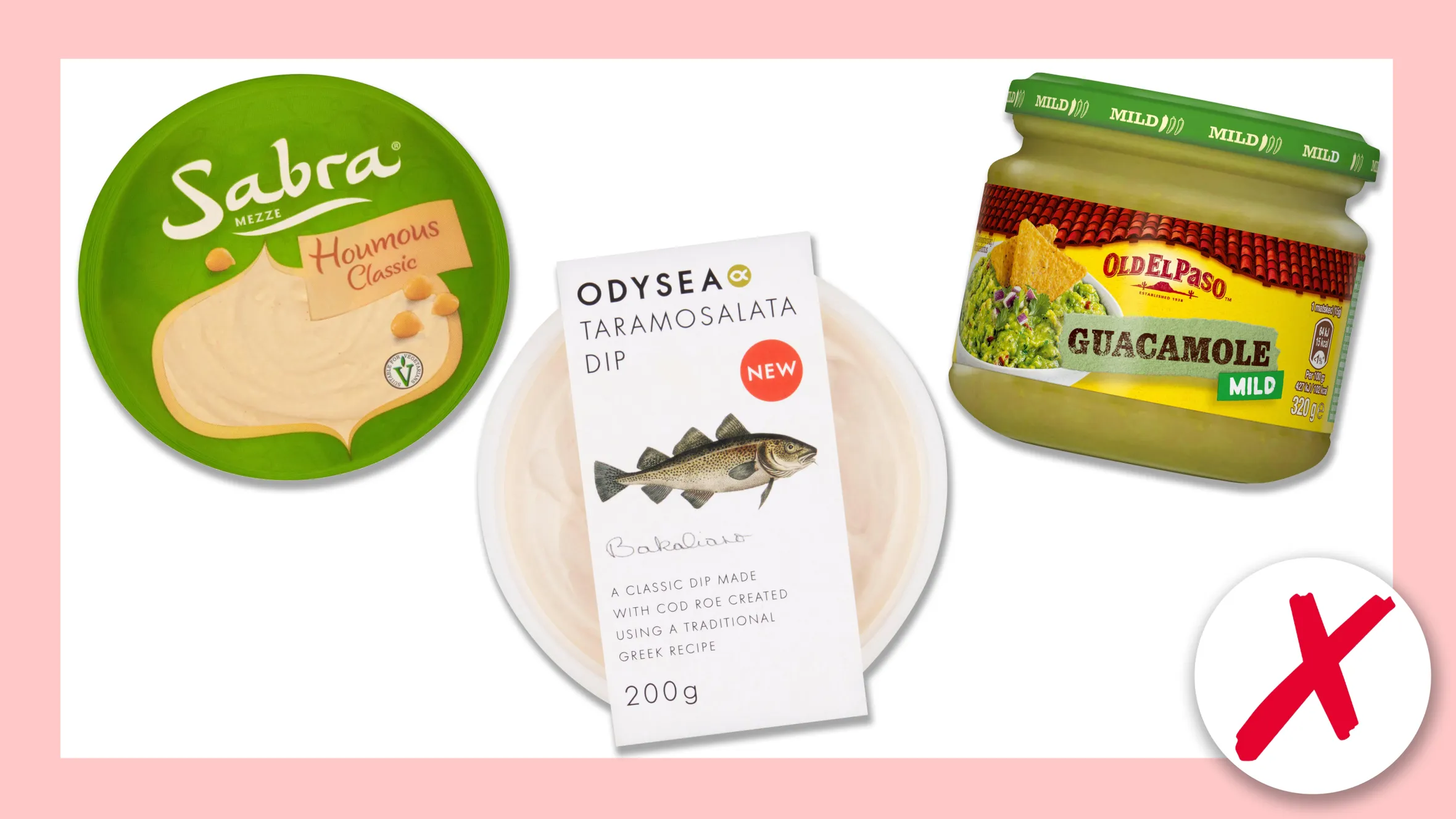
Sabra hummus classic ✘
Processing risk scale Medium
Nutrition per 100g Sat fat, 3g. Sugar, 0.3g. Salt, 1.3g. Protein, 6.5g. Fibre, not listed. Cals, 329
Yes, it has 51 per cent chickpeas, but also a cocktail of additives including sodium carbonate, citric acid and potassium sorbate to stabilise and preserve it. Basically, it’s been engineered for shelf life and consistency.
Odysea taramasalata ✘
Processing risk scale Medium
Nutrition per 100g Sat fat, 4.5g. Sugar, 0.5g. Salt, 0.6g. Protein, 2.3g. Fibre, trace. Cals, 537
This is a rapeseed oil spread with a token 8 per cent cod roe. The rest is essentially engineered texture: refined wheat breadcrumbs, water, salt, sugar, plus preservatives and acidity regulators to keep it shelf-stable and spoonable for longer than any real food should need. Although potassium sorbate is common, some evidence suggests it may upset your microbiome. There’s no fibre and minimal protein, just fat, salt and additives designed for maximum spreadability and minimum resistance.
Old El Paso guacamole ✘
Processing risk scale High
Nutrition per 100g Sat fat, 1.8g. Sugar, 3.2g. Salt, 0.86g. Protein, 1.7g. Fibre, 1.6g. Cals, 102
Calling this guacamole is a stretch. A small amount of avocado is diluted with water, starches, oils, cream cheese and multiple added sugars. A long list of stabilisers, acidity regulators, preservatives, flavourings and colourings are used to rebuild what processing has taken away. Then there is the “cocktail effect” — the synergistic interaction between multiple additives in UPFs — where it is the combination, not the individual ingredients, that becomes concerning.
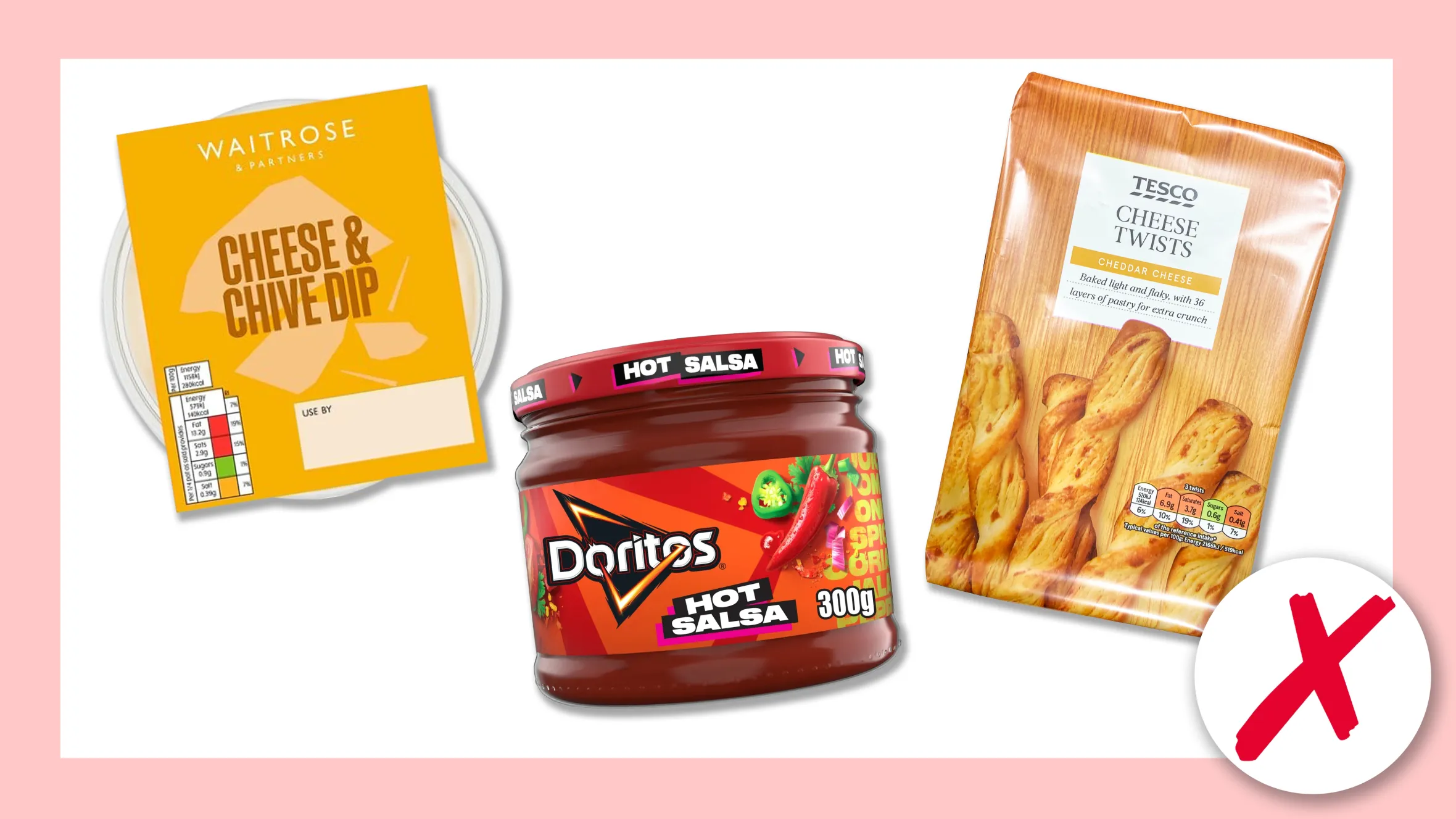
Waitrose cheese and chive dip ✘
Processing risk scale Medium
Nutrition per 100g Sat fat, 5.7g. Sugar, 1.7g. Salt, 0.78g. Protein, 3.3g. Fibre, 0.5g. Cals, 280
This is an ultra-processed dip dressed up to look more “food-like” than it really is. It’s mostly rapeseed oil, soured cream and starches, with a small amount of cheese. The result is a soft, engineered texture meant to do one thing very well: make it extremely easy to keep eating. Fibre is almost absent, protein is minimal and there is virtually nothing that supports satiety or gut health. This is the problem with UPFs — they don’t just taste good, they are designed to bypass normal appetite regulation.
Doritos hot salsa ✘
Processing risk scale Low
Nutrition per 100g Sat fat, 0.1g. Sugar, 5.1g. Salt, 1.3g. Protein, 1.5g. Fibre, 0.9g. Cals, 38
On its own, this dip is mostly tomato puree and vegetables, lightly thickened with modified maize starch and balanced with a small amount of sugar and salt. There’s nothing especially concerning. But this isn’t a food designed to be eaten in isolation — it’s meant to be paired with ultra-processed crisps. It becomes a vehicle for the high-volume snacking of refined starches where fibre is absent, so you never get full.
Tesco cheese twists ✘
Processing risk scale Low
Nutrition per 100g Sat fat, 15.6g. Sugar, 2.6g. Salt, 1.7g. Protein, 11.3g. Fibre, 3.7g. Cals, 519
These are engineered for taste and hyperpalatability, featuring a stack of refined flour, multiple added fats (palm oil, butter, coconut oil) and salt. There’s not too much processing but you are getting a cocktail effect: low-quality carbs paired with high saturated fat and salt, with only modest fibre to soften the blow. Just three twists provide one fifth of a woman’s recommended maximum saturated fat intake for the day.
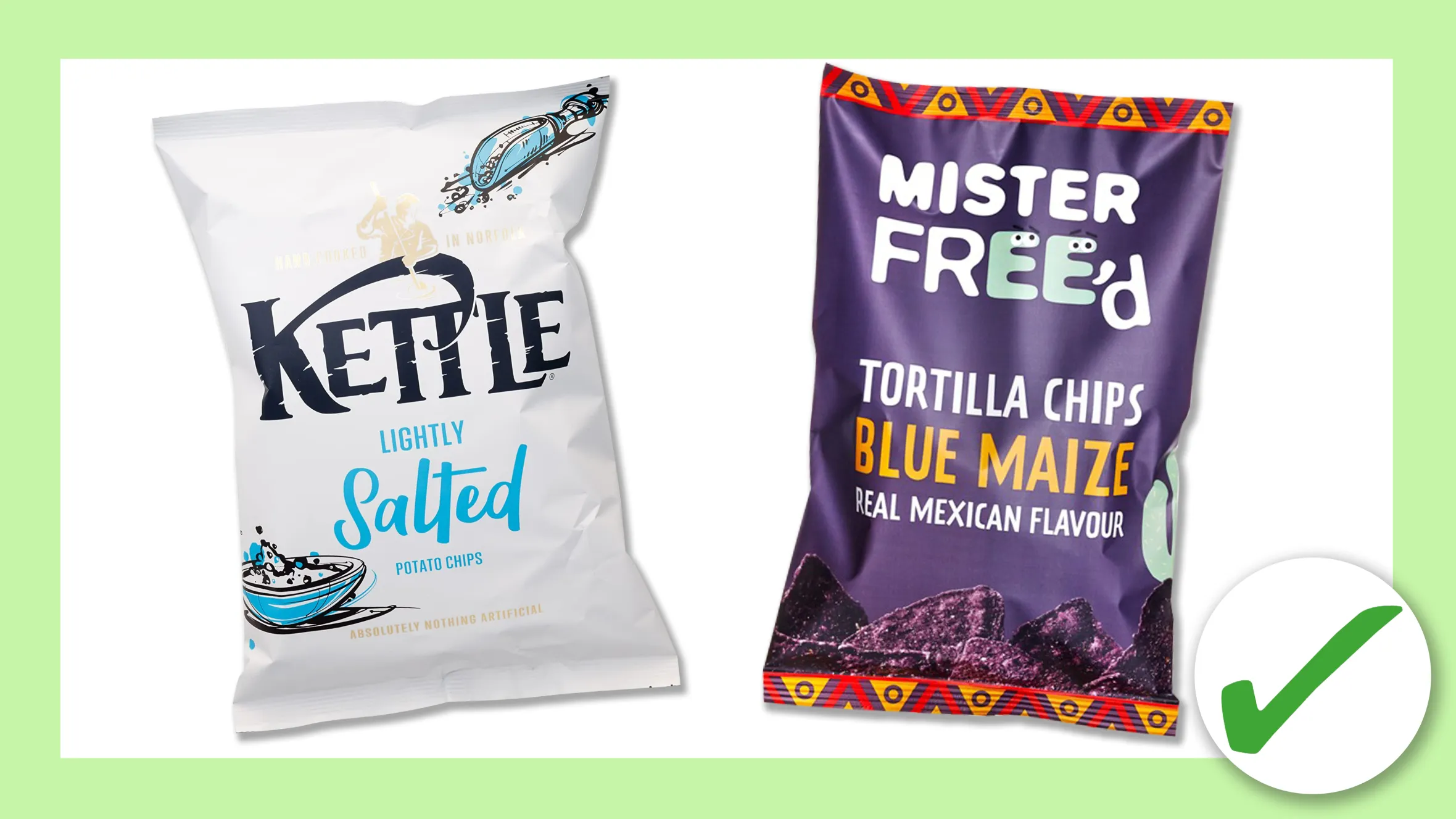
Kettle Chips lightly salted potato chips ✔
Processing risk scale Low
Nutrition per 100g Sat fat, 3g. Sugar, 0.1g. Salt, 0.65g. Protein, 7.7g. Fibre, 4.1g. Cals, 494
With crisps, what we really want is a simple ingredients list that features potatoes, a healthy vegetable oil and some salt. Kettle Chips offer just that. They still constitute a salty snack, though, so go easy on the portions.
Mister Free’d blue maize tortilla chips ✔
Processing risk scale Low
Nutrition per 100g Sat fat, 2.6g. Sugar, 1.5g. Salt, 0.8g. Protein, 6.5g. Fibre, 11.5g. Cals, 521
Containing just five whole-food ingredients and high in fibre, these are the chips I want to dip in my guacamole. They have very little sugar and contain some plant protein too. They are salty and delicious, which does make them hyperpalatable, but that’s not a huge surprise for a tortilla chip. Just watch how many you eat.
Picnic food
What you need to know
Steer clear of processed meats, sauces and dips that contain hidden sugar, and watch for pastries laden with saturated fats.
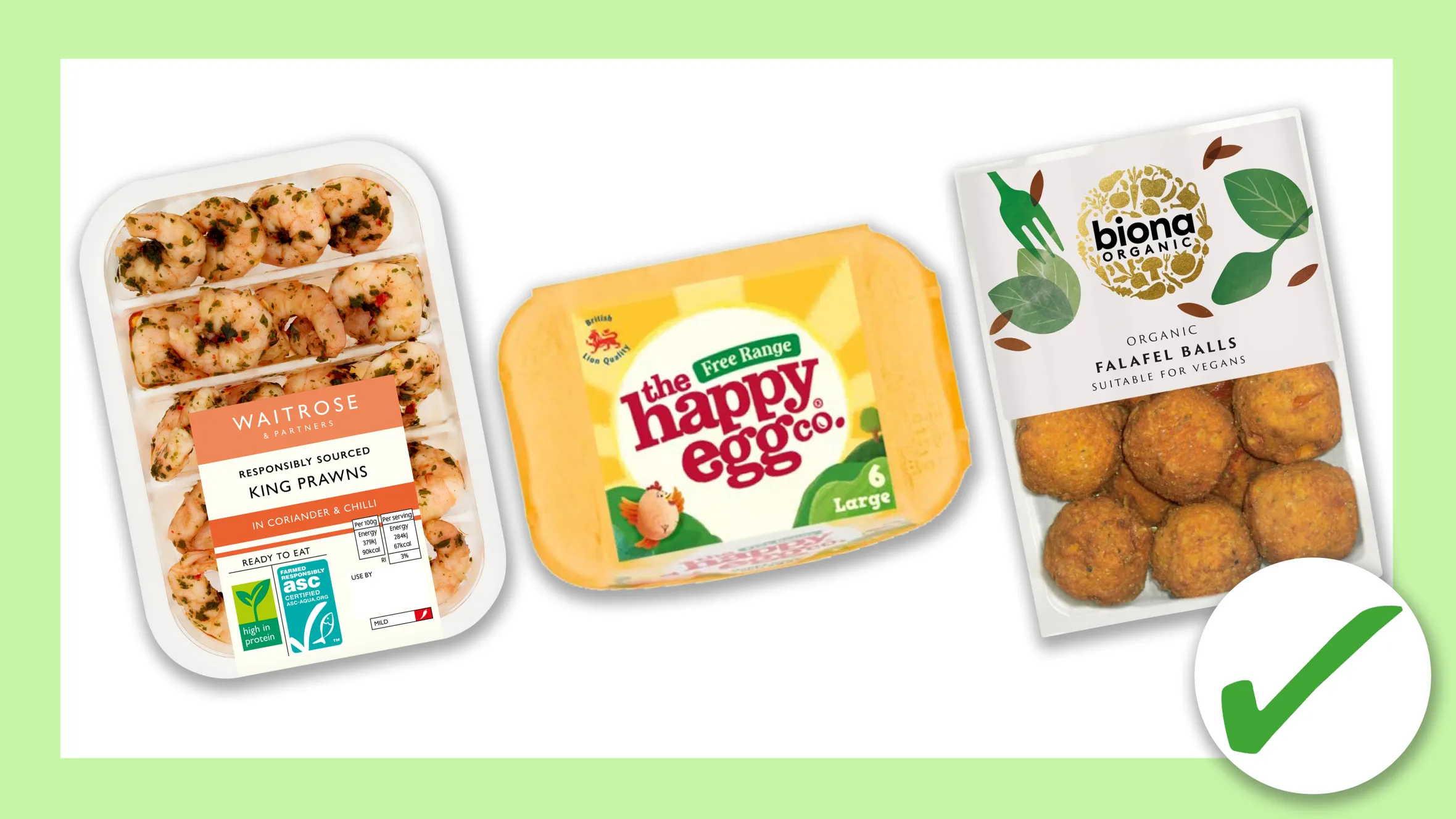
Waitrose king prawns in coriander and chill ✔
Processing risk scale No risk
Nutrition per 100g Sat fat, 0.2g. Sugar, trace. Salt, 1.37g. Protein, 15.9g. Fibre, trace. Cals, 90
If you’re grabbing picnic supplies from a supermarket shelf, pick prawns: they are one of the best dietary sources of selenium, a mineral that plays a key role in supporting our immune systems, protecting cells from oxidative stress and helping regulate thyroid function. They also provide choline, a nutrient crucial for brain function, memory and liver health. This option adds flavour and salt, but the sauce isn’t processed.
Hard-boiled eggs ✔
Processing risk scale No risk
Nutrition per 100g (1 egg is 60g) Sat fat, 2.5g. Sugar, trace. Salt, 0.39g. Protein, 12.6g. Fibre, none. Cals, 77 per large egg
The original picnic staple before convenience food became so prevalent. They may be a small faff to organise — nine minutes of your time to be precise — but the benefits are massive. You’ll get a solid amount of protein to help you feel full, with negligible sugar. Boiled eggs are a compact package of essential nutrients that support everything from muscle health to brain function. And produce no plastic litter either.
Biona Organic falafel balls ✔
Processing risk scale Low
Nutrition per 100g Sat fat, 1.4g. Sugar, 2.8g. Salt, 1.3g. Protein, 10g. Fibre, 8.5g. Cals, 217
These are not quite as good as a tin of pure chickpeas because they’ve been very slightly processed, with added oil and salt. That said, they’re a convenient way to consume a veg you can’t eat enough of. Chickpeas are rich in fibre, resistant starch and plant protein, supporting gut microbial diversity, steadier blood sugar responses and improved satiety after meals. With 8.5g fibre and 10g protein per 100g, these are a far better option than most refined grab-and-go foods.
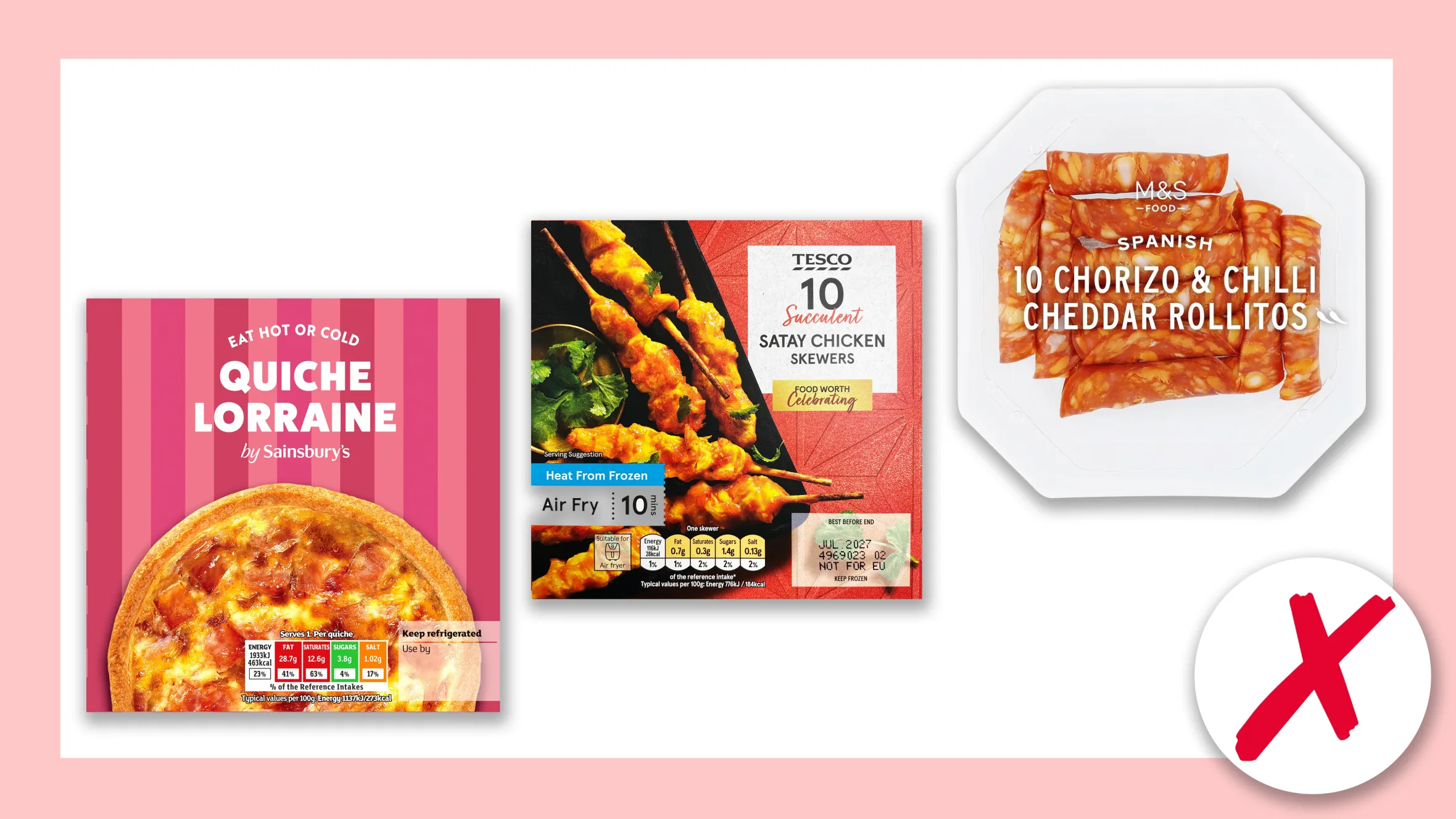
Sainsbury’s quiche lorraine ✘
Processing risk scale High
Nutrition per 100g Sat fat, 7.4g. Sugar, 2.2g. Salt, 0.6g. Protein, 10.1g. Fibre, 0.6g. Cals, 273 (463 per 170g quiche)
This is a UPF built from industrial shortcuts rather than real ingredients. The bacon is reformed meat with water, starch, dextrose and sodium nitrite, a preservative that, when eaten frequently, is associated with the formation of compounds linked to increased cancer risk. This product is extremely high in saturated fat, almost devoid of fibre and designed to be hyperpalatable rather than filling, making it very easy to overeat.
Tesco 10 satay chicken skewers ✘
Processing risk scale Low
Nutrition per 100g Sat fat, 2.3g. Sugar, 9.3g. Salt, 0.9g. Protein, 25.4g. Fibre, 1g. Cals, 184 (28 per 15g skewer)
Less “satay skewer”, more “chicken stick wearing a sugar disguise”. Sure, it looks like a good high-protein choice, but the satay sauce has been highly engineered. The traditional peanut base has been stripped out and replaced with coconut milk plus a network of binders and sugars: fructose syrup, sugar, tapioca starch and cornflour. Together, these rapidly increase glycaemic load while acting as cheap texture builders. It’s chicken coated in a sweetened starch matrix.
M&S chorizo and chilli cheddar rollitos ✘
Processing risk High
Nutrition per 100g Sat fat, 19.2g. Sugar, 1.3g. Salt, 2.48g. Protein, 24g. Fibre, 1.4g. Cals, 381
These picky bits may look posh but essentially they’re just a tightly engineered mix of processed chorizo and high-fat cheddar — two ingredients already loaded with saturated fat and salt, then intensified through curing, salting and flavour enhancement. The chorizo is a processed meat preserved with nitrite and nitrate salts, which extend shelf life. There’s also added dextrose and a level of processing that has nothing to do with nourishment and everything to do with taste engineering and shelf stability.
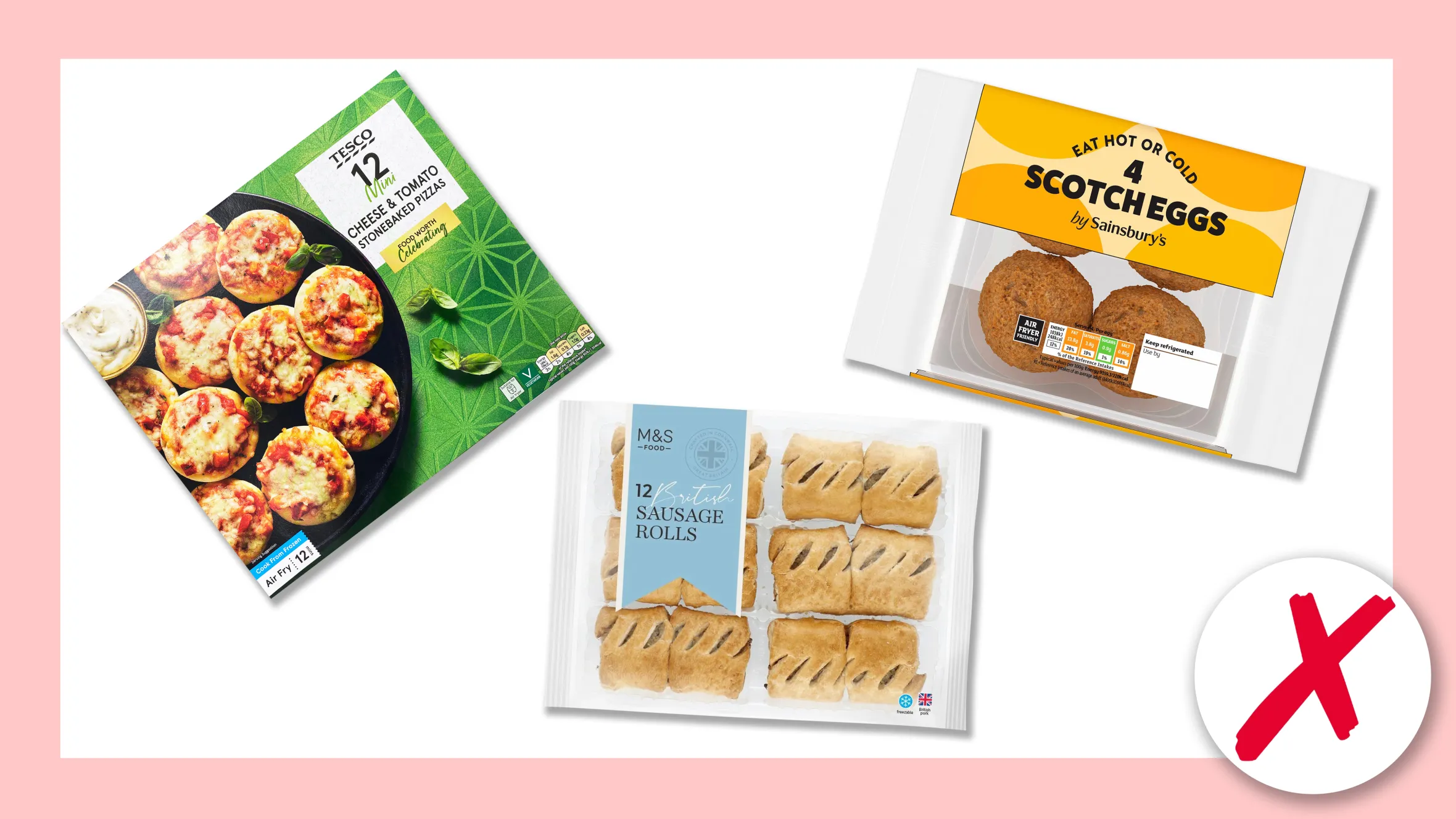
Tesco 12 mini cheese and tomato pizzas ✘
Processing risk scale Low
Nutrition per 100g Sat fat, 2.6g. Sugar, 3.5g. Salt, 0.79g. Protein, 8.8g. Fibre, 3.5g. Cals, 204 (59 per 29g pizza)
These mini pizzas combine dextrose, malted wheat flour and barley malt extract, creating a perfect storm for your metabolism: a high-glycaemic hit that ensures the crust browns beautifully but swiftly raises blood sugar levels. However, the real issue here is the salt. While 0.23g per pizza sounds like a pinch, if you ate four in the park you’d be hitting almost a sixth of your daily salt allowance in one snack.
M&S 12 sausage rolls ✘
Processing risk scale Low
Nutrition per 100g Sat fat, 12g. Sugar, 1g. Salt, 0.93g. Protein, 10.9g. Fibre, 1.2g. Cals, 387
The processing of this product is deemed “low risk” mainly because it contains relatively few additives compared with more heavily engineered UPFs. However, you’re still treating yourself to mouthfuls of refined pastry wrapped around meat that has been minced, seasoned and structurally altered, delivering high saturated fat, very low fibre and a significant salt load. Eat three and you’ve already consumed just under half of your daily salt allowance of 6g.
Sainsbury’s Scotch eggs ✘
Processing risk Medium
Nutrition per 100g Sat fat, 4.8g. Sugar, 0.8g. Salt, 0.68g. Protein, 10.9g. Fibre, 1.1g. Cals, 248 (281 per egg)
This is a processed meat product in disguise — egg combined with pork (26 per cent), then wrapped in a refined wheat flour coating. The issue is the use of processed cuts and added pork fat, which pushes up the saturated fat content while displacing more nutrient-dense ingredients. Stick with a plain boiled egg, which would give you the same high-quality protein.
Ice cream
What you need to know
Choose products made with whole foods like milk, cream and fruits. Too many added artificial sweeteners such as sucralose, emulsifiers and thickeners make this treat worse for our health.
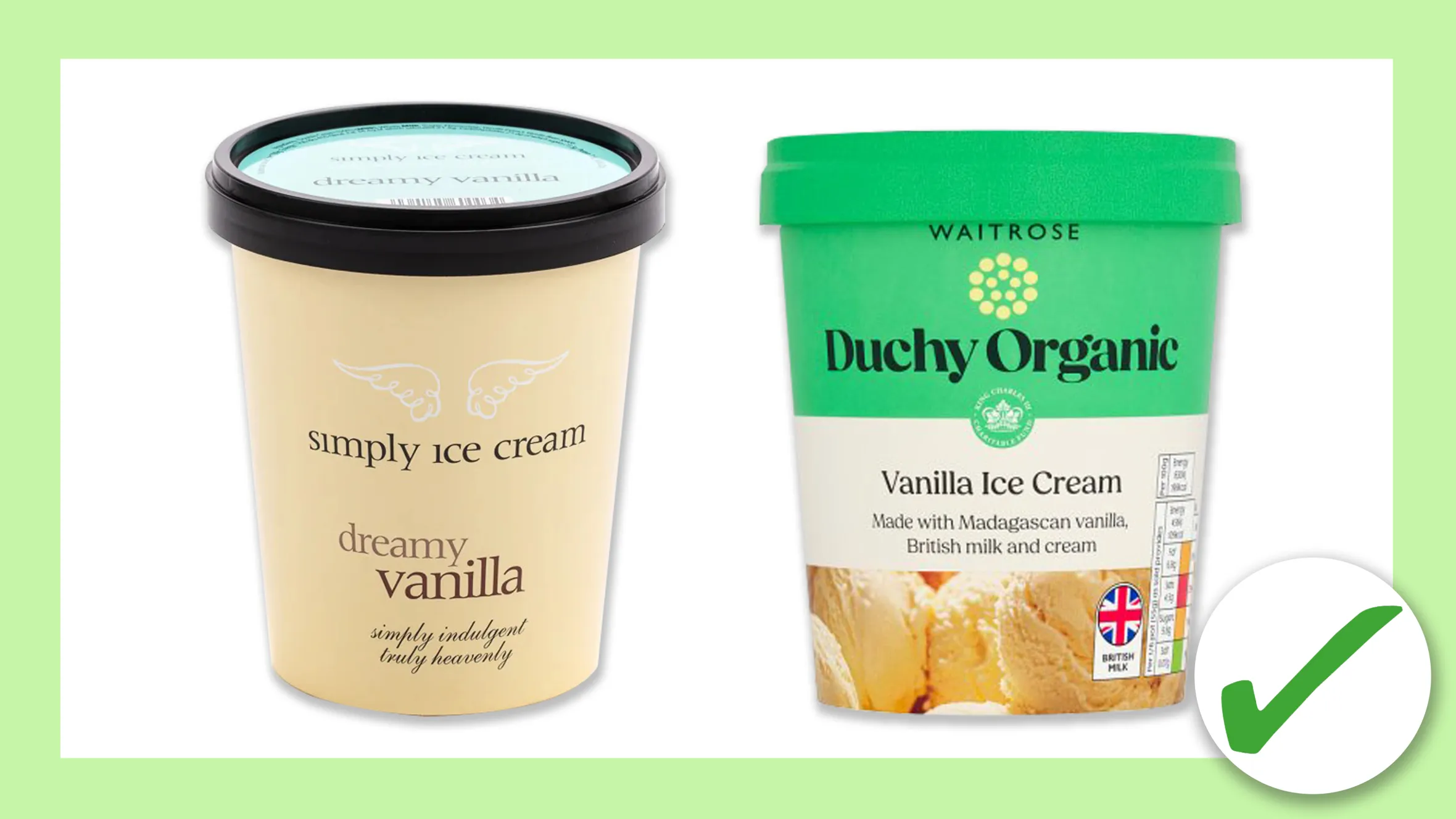
Simply Ice Cream vanilla ✔
Processing risk scale Low
Nutrition per 100g Sat fat, 21.5g. Sugar, 21.5g. Salt, 0.22g. Protein, 3.6g. Fibre, not listed. Cals, 410
Just four ingredients — cream, milk, sugar and vanilla. But beware: at 21.5g saturated fat and 21.5g sugar per 100g, a large scoop can take up a significant portion of an adult’s daily recommended limits for both. The absence of emulsifiers and stabilisers is positive, but the concentration of fat and sugar makes this very rich. Treat it as an occasional pleasure.
Duchy Organic vanilla ✔
Processing risk scale Low
Nutrition per 100g Sat fat, 8.1g. Sugar, 17.8g. Salt, 0.13g. Protein, 4g. Fibre, trace. Cals, 199
There’s no such thing as “healthy” ice cream, but this one is at least recognisably food. The ingredients list is short and familiar: milk, cream, sugar, skimmed milk powder, free-range egg, vanilla extract. No emulsifiers and stabilisers engineered for shelf stability or texture manipulation. You still get indulgence, but without the industrial layering of additives that characterises most supermarket ice cream. It’s a more transparent version of a treat, and that distinction matters.
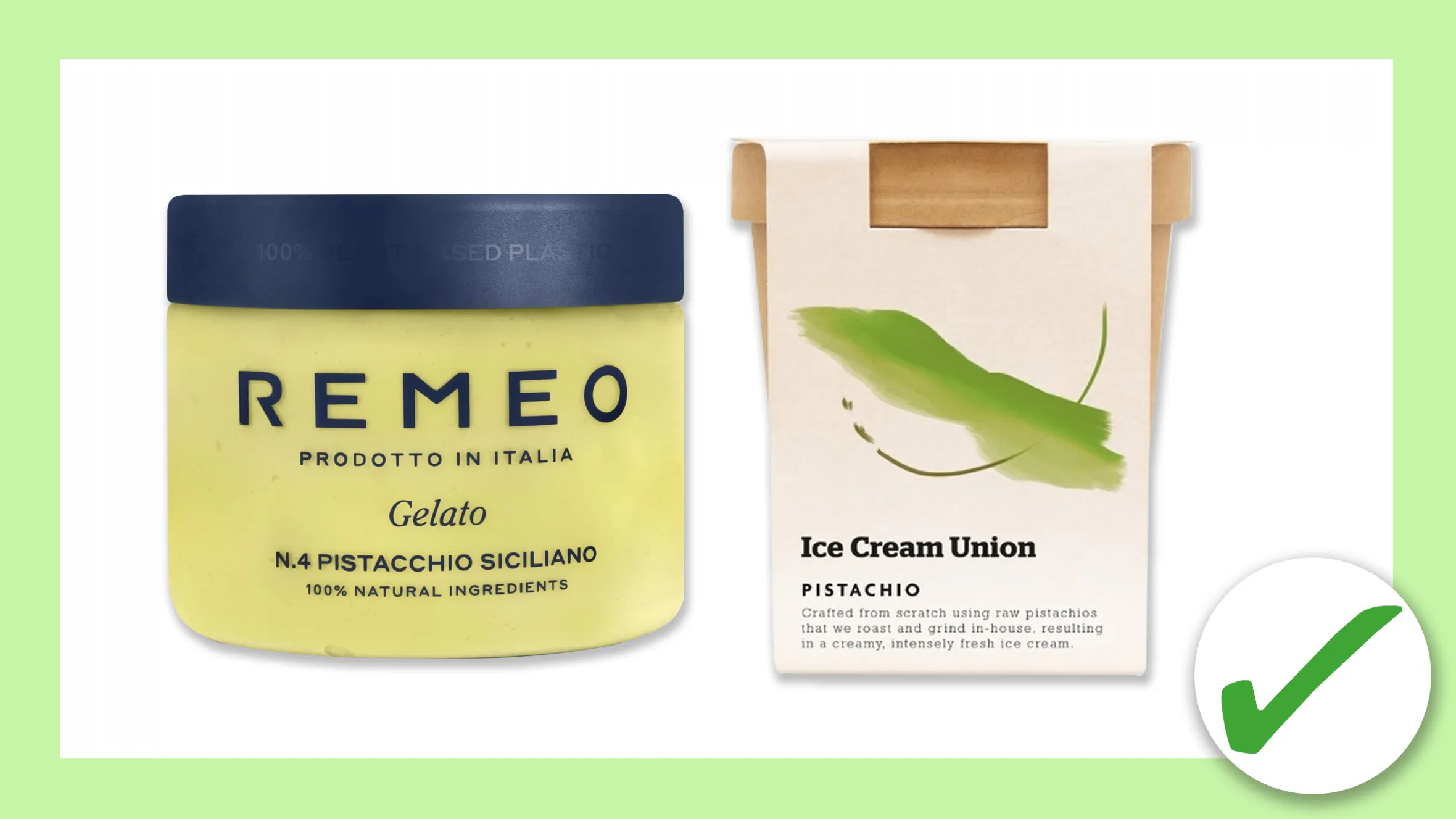
Remeo pistacchio Siciliano gelato ✔
Processing risk scale Medium
Nutrition per 100ml Sat fat, 2.3g. Sugar, 13g. Salt, trace. Protein, 2.8g. Fibre, 0.5g. Cals, 132
One of the few supermarket ice cream brands that resemble a gelato I would eat when I go home to Italy for the holidays. Made with whole milk, cream and real Sicilian pistachio paste and egg yolk, it only has one stabiliser and glucose syrup as additives. It is, however, hyperpalatable due to the fat, salt and sugar combo, so watch your portion.
Ice Cream Union pistachio ✔
Processing risk scale Low
Nutrition per 100g Sat fat, 1.47g. Sugar, 17.97g. Salt, 0.31g. Protein, 6.1g. Fibre, 1.23g. Cals, 194
Yes, it’s pricey, but Ice Cream Union’s pistachio is the real thing: 10 per cent pistachio paste, whole milk and double cream, with no artificial flavourings or colours. The stabilisers, locust bean gum and guar gum, are both naturally derived. The inverted sugar syrup is better than a multitude of artificial sweeteners such as sucralose and aspartame. If you’re going to have a scoop of something, seek this out.
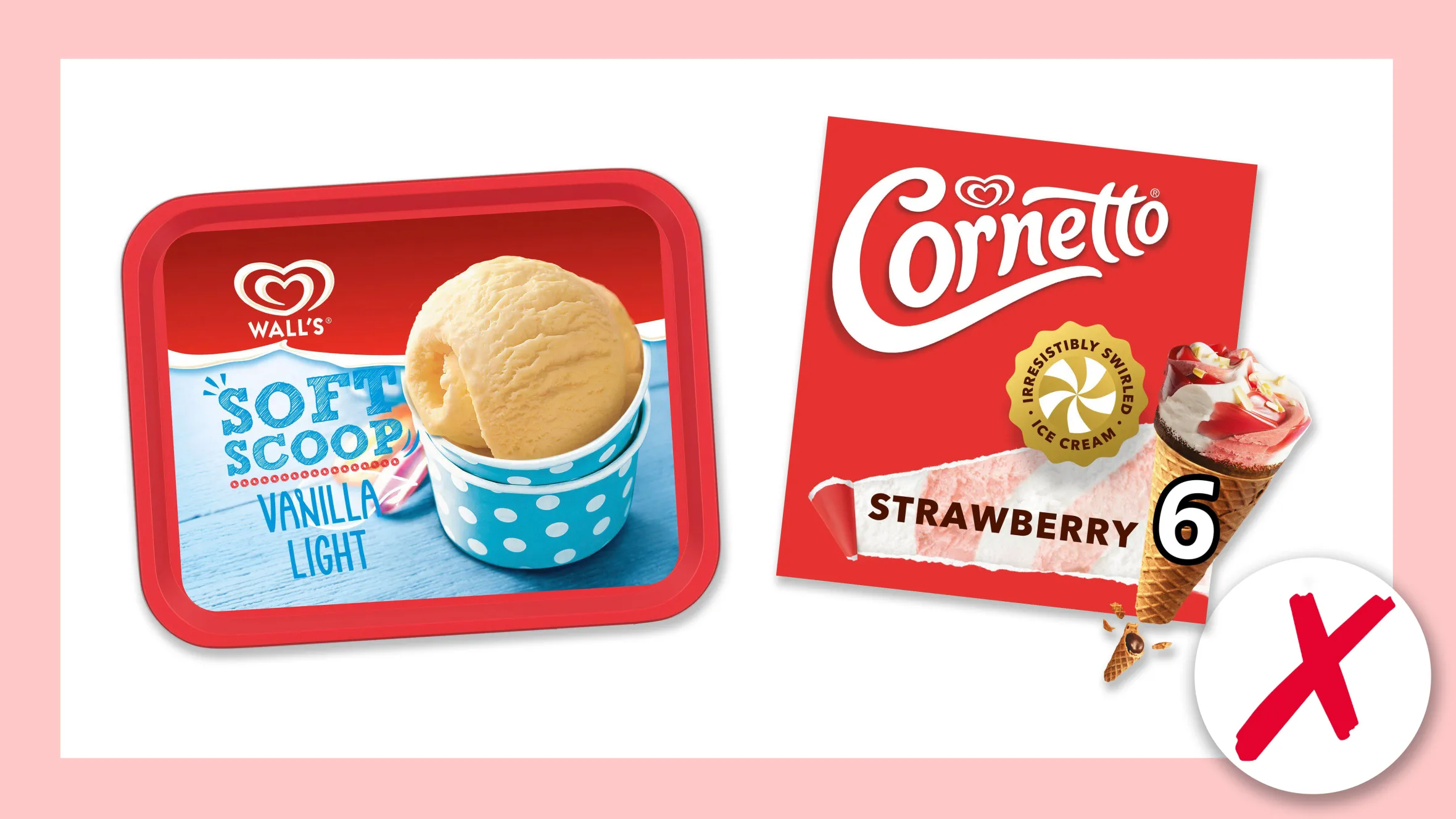
Wall’s Soft Scoop vanilla light ✘
Processing risk scale High
Nutrition per 100g Sat fat, 3.9g. Sugar, 14g. Salt, trace. Protein, 2g. Fibre, 0.5g. Cals, 163
An ice cream with no cream or milk. It’s marketed as “reduced fat” but is still essentially a high-sugar, high-fat dessert. With about 14g sugar and 3.9g saturated fat per 100g, its fat content is similar to other “full fat” ice creams and there is a smorgasbord of additives that aren’t doing our health any favours.
Cornetto strawberry cones ✘
Processing risk scale High
Nutrition per 90ml cone Sat fat, 5.2g. Sugar, 15g. Salt, trace. Protein, 1.3g. Fibre, 0.6g. Cals, 154
Each cone delivers about 4 tsp sugar (an adult should have a maximum of 7 tsp in a day, ie about 30g) alongside high saturated fat and almost no fibre or protein to slow absorption or improve fullness. Additives and emulsifiers stabilise texture, extend shelf life and ensure every bite tastes identical from first to last. Nothing is nourishing and it’s easy to overconsume ice creams like this without noticing.
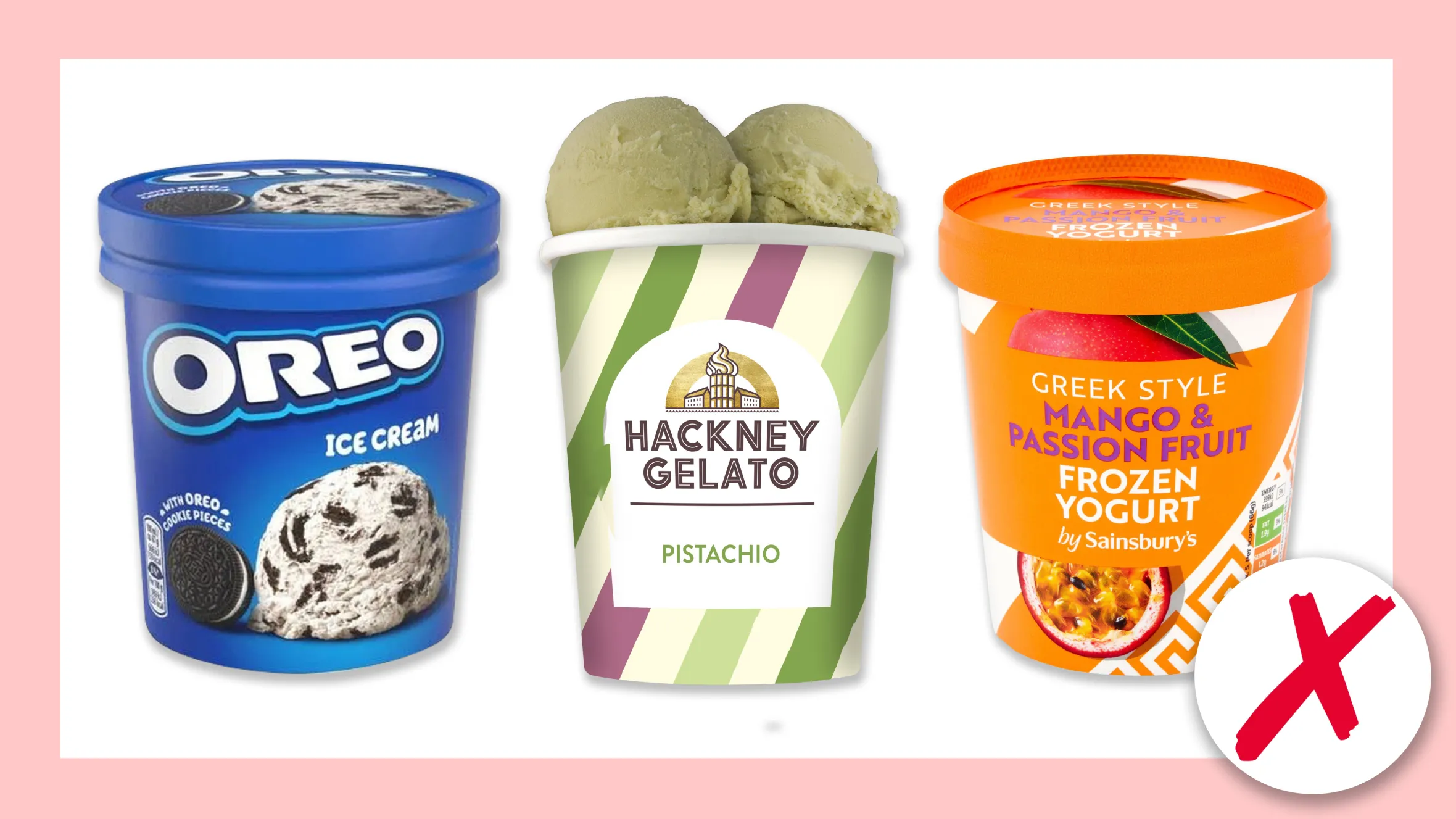
Oreo vanilla ✘
Processing risk scale High
Nutrition per 100g Sat fat, 8g. Sugar, 19g. Salt, 0.29g. Protein, 4g. Fibre, 1g. Cals, 236
This is an exercise in scientific formulation. Reconstituted milk concentrates, glucose syrup, coconut oil, emulsifiers (E471), stabilisers (E410, E412), multiple forms of sugar and syrup, plus processed cookie components built from refined flour, oils and additives. Even the Oreo pieces come engineered to keep texture and shelf stability consistent. Plus 19g sugar and 8g saturated fat per 100g, with no meaningful fibre or protein. No thanks.
Hackney Gelato pistachio ✘
Processing risk scale High
Nutrition per 100g Sat fat, 3.3g. Sugar, 14g. Salt, 0.34g. Protein, 3.6g. Fibre, 0g. Cals, 182
The name sounds sophisticated but just look at the long ingredients list, which includes carrageenan, which has been linked to a negative impact on the gut, alongside emulsifiers used to engineer texture. Despite the 6 per cent pistachio content there’s no fibre benefit and the sweetness comes from a blend of sugar, dextrose, glucose and maltodextrin, with coconut oil added for mouthfeel. It is lower in fat than some, but its heavy processing means there are better options.
Sainsbury’s Greek-style mango and passion fruit frozen yoghurt ✘
Processing risk scale High
Nutrition per 100g Sat fat, 1.9g. Sugar, 21.6g. Salt, 0.12g. Protein, 6.2g. Fibre, trace. Cals, 143
The beginning of the ingredients list is so promising, starting with Greek yoghurt, milk and mango puree. Unfortunately, the cocktail of sweeteners plus several emulsifiers pushes this out of the wholesome category and into high risk. I wouldn’t choose this for my picnic.
Fizzy drinks
What you need to know
Avoid anything with more than 4g sugar per 100ml and check for sugar substitutes such as sucralose and erythritol, which have been linked to negative health outcomes.
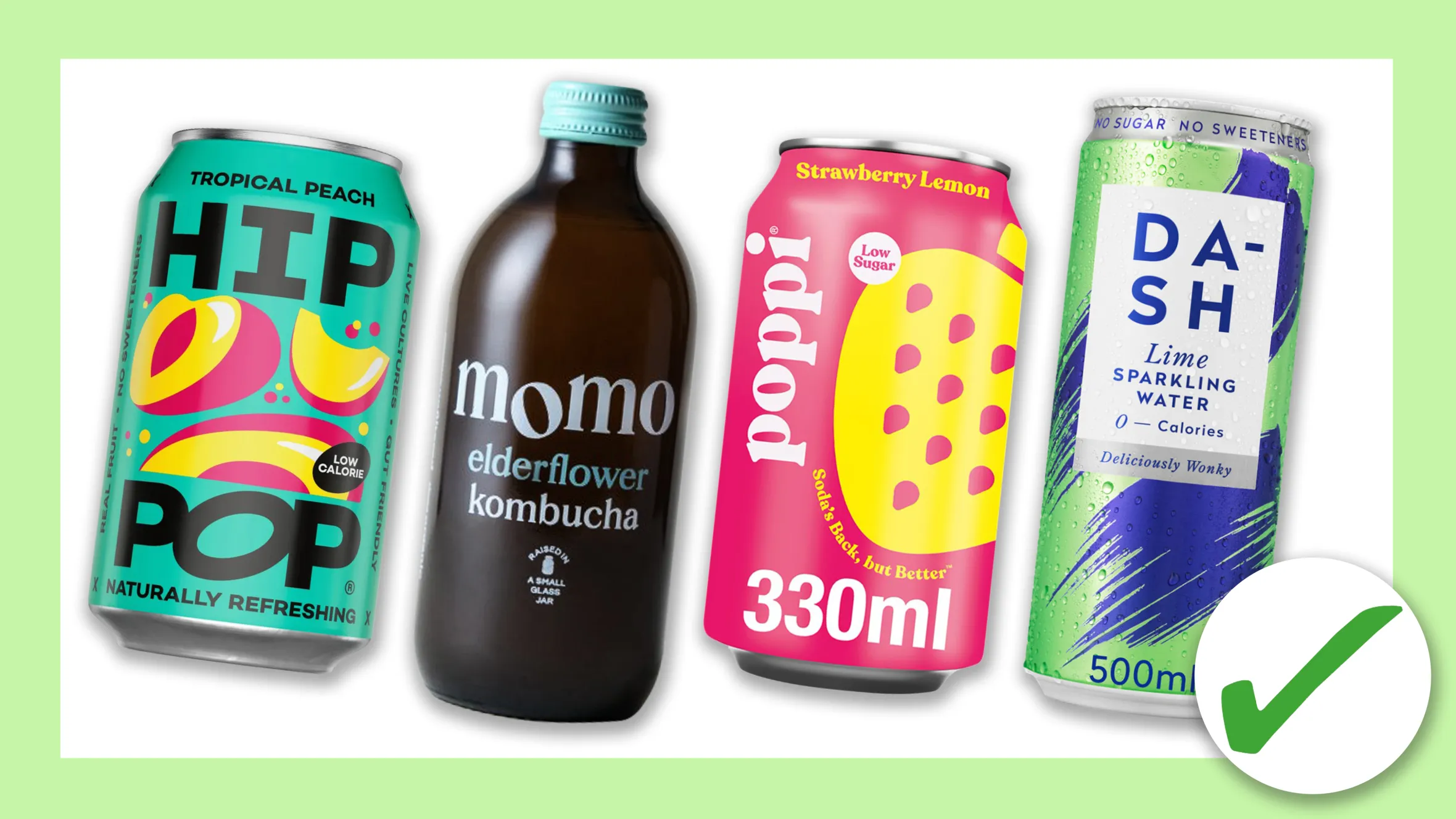
Hip Pop tropical peach ✔
Processing risk scale Low
Additives to watch out for 0
Nutrition per 100ml Sugar, 2.6g. Salt, negligible. Fibre, 1.8g. Cals, 19
This is a decent fizzy choice. Its relatively high amount of fibre — 1.8g per 100ml — sets it apart from most soft drinks, helping slow sugar absorption and keeping you fuller longer despite the moderate 2.6g sugar. And it’s free from additives.
Momo organic elderflower kombucha ✔
Processing risk scale No risk
Additives to watch out for 0
Nutrition per 100ml Sugar, 2.8g. Salt, 0.1g. Fibre, 1g. Cals, 19
Some kombuchas are better than others. Here the sugar is kept sensible at 2.8g per 100ml while the 1g fibre per 100ml is genuinely rare for a fizzy drink — and actually supports your gut. It also avoids the usual sweeteners and additives that some other kombucha brands include. A good choice if you want something fizzy.
Poppi strawberry lemon soda ✔
Processing risk scale Low
Additives to watch out for 0
Nutrition per 100ml Sugar, 1.3g. Salt, 0g. Fibre, 0.9g. Cals, 8
Fibre and prebiotic sodas are everywhere right now. Poppi uses cassava root fibre as a prebiotic, feeding your gut bacteria rather than just passing through. This is a low-sugar, minimally processed choice that doesn’t contain any artificial junk, so it’s one of the better sweet drink options out there. Still it contains sugar, so drink in moderation.
Dash lime sparkling water ✔
Processing risk scale Low
Additives to watch out for 0
Nutrition per 100ml Sugar, 0g. Salt, trace. Cals, 2
This is just sparkling water with real lime essence — no sugar, virtually no salt and barely any calories. Citric acid from the lime adds a natural tang without artificial additives, keeping processing minimal. This is free from the sweetness traps of most fizzy drinks.
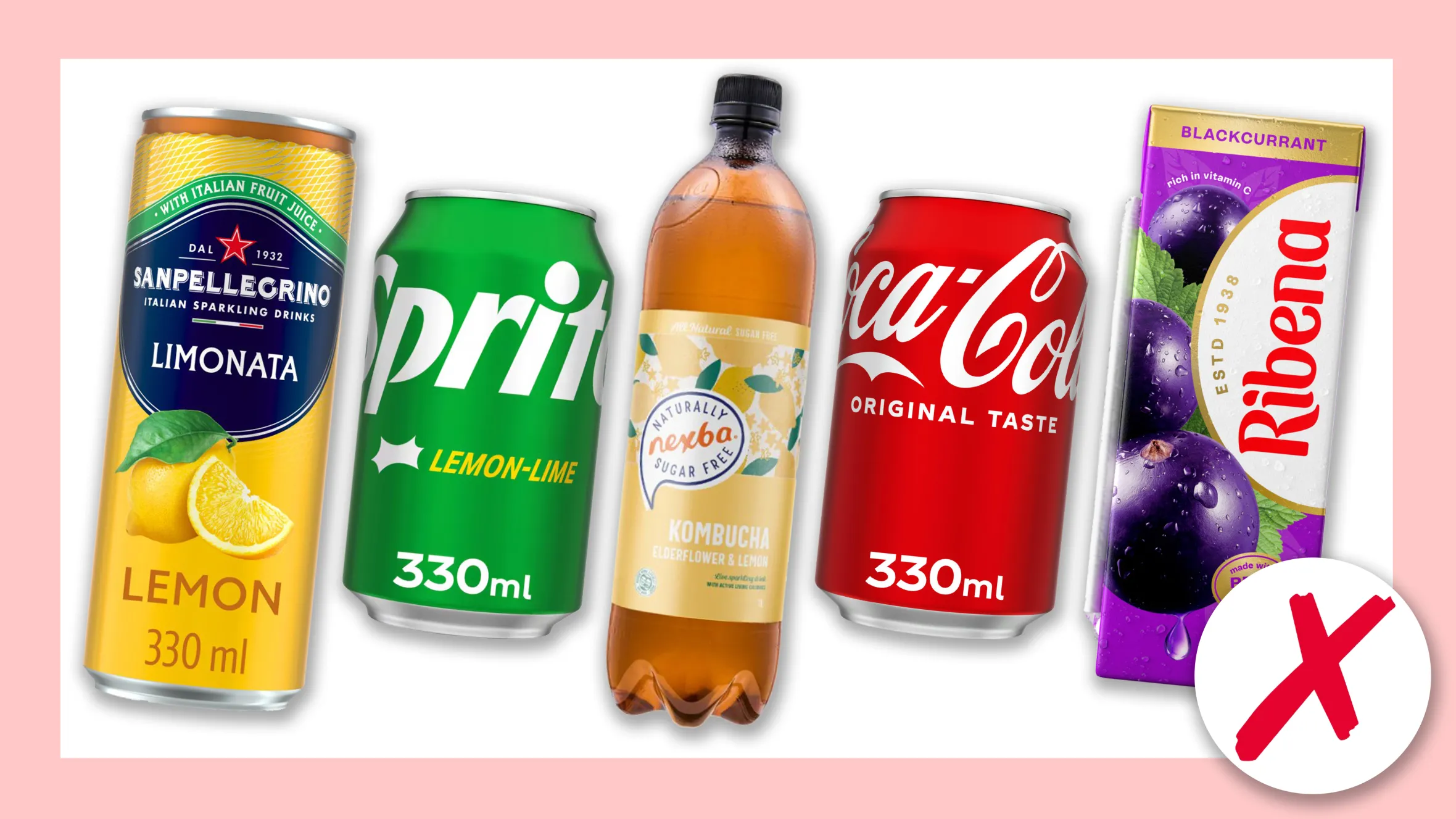
San Pellegrino limonata ✘
Processing risk scale Low
Additives to watch out for 3 (pectins, natural flavourings, carbon dioxide)
Nutrition per 100ml Sugar, 4.5g. Salt, 0.1g. Fibre, 0.1g. Cals, 23
Don’t let the artisanal design trick you into thinking the lemons were picked and pressed yesterday on an organic Italian farm. This is still pretty much a traditional sweet fizzy drink. While it doesn’t have the additive complexity of some sodas, the sweetness is a concern. Processing risk is low but you are still drinking 14.7g sugar in a 330ml can — half your daily allowance.
Sprite ✘
Processing risk scale High
Additives to watch out for 2 (acesulfame K, aspartame)
Nutrition per 100ml Sugar, 4.4g. Salt, trace. Fibre, 0g. Cals, 19
Sprite is a classic ultra-processed drink combining sugar and artificial sweeteners for a double hit of sweetness. A 330ml can delivers about 15g sugar, making it an easy way to drink your sugar rather than eat it. Add acesulfame K and aspartame and you’re firmly in high-risk processing territory. There’s no upside here at all — just liquid sugar engineered to keep you coming back for more.
Nexba elderflower and lemon kombucha ✘
Processing risk scale Low
Additives to watch out for 2 (erythritol, steviol glycosides)
Nutrition per 100ml Sugar, 0g. Salt, trace. Fibre, 0g. Cals, 2
Looking at the label, you might think this sounds like a great nutritional choice as it’s very low in sugar and calories and there’s a minimal processing risk. The trade-off is the use of erythritol and steviol glycosides to deliver sweetness. With fermented drinks becoming more popular, it’s worth remembering they’re not all created equal — always check the label carefully.
Coca-Cola original ✘
Processing risk scale High
Additives to watch out for 1 (phosphoric acid)
Nutrition per 100ml Sugar, 10.6g. Salt, trace. Fibre, 0g. Cals, 42
Like Sprite, this drink is effectively liquid sugar — no fibre, no nutritional benefits, just fast calories. The short ingredients list doesn’t change the fundamentals: high sugar load plus additives like phosphoric acid. A single 330ml can delivers more than 35g sugar in one go — more than the recommended daily intake. Even worse, it can spike blood glucose and doesn’t support your gut health.
Ribena blackcurrant juice drink ✘
Processing risk scale High
Additives to watch out for 4 (acesulfame K, sucralose, polydextrose, sodium gluconate)
Nutrition per 100ml Sugar, 4.2g. Salt, trace. Fibre, 0g. Cals, 19
The carton sells natural vibes but the label tells a different story: sweetness without substance, extras that add little nutritional value and potential gut irritation, plus a third of your sugar intake in one 250ml carton courtesy of acesulfame K and sucralose. Polydextrose, marketed as a “fibre,” acts more as a thickener; it can cause gas, bloating or digestive discomfort. It adds up to an unwholesome chemical cocktail.
You can find the processing risk scale of a product by scanning its barcode in the Zoe app (£9.99 a month; zoe.com)