





Vitamin B2 (riboflavin) is essential for human health, supporting vital metabolic and antioxidant functions. Recent research has uncovered an unexpected role for vitamin B2 in promoting cancer cell survival by enhancing resistance to ferroptosis, a form of programmed cell death with tumor-suppressive properties. This article reviews findings from a study, supported by the German Research Foundation (DFG) through the priority program “Ferroptosis: from Molecular Basics to Clinical Applications,” and the European Research Council (ERC) Consolidator Grant, which were published in Nature Cell Biology by Skafar et al.[1], demonstrating that vitamin B2 metabolism supports the stability and function of ferroptosis suppressor protein 1 (FSP1), thereby shielding cancer cells from ferroptosis.
The study also explores roseoflavin, a riboflavin antimetabolite, as a potential therapeutic strategy to sensitize tumors to ferroptosis. These insights pave the way for targeting riboflavin metabolism as a novel cancer therapy and broaden our understanding of micronutrient modulation in cell death regulation.
A Paradoxical Role
Riboflavin (vitamin B2) is a water-soluble vitamin obtained from dietary sources such as dairy, eggs, meat, and green vegetables. As a precursor to flavin mononucleotide (FMN) and flavin adenine dinucleotide (FAD), riboflavin is central to redox homeostasis, cellular metabolism, and protection against oxidative damage.
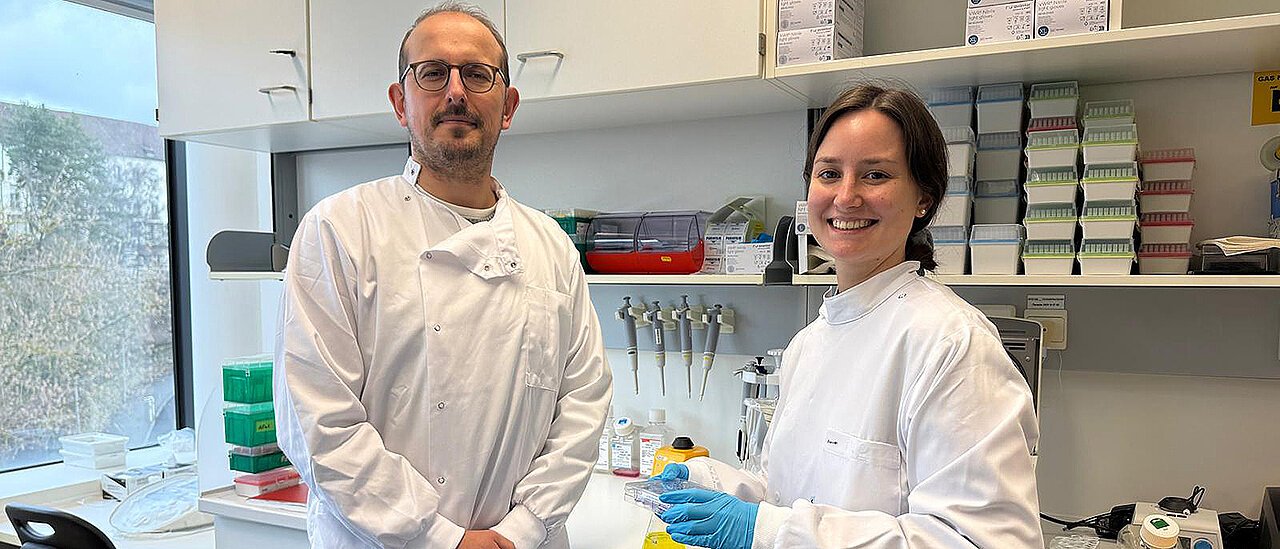
However, a recent study led by Friedmann Angeli and colleagues at the Rudolf Virchow Centre, Julius-Maximilians-Universität Würzburg (JMU), reveals a paradoxical role: vitamin B2 metabolism may also protect cancer cells from ferroptosis, thus supporting tumor survival.
Ferroptosis and Cancer Cell Survival
Ferroptosis is a regulated cell death pathway triggered by iron-dependent lipid peroxidation, usually counteracted by cellular antioxidant systems. It functions as a tumor-suppressive mechanism, as cancer cells are often susceptible to oxidative stress. Key regulators of ferroptosis resistance include glutathione peroxidase 4 (GPX4) and, more recently, FSP1, which acts by regenerating membrane-embedded antioxidants such as ubiquinone and vitamin K.
Advertisement #3
The study by Skafar et al. employed CRISPR–Cas9 screening and cellular models to identify modulators of FSP1 function. Riboflavin kinase (RFK), which phosphorylates riboflavin to FMN, emerged as a critical regulator. FAD, derived from riboflavin, is essential for FSP1’s enzymatic activity and stability. The absence or limitation of riboflavin impairs FSP1 protein levels and function, sensitizing cancer cells to ferroptosis, particularly under physiologically relevant riboflavin concentrations. This effect is distinct from other antioxidant systems, as riboflavin does not directly scavenge radicals but enables the recycling of lipophilic antioxidants via FSP1.
Therapeutic Targeting of Riboflavin Metabolism: The Role of Roseoflavin
Given the absence of specific inhibitors for riboflavin metabolism, the researchers explored roseoflavin—a natural riboflavin analog produced by bacteria. In cell models, roseoflavin is incorporated into FSP1 in place of FAD, stabilizing the protein but abolishing its enzymatic function. Even at nanomolar concentrations, roseoflavin triggered ferroptosis in FSP1-dependent cancer cells, providing proof-of-concept for targeting this metabolic pathway.
The unique aspect of this approach is that roseoflavin exploits the same cellular uptake and metabolic machinery as riboflavin, making it less susceptible to resistance mechanisms that often undermine targeted cancer therapies.
Broader Implications
Beyond oncology, the regulation of ferroptosis by riboflavin may have implications for neurodegenerative diseases and organ injury, where cell death regulation is a central pathological feature. The study underscores the importance of micronutrient availability—not only as a metabolic substrate but as a regulator of cell fate decisions.
Future research will focus on developing more specific and potent inhibitors of riboflavin metabolism and evaluating their efficacy in preclinical cancer models. Understanding how dietary and systemic factors influence riboflavin metabolism may also inform patient selection and therapeutic strategies.
The discovery that vitamin B2 metabolism can protect cancer cells from ferroptosis reveals a complex interplay between nutrition and cancer biology. By targeting riboflavin-dependent pathways, including the use of antimetabolites like roseoflavin, researchers are opening new avenues for cancer therapy that exploit tumor antioxidant defenses. These findings highlight the necessity of integrating metabolic and micronutrient biology into the development of next-generation anti-cancer strategies.
References
[1] Skafar V, de Souza I, Ghosh B, Ferreira Dos Santos A, Porto Freitas F, Chen Z, Sun S, Donate Castillo M, Nepachalovich P, Seufert L, Bothe S, Tschuck J, Mathur A, Nunes-Alves A, Buhr J, Aponte-Santamaría C, Schmitz W, Mack M, Eilers M, Bargou R, Chaufan M, Kaur M, Palma M, Ubellacker JM, Elling U, Augustin HG, Hadian K, Meierjohann S, Proneth B, Conrad M, Fedorova M, Alborzinia H, Friedmann Angeli JP. Riboflavin metabolism shapes FSP1-driven ferroptosis resistance. Nat Cell Biol. 2026 Apr;28(4):696-706. doi: 10.1038/s41556-025-01856-x. Epub 2026 Mar 13. PMID: 41826699; PMCID: PMC13086581.
Featured image:Vera Skafar and José Pedro Friedmann Angeli conducted the study at the Rudolf Virchow Centre for Integrative and Translational Bioimaging. Phopo courtesy © 2026 Natalie Fahmer / Universität Würzburg. Used with permission.
DOI
Advertisement #5