




BAKERSFIELD, Calif. (KGET) — The California Attorney General’s Office has released a comprehensive report diving into the conditions of several immigration centers – including multiple facilities located in Kern County.
The report, spearheaded by AG Rob Bonta, found that many of the state’s ICE detention centers’ conditions worsened as the Trump Administration’s mass deportation effort led to facility overcrowding and strained resources for new and existing facilities.
Of the seven active detention centers in California, there are two in McFarland, one in California City and one in Bakersfield.
Across all Kern County detention centers, similar issues and violations were reported, ranging between insufficient food portions, inadequate medical care, unsanitary conditions and chronic understaffing.
“Cal DOJ identified multiple violations of ICE’s detention standards relating to conditions of confinement and basic medical health care at all seven active facilities in 2025,” the report stated. “As the detained population increased in 2025, most facilities’ intake processes and other operations were overwhelmed and violated numerous detention standards.”
The DOJ stated that the violations within the 2025 report – and violations from past reports from 2019, 2021 and 2022 – documented “substandard and inhumane conditions that fail to meet U.S. immigration and Customs Enforcement’s (ICE) own applicable standards.”
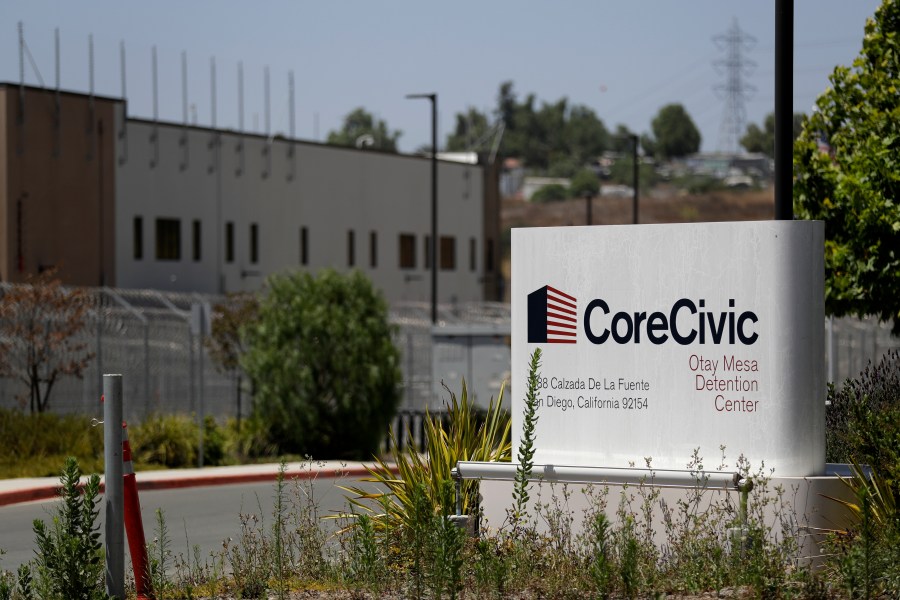
The AG’s office found that the California City Detention Center, which is owned by CoreCivic, one of the largest for-profit private prison and detention center operators in the country, had some of the most egregious conditions.
Per the report, the facility opened prematurely and “was not ready to accept detainees” when they did. As a result, the facility was found to be inadequately staffed for both detention and healthcare staff, in violation with the National Detention Standards, or NDS, set by U.S. Immigration and Customs Enforcement.
“One impact of insufficient staffing was that Cal City did not allow detainees to have contact visits, that is, visits in the same physical space allowing for physical touch or easy shared viewing of documents, as the NDS encourages,” the report said. “This policy negatively impacts detainees’ ability to maintain normal parenting or other familial relationships.”
The report states that detainees reported that the California City center was “being run like a prison opposed to a civil detention facility” despite the majority of the detainees being classified as “low security.”
Ten detainees spent “unnecessarily long periods” locked in their cells and reported that staff “yelled at detainees excessively.”
The NDS requires facilities to maintain appropriate temperatures in the detention center but detainees said they experienced extremely cold temperatures. They said parts of the building would leak when it rained and that “weather-appropriate clothing was substandard.”
Report: Voluntary immigrant departure orders up 1,000%
“Detainees, especially older detainees, reported suffering and detainees wept when describing these conditions,” the report stated. “To protect themselves from the cold, detainees modified socks to improvise sleeves and covered air vents in their cells with sheets of paper. They reported being written up when they did so.”
Inspectors also found that comprehensive intake medical assessments were not completed consistently within the time frames set by NDS, or were not completed altogether.
“Cal DOJ observed crisis-level health care understaffing. For example, there was only one physician providing care, and no backup physician consistently available to provide coverage when the single physician was unavailable,” reports stated. “Health care records and detainee interviews also revealed multiple instances of failures to give detainees access to outside specialists.”
However, inspectors found that mental health systems appeared to be in place and in use at the California City center, writing “the Health Services Administrator appeared to be making an effort to improve care.”
Detainees reported inadequate food quantities and needed to purchase additional food at the facility’s commissary to meet nutritional needs.
The report went on to say that outdoor access was inadequate.
“Female detainees were provided less access to both recreation and outdoor areas than male detainees,” it said.
At the Mesa Verde ICE Processing Facility in Bakersfield, the center saw a “tremendous population surge” since the Cal DOJ last visited the facility in May 2023.
Between spring 2023 and 2025, the population increased from 41 detainees to 370, marking an 802% increase.
Immigration enforcement operations taking place in Bakersfield area, local officials say
“Detainees reported a chaotic, overcrowded, overwhelming and unsanitary intake process. … Detainees reported low quality and insufficient portions of food, and poor access to clean drinking water,” the report stated. “Detainees reported that food was served late, tasted bad, consisted primarily of beans and bread, and for some detainees, upset their stomachs and caused diarrhea.”
ICE guidelines, called ICE Performance-Based National Detention Standards, require facilities to provide appetizing meals that meet detainee’s nutritional needs.
Detainees also reported widespread medical care delays, and that mental health and reproductive health intake assessments either did not happen or did not meet federal requirements.
“The facility lacked a proper quality assurance process to identify and improve problems in health care operations,” the California DOJ found.
There are two detention centers in McFarland: the Golden State Annex center and the newly opened Central Valley Annex. Both facilities are owned and operated by private prison company, The GEO Group.
At Golden State Annex, the DOJ found that the detainee population increased from 159 detainees to nearly 570, marking an increase over 250%. The facility’s capacity is 700 detainees.
Similarly to the other facilities, inspectors found low and insufficient food portions.
Report: Removal orders for immigrants nearly double
Some detainees experienced “lengthy periods of segregation” in restricted housing units, with some periods of 100 to over 200 days. Federal standards recommend that those periods do not exceed 30 days.
The facility also had language-related deficiencies, according to inspectors.
“Its language line offered access to only seven languages and the facility relied on detainees to interpret for other detainees even though ICE expressly prohibits this practice. … Detainees appeared not to understand facility rules and procedures due to inadequate orientation,” the report said. “Detainees consequently did not understand how the facility worked and did not understand different options for submitting requests, such as on tablets.”
The report also said that “uses of force were appropriately reviewed by supervisors, who showed willingness to acknowledge when a use of force was not warranted and to take remedial action.”
Copyright 2026 Nexstar Media, Inc. All rights reserved. This material may not be published, broadcast, rewritten, or redistributed.
For the latest news, weather, sports, and streaming video, head to KGET 17 News.