





Instead of waiting to treat illnesses after they appear, consumers are increasingly embracing preventive healthcare strategies focused on nutrition, immunity, fitness, and long-term wellness. This shift is fueling explosive growth in the nutraceuticals industry across the United States.
Once considered a niche category limited mainly to vitamins and herbal supplements, nutraceuticals have now evolved into a massive and highly diversified market that includes functional foods, fortified beverages, probiotics, dietary supplements, plant-based wellness products, and science-backed nutritional solutions.
According to Renub Research, the United States Nutraceuticals Market is projected to grow from US$ 161.8 billion in 2025 to US$ 292.99 billion by 2034, expanding at a CAGR of 6.82% between 2026 and 2034. The market’s strong growth is being driven by rising health awareness, increasing prevalence of chronic diseases, growing interest in preventive healthcare, and expanding demand for functional foods and supplements.
Consumers today are becoming far more proactive about maintaining their health.
From immunity support and digestive wellness to energy enhancement and cognitive health, nutraceutical products are increasingly integrated into everyday routines across all age groups.
This shift is transforming nutraceuticals from optional wellness products into essential components of modern lifestyles.
Preventive Healthcare Is Driving Massive Consumer Demand
One of the biggest forces fueling the nutraceuticals market is the growing consumer focus on preventive healthcare.
Americans are increasingly prioritizing long-term wellness over reactive medical treatment.
Instead of relying solely on pharmaceuticals after health issues arise, consumers are turning toward nutritional products designed to support overall health and reduce future risks.
Factors driving this shift include:
Rising chronic disease rates Increasing healthcare costs Growing awareness of nutrition-linked health outcomes Aging populations Greater emphasis on immune resilience
Consumers are now actively incorporating supplements and functional foods into their daily routines to support:
Heart health Digestive wellness Joint support Cognitive performance Energy levels Stress management Weight control Immunity
This movement has become especially strong following recent global health concerns, which significantly increased awareness around immune health and wellness maintenance.
The nutraceutical industry is benefiting directly from this broader lifestyle transformation.
Functional Foods Are Becoming Everyday Essentials
Functional foods are one of the fastest-growing categories within the nutraceutical market.
Consumers increasingly prefer products that provide health benefits beyond basic nutrition.
Modern functional foods now include:
Fortified cereals Probiotic yogurts Protein snacks Functional beverages Nutrient-enhanced bakery products Vitamin-enriched dairy alternatives
Consumers appreciate these products because they integrate wellness conveniently into everyday eating habits.
The demand for functional foods is especially strong among busy consumers who want practical ways to improve nutrition without major lifestyle disruption.
Manufacturers are continuously introducing products targeting specific health concerns such as:
Gut health Brain function Immune support Fitness recovery Healthy aging
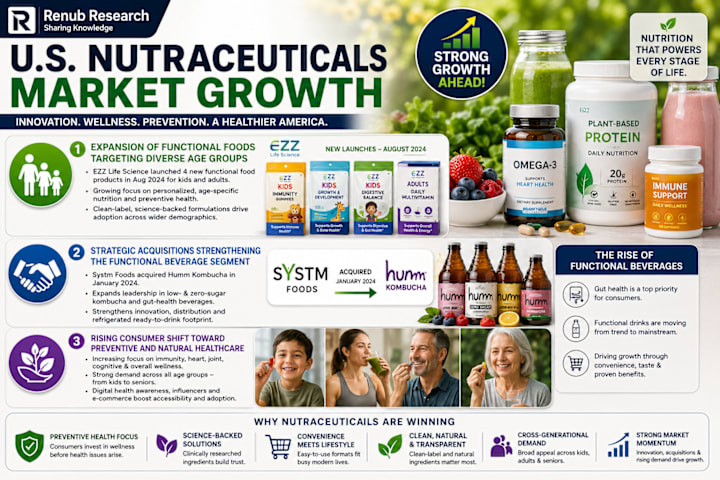
In August 2024, EZZ Life Science expanded its functional food portfolio with four new products designed for both children and adults. Three products targeted pediatric nutrition while another focused on adult wellness support.
This type of personalized nutritional innovation is becoming increasingly important within the market.
Consumers no longer want generic supplements alone — they increasingly seek targeted wellness solutions designed around specific age groups and lifestyle needs.
 Functional Beverages Are Reshaping the Wellness Industry
The functional beverage segment has become one of the most dynamic areas within the nutraceutical industry.
Consumers are rapidly moving beyond traditional soft drinks toward beverages offering added health benefits.
Popular categories now include:
Kombucha Probiotic drinks Energy beverages Protein shakes Fortified juices Dairy alternative wellness drinks Hydration products
Gut health, in particular, has become a major consumer focus.
As scientific awareness around the microbiome expands, products containing probiotics and digestive health ingredients are becoming mainstream.
A strong example came in January 2024 when Systm Foods acquired Humm Kombucha, a well-known low- and zero-sugar kombucha brand recognized for supporting gut health and digestive wellness.
Strategic acquisitions such as this help companies strengthen distribution networks while expanding access to functional beverages across retail markets.
Consumers increasingly view wellness beverages as convenient tools for improving health while maintaining busy lifestyles.
Younger Consumers Are Accelerating Market Transformation
Millennials and Generation Z are playing a major role in shaping the future of the nutraceutical industry.
Younger consumers are highly wellness-focused and strongly influenced by:
Fitness culture Social media health trends Plant-based lifestyles Clean-label products Preventive wellness habits
Unlike previous generations, younger buyers often prioritize nutrition and supplementation as everyday lifestyle investments rather than occasional health purchases.
This demographic is especially attracted to:
Natural ingredients Organic formulations Plant-based nutrition Low-sugar products Sustainable packaging Transparent labeling
Social media platforms such as TikTok, Instagram, and YouTube have significantly amplified wellness education and product awareness.
Health influencers, fitness creators, and nutrition experts continuously promote supplements, protein products, and wellness beverages to younger audiences.
As a result, nutraceutical products are increasingly becoming part of mainstream lifestyle culture.
Personalized Nutrition Is Becoming a Major Trend
Consumers are increasingly moving toward personalized wellness solutions tailored to individual needs and health goals.
Rather than purchasing generic supplements, many consumers now seek products addressing specific concerns such as:
Sleep quality Focus and cognitive performance Stress reduction Athletic recovery Women’s health Men’s vitality Healthy aging
Companies are responding by developing more specialized formulations supported by science-based marketing.
In December 2024, Nitches Inc. expanded its InTheZone Labs brand on Amazon with products including:
InTheZone Focused Extreme InTheZone Focused Youth InTheZone Passion
These products target cognitive support and men’s vitality while emphasizing FDA- and GMP-compliant U.S.-based manufacturing.
This reflects how nutraceutical brands are increasingly focusing on niche wellness categories and lifestyle-specific health solutions.
E-Commerce Is Reshaping Nutraceutical Distribution
Digital retail has become one of the most important growth channels for the nutraceutical market.
Consumers increasingly purchase wellness products through:
Amazon Brand websites Subscription platforms Online pharmacies Wellness marketplaces
E-commerce provides several advantages, including:
Product accessibility Personalized recommendations Consumer reviews Subscription convenience Educational content
Online wellness communities and digital health platforms have also strengthened consumer awareness around supplements and functional nutrition.
The rise of direct-to-consumer nutraceutical brands is intensifying competition while expanding consumer access to specialized wellness products.
Companies capable of building strong digital trust and transparent branding are likely to perform especially well in the evolving marketplace.
California Continues Leading Wellness Innovation
California remains one of the largest and most influential nutraceutical markets in the United States.
The state’s strong wellness culture, plant-based lifestyle trends, and premium consumer spending create ideal conditions for nutraceutical growth.
California consumers strongly favor:
Functional beverages Organic supplements Probiotics Clean-label products Plant-based nutrition
The state’s technology and biotechnology ecosystem also supports strong innovation within health-focused food and supplement industries.
California’s emphasis on sustainability and ingredient transparency further strengthens demand for premium nutraceutical products.
Texas Is Becoming a Fast-Growing Nutraceutical Market
Texas is experiencing rapidly increasing demand for nutraceutical products driven by population growth, rising disposable incomes, and active lifestyle trends.
Consumers in cities such as:
show particularly strong interest in:
Protein supplements Energy products
Digestive wellness solutions
Functional snacks Vitamins and minerals
The state’s growing urban population and expanding retail infrastructure continue supporting market growth.
Texas also benefits from broad consumer diversity, helping support demand across multiple nutraceutical categories.
New York Consumers Prioritize Convenience and Wellness
New York remains a major nutraceutical hub due to its dense urban population and strong focus on convenience-oriented wellness solutions.
Consumers increasingly seek:
On-the-go supplements Functional beverages Stress-support formulations Immunity boosters Plant-based nutrition
Fast-paced urban lifestyles encourage demand for portable wellness products that integrate easily into daily routines.
New York’s multicultural environment also contributes to strong demand for herbal and globally inspired nutritional products.
Florida Benefits From Aging and Wellness-Focused Populations
Florida’s nutraceutical market benefits significantly from its large elderly population and wellness-oriented communities.
Older adults increasingly seek supplements supporting:
Joint health Heart function Cognitive wellness Immune support
At the same time, younger consumers continue driving demand for:
Hydration products Functional snacks Gut-health solutions Fitness-oriented supplements
Florida’s active lifestyle culture and tourism economy further contribute to demand for portable and convenient wellness products.
Regulatory Complexity Remains a Major Industry Challenge
Despite strong growth opportunities, the nutraceutical industry continues facing important regulatory challenges.
Nutraceuticals exist in a complex regulatory space between food and pharmaceutical products.
Companies must comply with strict requirements involving:
Ingredient safety Labeling accuracy Marketing claims Product testing Scientific validation
Oversight from both the FDA and FTC creates additional compliance complexity for manufacturers.
Smaller brands often struggle with the high costs associated with testing, certifications, and regulatory documentation.
As consumer expectations around product transparency continue rising, companies must invest heavily in research and quality assurance.
Consumer Skepticism and Quality Concerns Continue Affecting Trust
Another major challenge is growing consumer skepticism.
The nutraceutical industry has faced criticism related to:
Misleading marketing claims Inconsistent formulations Product adulteration Lack of scientific evidence
Consumers increasingly demand proof of efficacy and transparent ingredient sourcing before making purchases.
Brands that fail to demonstrate authenticity risk losing credibility in a highly competitive market.
As a result, companies are investing more heavily in:
Third-party certifications Clinical validation Clean manufacturing practices Transparent labeling Science-backed formulations
Building consumer trust is becoming one of the most important long-term success factors within the industry.
Key Market Segments
Functional Food
Cereal Bakery and Confectionery Dairy Snacks Other Functional Foods
Functional Beverage
Energy Drinks Sports Drinks Fortified Juice Dairy and Dairy Alternative Beverages Other Functional Beverages
Dietary Supplements
Vitamins Minerals Botanicals Enzymes Fatty Acids Proteins Other Dietary Supplements
Distribution Channels
Specialty Stores Supermarkets/Hypermarkets Convenience Stores Drug Stores/Pharmacies Online Retail Stores Other Distribution Channels Major Companies Operating in the Market
Leading companies in the U.S. nutraceuticals market include:
PepsiCo, Inc. General Mills, Inc. Nestlé S.A. Kellogg Company Herbalife International of America, Inc. Danone S.A. NOW Foods Amway Corporation Red Bull GmbH Abbott Laboratories
These companies continue investing heavily in product innovation, functional nutrition, personalized wellness, and clean-label product development.
Final Thoughts
The United States nutraceuticals market is entering a powerful new growth phase driven by preventive healthcare, wellness culture, and personalized nutrition.
Consumers are increasingly treating nutrition as an essential part of long-term health management rather than simply a dietary necessity.
According to Renub Research, the market is expected to grow from US$ 161.8 billion in 2025 to US$ 292.99 billion by 2034, reflecting strong demand for functional foods, supplements, and science-backed wellness products.
As health awareness continues expanding and consumers prioritize convenience, immunity, fitness, and healthy aging, nutraceutical products are likely to become even more integrated into everyday American lifestyles.