





Pigmentary glaucoma can occur after a condition called pigment dispersion syndrome, or PDS, where pigment granules are shed from the back surface of the iris of the eye. The accumulation of these granules blocks the trabecular meshwork, preventing the internal fluid of the eye from draining properly and elevating intraocular pressure, or IOP. The details about the changes that happen in this iris and trabecular meshwork region leading to elevated IOP remain unclear.
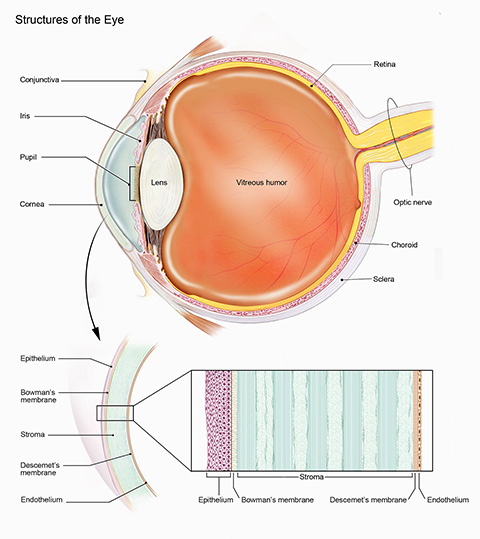
Changes in the iridocorneal region, the area where the iris meets the cornea, is studied by researchers at Duke University to better understand glaucoma.
A team led by Myoung Sup Shim at the Department of Ophthalmology at Duke University addressed this knowledge gap in a recent study published in Molecular & Cellular Proteomics. They used a well-characterized glaucoma mouse model, which recapitulates elevated IOP and other aspects of the disease, and a derivative of this model whose single genetic correction prevents mice from developing IOP dysregulation. The researchers found alterations in the transcriptomic and proteomic profiles in the mouse model, which suggested activation of immune pathways and increased extracellular remodeling. This allowed the researchers to identify which genetic variations increase one’s likelihood of developing glaucoma. The study helps researchers understand what could contribute to glaucoma susceptibility and progression.