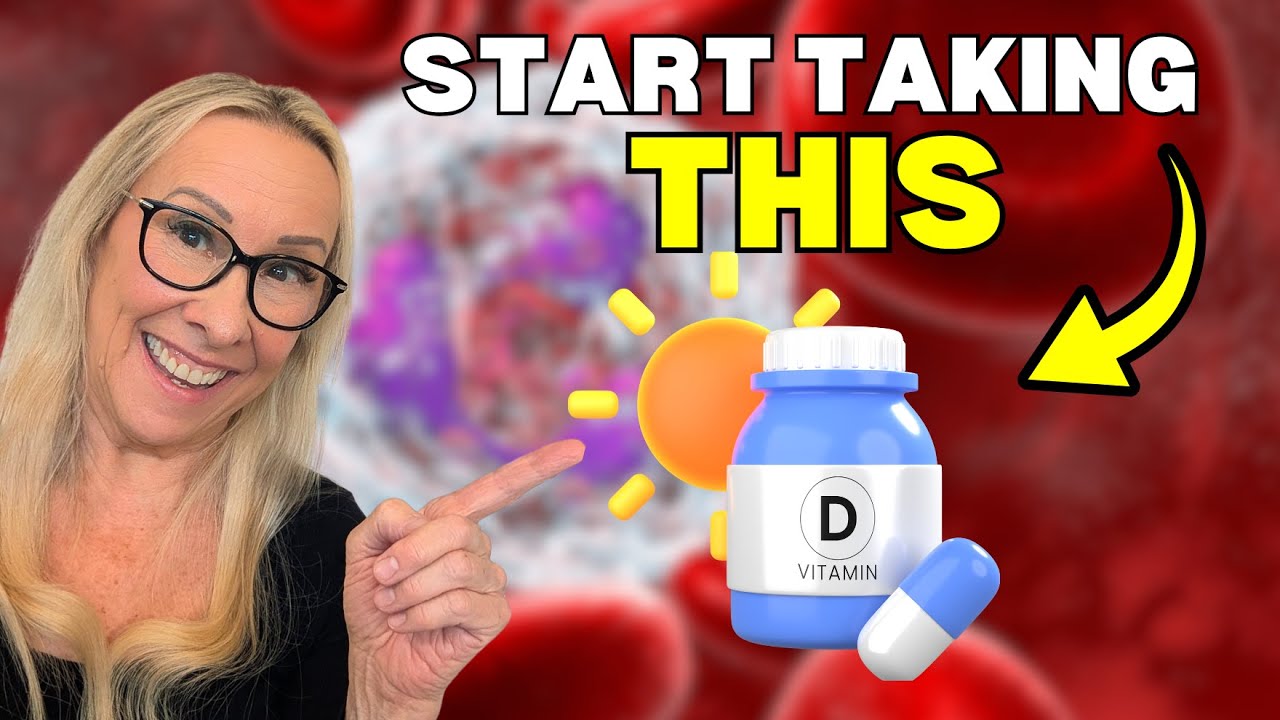
The Vitamin D Mistake Most People Over 50 Make (And How to Fix It!)
Are you taking vitamin D but still feeling fatigued, foggy, or unsure if it’s working? You’re not alone. As a healthy longevity advocate and bodybuilding competitor at almost 70, I’ve learned the hard way that more vitamin D isn’t always better—it’s about absorption, balance, and smart pairing with key nutrients like magnesium and K2.
In this video, I’ll walk you through 5 critical lessons I discovered after my own battle with osteopenia (early bone loss). From why your brain needs vitamin D to the hidden absorption mistakes wasting your dose, you’ll learn:
✅ Why your vitamin D isn’t working (Hint: Are you taking it with fat?)
✅ The brain-boosting benefits of vitamin D (Low levels = higher dementia risk!)
✅ The #1 nutrient that “activates” vitamin D (Spoiler: It’s magnesium!)
✅ Why vitamin K2 is non-negotiable (Avoid dangerous calcium buildup!)
✅ How to test (not guess!) your levels—plus my real-life DEXA scan results after fixing my routine
#VitaminD isn’t just for bones—it’s a game-changer for energy, mood, and longevity. But only if you take it right. Watch to the end to see how I reversed my bone demineralization and finally found the optimal dose!
Key Topics Covered:
What vitamin D does for the body (Beyond bones!)
Which vitamin D is best (D3 vs. D2, liquids vs. tablets)
Vitamin D with K2 and magnesium (The golden trio for absorption)
Vitamin D deficiency symptoms (Silent but serious)
How to avoid wasting your vitamin D capsule (Timing matters!)
#HealthyAging #VitaminDBenefits #Longevity #BoneHealth #Over50Fitness #VitaminDWithK2 #VitaminDDeficiency #CognitiveHealth #AgingStrong #NutritionForSeniors #SupplementTips
——————————-
Video Chapters
00:00 – Intro: My Vitamin D Struggle & Why This Matters
01:12 – Lesson 1: The #1 Absorption Mistake (Are You Wasting Your Dose?)
03:05 – Lesson 2: Vitamin D’s Brain Benefits (More Than Just Bones!)
04:40 – Lesson 3: The Magnesium & K2 Connection (The “Activation Team”)
06:30 – Lesson 4: Stop Guessing—Test Your Levels!
08:15 – Lesson 5: Finding Your Perfect Dose (Sun, Weight & Geography Factors)
09:50 – My Shocking DEXA Scan Results (How I Reversed Bone Loss)
11:00 – Final Takeaways: Balance is better than Megadoses!
11:25 – Call to Action: Share Your Story!
——————————-
Disclaimer:
This video is for educational purposes only and does not constitute medical advice. Always consult your healthcare provider before starting any supplement.
Connect With Me:
Linkedin: https://www.linkedin.com/in/janet-mcconnell-65703a1b2 /
Website: https://www.ignitefitnesswithjanet.com/meet-janet
My Book: https://www.ignitefitnesswithjanet.com/copy-of-speaking
✅ Found this helpful? Subscribe for more science-backed strategies on aging strong!
What is the mistake most people over 50 make when it comes to vitamin D? I’m Janet McConnell, certified coach and healthy longevity advocate. And as a bodybuilding competitor at almost 70 years old, I’ve had to rethink my regimen lately. So, in today’s video, I’m going to walk you through five key lessons that helped me finetune finally my supplement routine, especially after I learned the hard way that more isn’t always better. We’ll cover what to pair it with, how it affects the brain, how to know if you’re getting enough, how to avoid wasting your dose because of absorbability, and how to know if it’s actually helping. This isn’t medical advice, just what I’ve learned through my own experience and research. Always check with your health care provider to personalize what’s right for you. Lesson number one starts with absorption. Vitamin D is fat soluble as opposed to water soluble. Meaning that it needs fat in your meal to be absorbed well. If you’re popping it in with your green smoothie, your coffee, or on an empty stomach, your body isn’t really using it as well as it could. Also note that all forms are not created equally. Vitamin D3, which is colocaliferol, is more effective than D2. And the liquid or the soft gels tend to work better in older adults than the dry tablets because as we age, digestion slows down a little bit, especially the enzymes and the bile that is used to help absorb fat soluble vitamins. That’s why delivery matters. Lesson number two, what does your brain have to do with it? Well, what many people don’t realize is that vitamin D isn’t just about bone density. It has powerful effects on the brain, too. So, low levels are associated with brain fog, depression, and even increased dementia risk. So, there are vitamin D receptors in brain areas that involve memory and decision making. But again, if you’re not absorbing it or if you’re taking too much without balance, you’re not getting those cognitive benefits. Lesson number three, absorption. Who does vitamin D like to play with? Vitamin D works best in partnership with two other nutrients, especially the first one is magnesium. It helps convert vitamin D into its active form in the body. So if you’re low on magnesium, your vitamin D supplement may not get turned on. The second one is vitamin K2. This helps calcium to go into your bones where it belongs and not into the soft tissues like arteries. This is crucial if you’re supplementing with higher doses of D. You want the vitamin D to know where the help is needed and it’s not in your bloodstream. So, how that scenario plays out is for people when they take a high dose of D3 without the K2, they may increase the calcium levels in the wrong places and that’s where problems can start. And lesson number four, stop guessing. Start testing. It’s one of the biggest mistakes that I see. People guess they’re getting enough because maybe they spend a lot of time outdoors or because they have a healthy diet and they don’t feel anything obvious. Well, vitamin D deficiency doesn’t feel like a headache or something really obvious, but it’s still going on in the background. So, also the flip side of that is, well, I’m tired. I must be low on vitamin D. They start taking more, but too much D can also cause fatigue and nausea and even kidney issues if it gets really high. So, you don’t want that to happen. It’s a classic case of too much of a good thing. So, not getting enough, you feel fine. Getting too much, it starts to hurt you a little bit slowly over time. So that’s why testing is key. So ask your doctor for the 25 hydroxy vitamin D blend test. Ideally levels should fall between 30 and 60 nanog per milliliter. And if you’re going on a higher dose on a daily basis, monitor calcium and parathyroid hormone. These are the the levels that are affected by a very high dose. if it’s starting to go too high. It’s not about fear, it’s about being informed. Lesson number five. So, how much should I take? The right dose depends on your baseline blood levels, of course, and your sun exposure. And your geography can have a lot to do with that. if you’re in a very sunny climate or a very cloudy climate. And even in the sunny climates, it’s hard to know if you wear a lot of sunscreen or you avoid the sun by staying indoors. So, there’s a lot of smaller factors in daily lifestyle and geography that can affect that. And your body weight and absorption. Your body weight can make a difference on how much you’re absorbing. Many experts recommend a minimum of a,000 to 2,000 units per day for older adults and some need more to maintain optimal levels. Again, test and tweak and remember more is not necessarily better. Your body lungs balance, not mega doses. Now, if you’ve been following me for a while, you may remember me telling the story about my vitamin D experience. It was covered in a video that talked about many different supplements, vitamin D just being one of them. But a few years ago, I found that I had osteopenia. I went and had a DEXA scan and my bones were just starting to demineralize. This is a precursor to osteoporosis which is very serious. So my doctor was kind of trying to ask me about my habits and how I and obviously my diet was on point 8020 rule but I wasn’t supplementing vitamin D. So, I began supplementing vitamin D and calcium and magnesium, all of them, but without really understanding how they work together. Uh, and I didn’t take the K2 at all. So, here I was supplementing away and went back in and I didn’t have the DEXA scan again right away cuz you have to wait a while for the process to actually work. But I had another blood test and I was still low and I thought I am pouring, you know, dollars and dollars and dollars right down my gullet, taking all these vitamins and it’s not doing any good. So I got perturbed about it. So, I started reading in the literature because I’m intellectually curious and I found some studies that explained how important it is to take K2 with it because it shows that it works with vitamin D to show calcium where it’s needed in my bones, not in my bloodstream. And then also magnesium that helps you absorb better. I didn’t know any of this and my doctor didn’t explain it. So then I started being more strategic with how I was supplementing. I went in about 4 months ago and got another blood test and my doctor said, “You need to back off on your vitamin D supplementation. It is really taking root and you’re almost to the level where it’s not healthy. It’s overboard. And because it’s fat soluble, it doesn’t just dissipate quickly like vitamin C for example. So I I cut my dose in half and I took it 3 days a week instead of 7 days a week. Slightly less than half. I just went back last week for a DEXA scan. My bones show no no demineralization. I went backwards. my bones aged backwards. So, I can’t tell you how excited I am to tell you this that it’s true. So, I in just the most recent times as someone who is 69, the last thing I want to do is to go into my decade of the 70s with osteoporosis because falls are one of the biggest accidental causes of death in women who are 70 and over. not instant death, but decline after a broken hip or any uh shoulder injury that can ensue. And it’s just it’s such a huge setback as we get older. So, I am excited about this and I think that I finally struck the right balance on how much I’m taking. So, this is very real life information. I mean, who knows what can happen with your cognition, with the brain thing. I don’t have any proof that that’s helping my brain yet. I still forget where I put my keys, but it’s helping my bones at the moment. So, vitamin D can be a game changer for your brain, for your bones, for your mood, and for your energy, but only if it’s taken wisely. So, if you’re over 50 like me, this isn’t about popping a magic pill it or taking a kitchen sink vitamin that has everything in it with all these wonky amounts that may or may not work together. It’s about a whole body approach pairing with key nutrients, testing to make sure your blood levels are okay, and choosing a form and a dose that actually works for you. You deserve clarity and vitality. And the right vitamin strategy can help you get there. Every smart choice you make, even if it’s something small as taking a certain supplement, adds up. You are the hero of your healthy aging journey. And these tools are here to support you in your strength, not replace it. So tell me, what resonated with you about today’s topic? Let me know in the comments. I’d love to hear your experience. [Music]