




At age 22, Oakland-based artist Jasmine Ross is the youngest award recipient ever in the Museum of the African Diaspora’s annual Emerging Artists Program. Honored in MoAD’s 10th cohort, Ross, along with Demetri Broxton, Dorian Reid and Tahirah Rasheed, will receive a $10,000 award and significant professional development and marketing support from the institution. Notably, the award grants each recipient with a two-month solo exhibition.
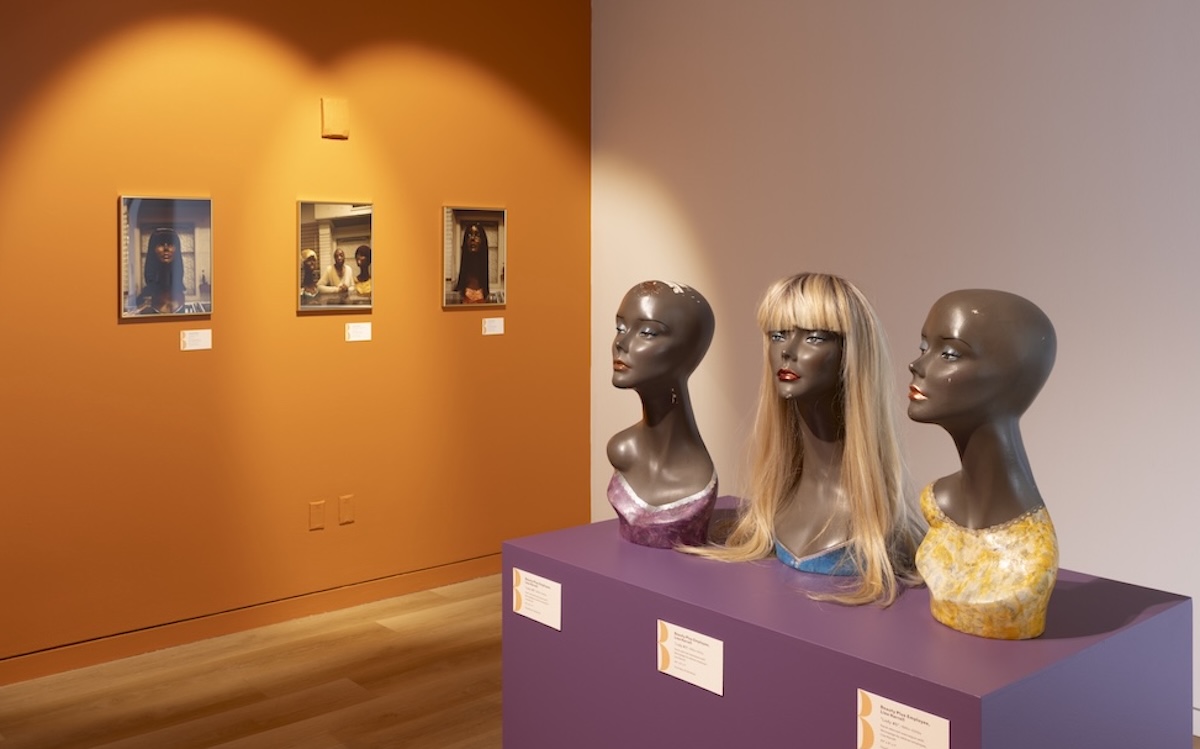
Ross’ “Beauty Plus,” an exhibit of her fine art documentary photography centered on a now-closed Black-owned beauty supply in New Haven, Connecticut, opened March 18 in the MoAD Salon and remains on view through May 31.
The origins of “Beauty Plus” began while Ross was completing a B.A. in ethics, politics, economics and art at Yale College. Describing herself in an interview as having “a hustle mentality” and dreaming of attending an Ivy League university since she was a girl, she represents the third-generation of “self-made, scrappy, driven women” in her family.

“My mom is CFO at GitLab and has worked in finance for Deloitte, Salesforce and others,” she says. “My younger brother pursued music, so I figured there could only be one ‘creative’ in the family. My dad is a lawyer and has his own practice. We were always close, but I identified with my mother and pressured myself to go into the finance, corporate field. My grandmother grew up in Compton and was the oldest of seven children. She had to take care of her siblings, and Nana’s still the family caretaker today.”
Ross grew up near Lake Merritt, attending Redwood Day School from K-8th grade before attending the Cate School, a college preparatory boarding and day school in Santa Barbara. Her grandmother still lives in and manages the Oakland apartment building where Ross and her mother spent her earliest years.
Determined since her youth to attend a school like Yale, Ross attributes the early yearning to being the child of Black survivalist entrepreneur parents. Although they never pushed her to follow their career paths, when she wanted to go on a Spanish immersion trip, her father asked, “How are you going to pay for it?” She raised $2,000 selling candy at her brother’s basketball games.
“My father instilled in me an entrepreneurship that’s particular to Black communities,” she states. “It’s definitely been informative to my sense of determination. My parents aren’t artists, but they’re creatives. Entrepreneurship—you have to be creative. I studied ethics, politics, economics and arts because to me it’s important to bridge that struggling artist trope. So many artists never achieve financial viability.”
One hard lesson about finance and trust as a professional artist came early for Ross. Offered a solo exhibit at a Chelsea gallery in New York City and promised a $10,000 budget, the situation became negative. “It left me with a $6,000 bill. It was a blindsiding relationship. I’m grateful I was graduating and had mentors who imparted wisdom about doing a poster, making a zine, asking for support, engaging with my community. I fundraised $22,000 and bounced back,” she recalls.
A good portion of those funds helped her self-produce “Beauty Plus.” The first showing was in Los Angeles, and she partnered with her brother. “Artists he works with performed,” she notes. “It was an art experience that was relatable to people, even if they weren’t in the fine arts.”
 OAKLAND PHOTOGRAPHER Jasmine Ross, 22, is the youngest award recipient ever in the Museum of the African Diaspora’s annual Emerging Artists Program. (Photo courtesy of Jasmine Ross)
Prior to pursuing photography, Ross was a ceramicist. She loved the tactile nature of the craft and the slow process, even those times when waiting hours for a piece to reach final stages resulted in “failure.” The practice of patience in part explains why she uses primarily a Chamonix large format analog camera and feels an affinity for long hours spent in a darkroom.
“There’s a sense of involvement,” she says. “You can go in for six hours and come out with nothing. If you put your negatives in wrong, use the wrong chemicals, you can have grainy images. The frustrating things can also produce something very beautiful.”
Ross began her association with Beauty Plus owner Mel Hylton when she was Hylton’s customer. She had long admired how the products and shop design told complex stories of economic exploitation and the commodification of Black culture—and who benefits from it.
“When I started working with Mel, we called the mannequins, ‘The Ladies,’” says Ross. Lisa, a longtime employee, provided the hand-done decoration and decoupage for the wig mannequins. “It speaks to how they saw these as not just objects, but representations of Black women and deserving of being adorned,” she explains.
Many of the photographs are a form of time-capture, showing portraits of longtime employees such as Mel’s sister, Liz, and in one, Mel’s husband, Rudy Hylton. “Liz passed away a few years ago and had been a part of the store for almost 30 years. Rudy’s behind the counter in another photograph. After years as an educator, he said he ‘retired’ and moved to an unpaid job, which was Beauty Plus,” says Ross. There’s a quiet pride in their faces that hints of humanity and dignity, signature features of Ross’ portfolio.
 BEAUTY PLUS ‘Marlana’ (2025) by Jasmine Ross, on exhibit at MoAD. (Photo by Francis Baker, courtesy of MoAD)
An image of a wall with multiple posters carves into equally deep issues. A large poster shows a woman in a glamorous gold dress and bears the brand name, “Motions.” Ross says, “I have a cinematic eye and come from a fashion background, and there’s a focus on the (posture) and warmth of the woman in the gold dress. Motion and other brands were not Black-owned but allowed women to shape and share their identity.”
Briefly touching on images from other collections on her website, Ross speaks about a photo of a man in a swimming pool on a makeshift floaty made with pool noodles. “It’s leisurely, disarming,” she notes. “He’s not concerned with representing a traditional sense of masculinity.”
A closeup of a Black woman inspired by Dawoud Bey portraits she saw offers “micro/macro expressions of Black culture and identity” in gold, maximalist jewelry, bold eyelashes and kinky curls. A photo of a young girl in a blood-red party dress playing with a Black doll is deliberately unposed: One bare foot peeks out from the layers of chiffon.
“I loved being in my Sunday best and playing with dolls. It feels like a part of my childhood,” Ross says.
Moving forward, she will continue her work fostering opportunities for early career artists as a gallery associate at SF Camerawork.
“I’m figuring out how to be a resource for other artists,” says Ross. “I want to talk about the business of art, whether that’s through a Substack, panel discussions, a podcast. I’m an abundance thinker, and there’s room for everybody. I’ll always be rooted in collaborative processes with my community and the subjects (I photograph) who become my fictive kin.”
Jasmine Ross’ ‘Beauty Plus’ exhibits through May 31 at the Museum of the African Diaspora, 685 Mission St., San Francisco. For more info, visit moadsf.org or jasminereneeross.com.
 Jasmine Ross’ ‘Beauty Plus’ exhibits through May 31 at the Museum of the African Diaspora in San Francisco. (Photo by Francis Baker, courtesy of MoAD)