



Scientists have found that vitamin B12 can cause worms to develop a meat-eating mouth shape that their offspring inherit without changes to their DNA.
The discovery turns a common nutrient into a biological signal, linking diet to inheritance across generations.
Evidence in worms

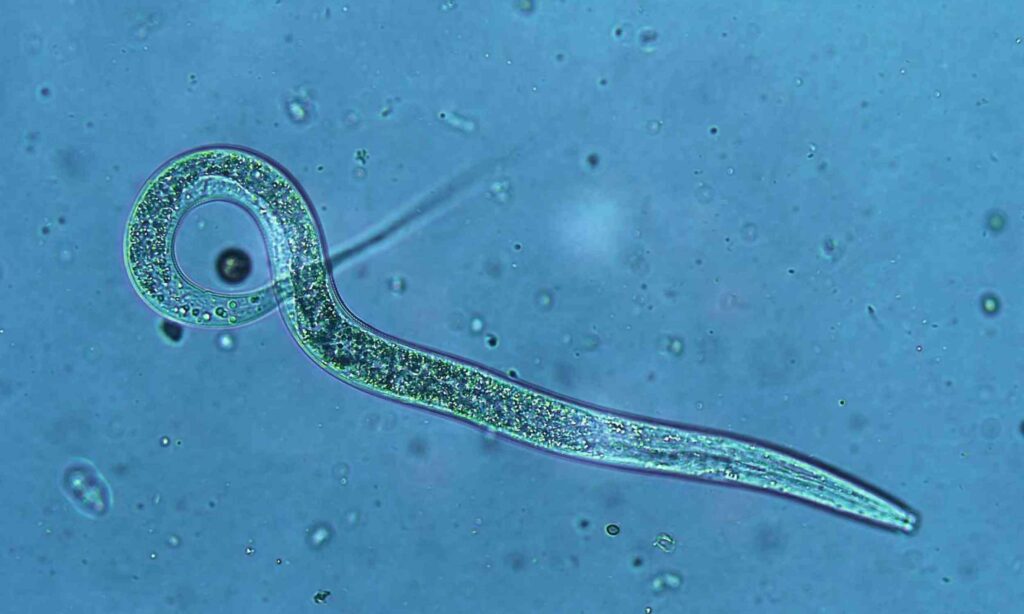
In laboratory lines of Pristionchus pacificus, the finding appeared in mouthparts that either stayed narrow or became predatory.
Tracking those forms across generations, Shiela Pearl Quiobe at the Max Planck Institute for Biology Tübingen (MPI) documented vitamin B12 as the factor tied to inherited predation.
The change did not end with the worms that consumed the vitamin, but continued after later generations returned to ordinary food.
That persistence focused attention on what mothers passed forward, linking diet and inheritance through nutrients stored in eggs.
How B12 alters traits
Vitamin B12 made the predatory mouth form appear quickly when worms ate bacteria or supplemented food on treated plates.
In high enough amounts, the vitamin kept that form showing up after the animals returned to ordinary food.
Lower amounts still started the predatory shape, yet the inherited effect faded after one or two generations once food changed.
“Our findings show that vitamin B12 does not simply affect the individual consuming it, but can shape the biology of future generations,” said Quiobe.
Bacteria supplied signals
A bacterium called Novosphingobium pushed worms toward predation because it supplied vitamin B12 and other food signals.
When scientists used bacteria unable to make the vitamin, descendants lost the inherited predatory pattern as soon as food switched.
Adding vitamin B12 back restored that carryover, while the defective bacteria still partly shaped the first generation.
Other bacterial chemicals can help build the mouthparts, but vitamin B12 carried the lasting signal over time.
Nutrients stored in eggs
Mothers passed the effect through vitellogenin, a yolk protein that feeds embryos, rather than through vitamin B12 itself.
Vitamin-rich diets raised vitellogenin gene activity, which packed more nutritional support into eggs before development began across generations.
Worms missing the egg uptake system could become predatory, but their offspring lost the pattern in the next generation.
The result places egg contents alongside DNA sequence as part of inherited change across generations.
Genes remain unchanged
The worms inherited a behavior-linked mouth form without a DNA rewrite, giving the finding its strongest point.
Biologists call such carryover epigenetic inheritance, when conditions affect descendants without directly changing genetic letters after one generation ends.
Earlier famine research in humans found lasting DNA marking differences after prenatal exposure, but mechanisms remain difficult to separate.
Worm experiments give scientists a cleaner cause-and-effect path about diet, while keeping human claims out of reach.
Dose determines outcome
At very small amounts, added vitamin B12 preserved predatory memory after worms left rich food.
With moderate amounts, the animals still formed predatory mouths, but the carryover stopped short of true inheritance after the vitamin disappeared.
Even trace amounts could trigger the mouth change, while extremely low amounts left worms near their usual state under the same setup.
Dose mattered because the first response was easy to start, but memory required more vitamin across generations.
Amino acid role found
Cells needed methionine, an amino acid used in protein building, for the vitamin signal to continue.
Supplements of methionine slowly produced the meat-eating mouth shape and maintained the pattern for several later generations after repeated exposures.
By contrast, folate – another B vitamin involved in cell chemistry – did not create a clear predatory response under these tests.
That contrast points to a specific route inside cells, not a general effect of richer food or plate conditions.
Predation in the wild
Long before this vitamin test, the Max Planck group followed 110 groups of genetically similar worms across 101 generations on different diets.
That earlier work showed predatory mouthparts persisted only after at least five generations on the bacterial diet before lines switched back.
In nature, these worms often ride beetles and face crowded food after insects die in soil once they arrive.
A remembered predatory form could help descendants compete when bacteria, fungi, and other worms share one carcass during that brief period.
Human relevance limited
Humans also need vitamin B12 for nerves, blood cells, and DNA maintenance, but this worm result is not medical advice.
During pregnancy and early childhood, B12 supports growth because dividing cells need it to handle key chemical reactions.
No human research has shown that B12 programs inherited traits in people through this worm pathway.
Still, the finding sharpens a broader lesson: nutrition can alter biology beyond a single lifetime for some animals.
Next steps in study
By tying diet, bacterial chemistry, egg nutrition, and inherited behavior into one chain, the work gives a rare clean example.
Future tests should measure memory length through offspring and identify other nutrients that produce similar effects in controlled lineages.
The study is published in Nature Communications.
—–
Like what you read? Subscribe to our newsletter for engaging articles, exclusive content, and the latest updates.
Check us out on EarthSnap, a free app brought to you by Eric Ralls and Earth.com.
—–