




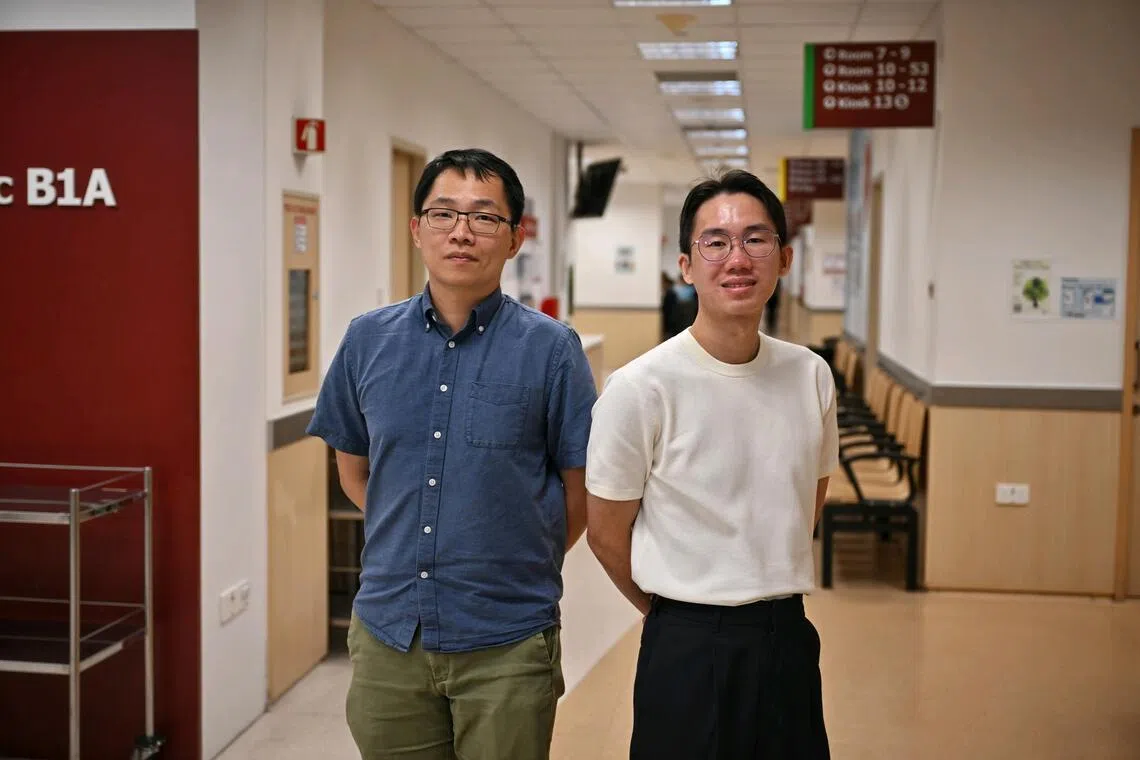
SINGAPORE – In 2020, software engineer Jerry Tan was in and out of the GP clinic for a year with constant diarrhoea and sinus infections.
“I had recurring infection, causing fever and cough. I was given MCs,” he told The Straits Times.
Being ill so often was, sadly, a condition he was all too familiar with. When he was a child, Mr Tan said, he would have a fever once every four or six months, though nothing so bad that he would have to be hospitalised.
“Being sick in 2020 felt different. I suffered constant abdominal pain, I had nausea and I had severe diarrhoea, and it lasted for a year. I thought my gut was weakened because of the constant food poisoning,” said the 41-year-old.
A colonoscopy at Sengkang General Hospital found small lumps in the gut.
Believing they were nodules caused by his immune system, the hospital referred Mr Tan to the Department of Rheumatology, Allergy and Immunology at Tan Tock Seng Hospital (TTSH), where he underwent blood tests to determine his levels of infection-fighting proteins called immunoglobulins.
Mr Tan was then diagnosed with primary immunodeficiencies (PIDs).
“The whole journey to getting a diagnosis had been quite overwhelming. But after knowing what I have, I actually felt relieved. At least now my sickness could be managed,” he said.
Equally overwhelmed was administrator Brian Chan, 30. He was frequently and inexplicably ill, suffering recurring pneumonia after he turned 16. It had necessitated yearly “staycations” at the hospital ever since, he said wryly.
“It continued while I was in polytechnic, when I was doing my national service and during my university days in Australia. I was really sick there,” he recounted.
It was after a thorough investigation and a battery of tests that the Australian doctors diagnosed him with PIDs.
PIDs, increasingly referred to as inborn errors of immunity, are disorders caused when some parts of the immune system, mainly cells and proteins, do not work properly.
“In short, PIDs are not simply about having a weak immune system. The immune system can be underactive, overactive or dysregulated,” said Dr Lim Xin Rong, a senior consultant with the Department of Rheumatology, Allergy and Immunology at TTSH.
Symptoms can emerge at any age from infancy to adulthood, and they vary widely.
Dr Lim said the most common symptoms of a PID are severe, persistent, unusual and recurrent infections. Sufferers may have inflammation affecting the lungs, liver and intestines, autoimmune issues, severe allergies or an increased risk of tumours.
There are now more than 550 recognised types of PIDs, and Dr Lim said that while the vast majority are caused by genetic mutations that disrupt how the immune system develops and functions, not all patients will have a recognised genetic cause.
“This does not mean one doesn’t exist. It simply means the relevant gene has not yet been discovered, or the condition involves complex interactions that current testing cannot fully capture,” she said.
Examples of PIDs include severe combined immunodeficiency, one of the most severe forms, where babies are born with a non-functional immune system. It was historically known as the “bubble boy disease”. Another example is common variable immunodeficiency, a common form in adults who have low levels of antibodies, leading to recurrent infections.
Dr Lim said the key insight is that PIDs are probably far more common than thought and that doctors have been underdiagnosing them.
“Many patients, particularly adults with milder or atypical symptoms, go years before receiving a correct diagnosis. As awareness grows and testing improves, the number of recognised cases rise as we get better at identifying them,” she added.
While historically, symptomatic PIDs have been estimated at about one in 8,000 to one in 100,000 people, newer data suggests prevalence may be closer to one in 3,000 people.
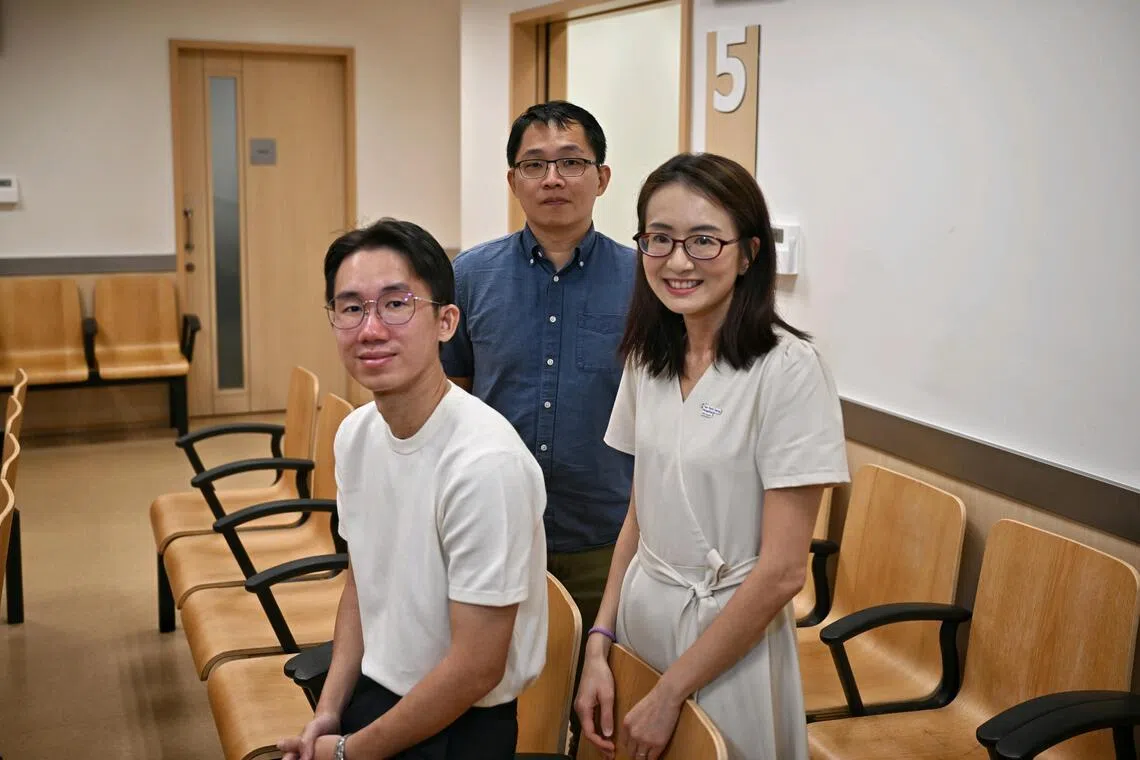
(From left) Mr Brian Chan and Mr Jerry Tan, who both have primary immunodeficiencies, with Dr Lim Xin Rong, a senior consultant at the Department of Rheumatology, Allergy and Immunology at TTSH.
ST PHOTO: ARIFIFN JAMAR
Although the genetic defect causing PID is present at birth, some people with the condition may not develop symptoms until they are several months old. In some cases, they were not diagnosed until later in childhood or even adulthood.
“Unlike infants, who are often identified early due to severe infections, adults tend to develop symptoms more gradually, and these may be milder at first. Symptoms can affect almost any organ system, including the lungs, gut, blood, skin or joints. There is no single ‘typical’ presentation, which is why diagnosis is often delayed,” Dr Lim said.
The simplest way to remember the warning signs is a framework called “too frequent, too severe, too unusual”.
“Too frequent is when the infections happen again and again, beyond what would be expected; too severe is when the infections require hospitalisation or intravenous antibiotics, especially when most people would recover easily at home; and too unusual is when the infections are caused by uncommon organisms, infections that would not resolve despite treatment, or infections that keep recurring shortly after treatment ends,” she said.
Both Mr Tan and Mr Chan are currently treated every six to eight weeks with immunoglobulin replacement therapy intravenously, and this treatment is usually lifelong. The therapy helps improve antibody levels and reduce disease impact.
Dr Lim said they have a choice of receiving the therapy subcutaneously under the skin – a new and well-tolerated treatment – which Mr Chan categorically declined.
The therapy is administered via a small needle placed under the skin, typically through a portable infusion pump or manual push method, allowing treatment to be given at home.
“I take part in MMA (mixed martial arts), and with the implant in my body and the shorter, more frequent subcutaneous method, it would prevent my participation in the contact sport,” he said.
As for Mr Tan, he is used to having a longer downtime with the infusion, which allows him to travel frequently with his wife.
The frequent bouts of illness can take a toll on the mental and emotional well-being of people with PID. Having a community of others who have the condition can help.
Over the years, parents of children with PID and individuals with the condition have come together under the Singapore Immunodeficiency Network (SPIN) to connect with and support one another through awareness, education and access to care.
Dr Lim said more adults with PID and those around them should be part of the group.
To build a stronger patient and advocacy community in Singapore, the group needs to be patient-led.
“These are people with common experiences and concerns, and who are able to provide emotional and moral support for one another,” she said.
To volunteer or support its efforts, contact spin.immuno@gmail.com