




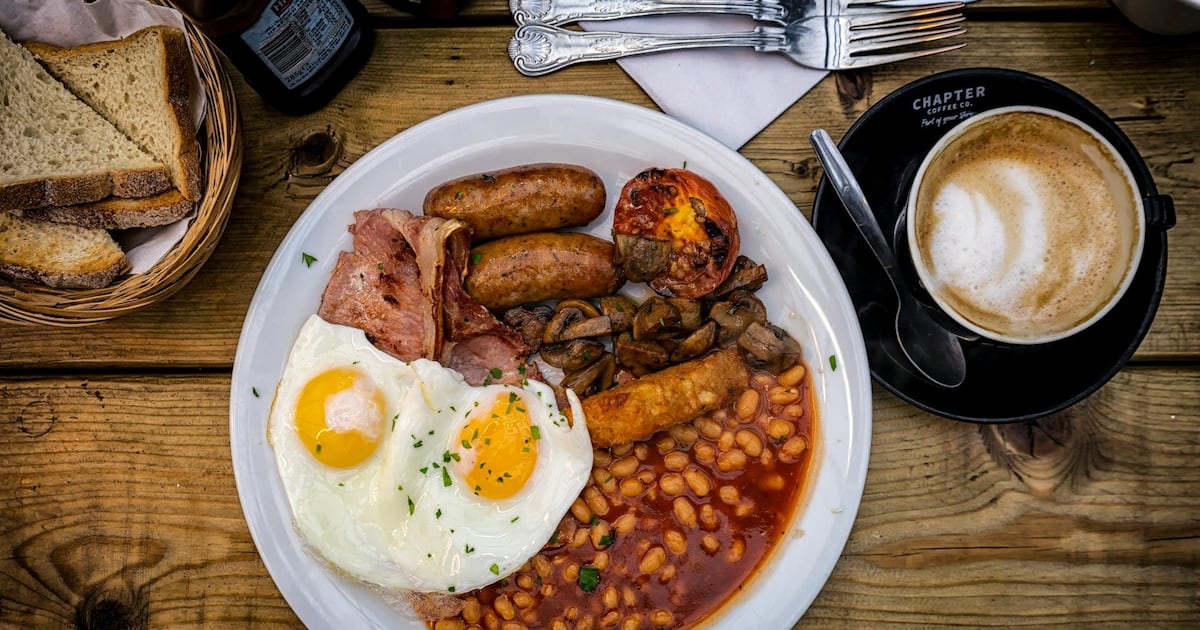
I often meet a friend for breakfast after a gym session at the weekend. She devours eggs, bacon and sausage accompanied by full-fat cappuccinos, while I always order the healthy muesli and mango juice option. She’s lean and I can’t get the weight to budge. Do you think she trains more, has better genetics or are healthy food recommendations a farce?
I once wrote a play in which a character walked into a fast food outlet and ordered a double cheeseburger, a large chips … and a Diet Coke. I was poking fun at the idea of a “diet” or “healthier” option undoing the damage of poor eating choices.
This old hack goes out on motorcycle runs most Sundays. I discover delightful little breakfast spots all around the periphery of the great failing City of Gold. Almost always the “healthy option” is something like muesli, berries, low-fat plain yoghurt and a sprinkle of honey.
Compare that to my favourite: a breakfast of two scrambled eggs (with butter), two rashers of bacon and a standard beef sausage. Everything we’ve been taught to avoid.
Now, if we put our calorie hat on and dabble in the land of averages, the muesli delight packs about 310-350 kilocalaries. There are about 55g-65g of carbs (every element of the meal has carbs), while there is probably also 10g-15g of protein and 5g or fewer grams of fat.
A full glass of freshly squeezed mango juice is likely to pack about 120-130 kilocalaries, with almost all of it coming from rapidly absorbed sugars. Zero fat, zero protein.
The egg breakfast is likely to pack about 450-500 kilocalaries, with about 2g of carbs (depending on the sausage), 30g of protein and 35g-40g of fat. The cappuccino with standard milk and no sugar is likely to deliver about 90-120 kilocalaries, split into about 6g of protein and 6g or even 7g of fat.
Clear winner? Something the banting and keto crowd get right, even if they don’t know it, is that what you eat is as important, if not more important, than how much you eat. The macronutrients you choose affect hormones, and hormones — we hate to have to share — are more powerful than willpower.
Don’t panic. The Water Cooler is not about to promote any one diet over another. Calorie control over time is important, as is macronutrient choice, and if we choose to live a balanced and not a dogmatic life, how and when we combine different food types will dictate our belt size.
The macronutrients you choose affect hormones, and hormones — we hate to have to share — are more powerful than willpower.
The muesli meal causes a huge insulin spike. In layman’s language (many resources break down the science, if it interests you), your body goes into a state in which what you eat is far more likely to be stored as fat. The insulin crash that follows means you will be hungry quicker.
Meal two, with a far more muted insulin spike and higher protein and fat content, is more likely to put your body in a state in which it uses the food as energy and not fat stores, while the high fat content slows gastric emptying, meaning you will feel fuller for longer — essentially wait longer until your next meal.
You’re probably thinking, if the savoury breakfast is less likely to make someone gain weight, then why do we have an obesity epidemic linked directly to Western eating habits? You see, if the person who ordered meal two decides to add two slices of white toast with apricot jam, the whole scenario turns on its head.
Now, meal two’s sausage eater has also spiked their insulin with a rush of high glycaemic carbs and suddenly all those calories from the fat and protein are also more likely to be stored as fat as opposed to being burnt as energy. In addition, they’ll also get hungry quicker.
The Water Cooler believes in explaining things in a way that makes sense. Meal one, if it represents a controlled higher-carb lifestyle, can absolutely support someone with a healthy body mass index. Similarly, meal two, if it represents how someone eats, will no doubt see less fat storage.
The catch (or the secret) is that you must not just watch how much you eat, but you must also understand that what you eat and how you combine macronutrients affects your hormones, which dictate how the food is used in your body.
This is just for weight maintenance. Pursuing overall health and wellness is far more complex and, I would argue, far more important to pursue. One of its side effects is a healthy waist measurement.