




The global ginger market is witnessing a powerful resurgence as consumers around the world increasingly embrace natural ingredients, functional foods, and herbal wellness products. Once primarily associated with traditional medicine and regional cuisines, ginger has evolved into a globally recognized ingredient used across food, beverages, nutraceuticals, pharmaceuticals, and wellness applications.
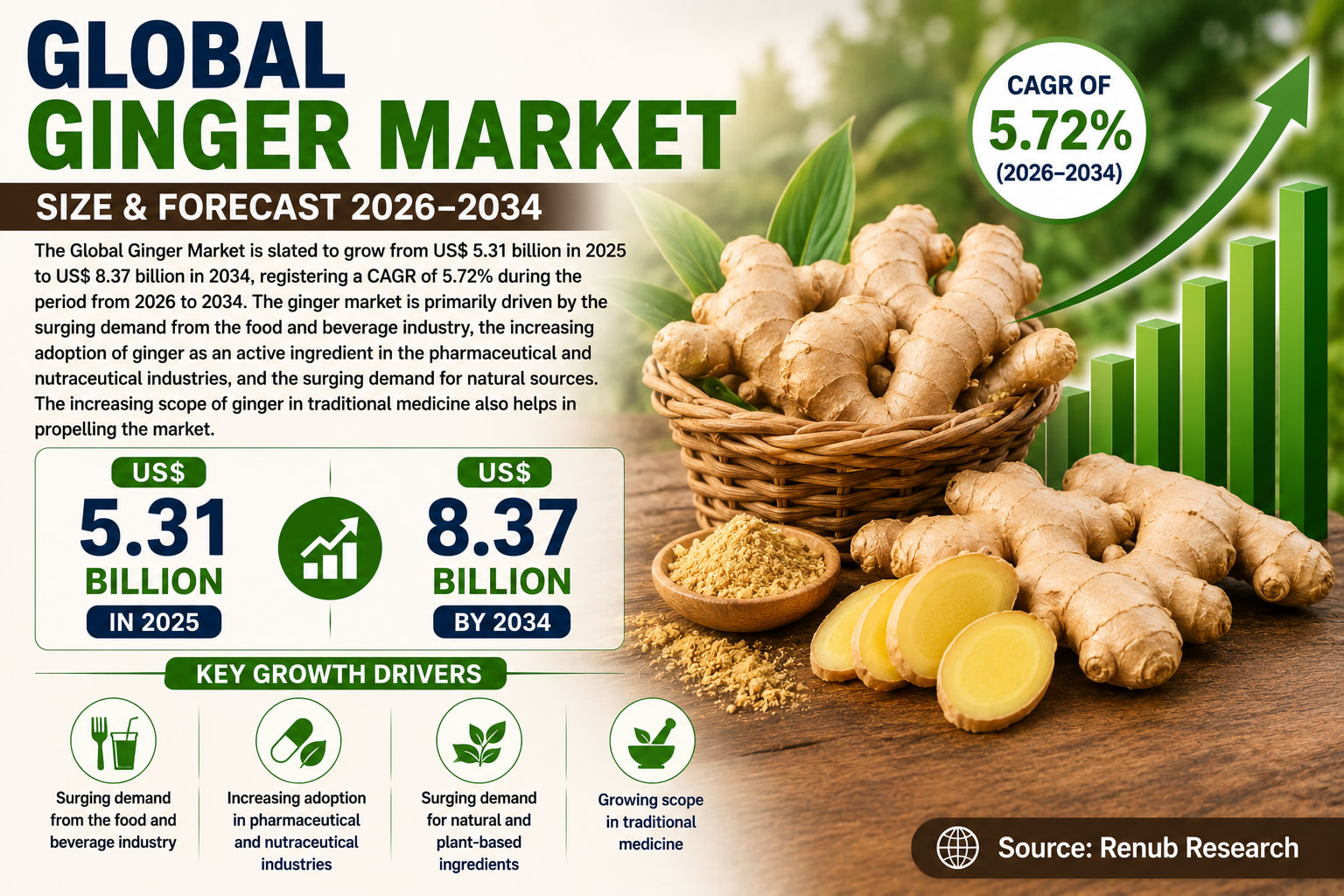
According to Renub Research, the Global Ginger Market is projected to grow from US$ 5.31 billion in 2025 to US$ 8.37 billion by 2034, expanding at a compound annual growth rate (CAGR) of 5.72% from 2026 to 2034.
This strong growth outlook is being driven by increasing demand for natural and clean-label products, rising consumer awareness regarding immunity and digestive health, expanding applications in the food and beverage industry, and the growing popularity of herbal medicine worldwide.
From ginger teas and wellness shots to nutraceutical supplements and culinary products, ginger is becoming one of the most versatile and commercially valuable botanical ingredients in the global marketplace.
Ginger’s Expanding Role in Modern Consumer Lifestyles
Ginger is a flowering plant whose rhizome is widely used as a spice, flavoring ingredient, and medicinal product. Known for its pungent flavor and distinctive aroma, ginger contains active compounds such as gingerol and shogaol, which are associated with antioxidant, anti-inflammatory, and immunomodulatory properties.
The ingredient is available in multiple forms, including fresh ginger, dried ginger, powdered ginger, ginger oil, extracts, preserved ginger, and pickled ginger. This versatility allows ginger to be used across numerous commercial applications.
Traditionally, ginger has been deeply rooted in Asian, African, and Middle Eastern cuisines and medicinal systems. However, over the last decade, consumption has expanded rapidly in Western markets as consumers increasingly seek natural wellness solutions and functional ingredients.
Today, ginger is commonly used in beverages, sauces, bakery products, confectionery, teas, supplements, immunity-boosting products, and herbal remedies. Its growing integration into mainstream health and food trends reflects broader consumer interest in preventative wellness and natural nutrition.
Natural and Functional Ingredient Demand Is Driving Market Expansion
One of the biggest factors supporting the global ginger market is the rising demand for natural and functional ingredients.
Consumers worldwide are becoming more health-conscious and increasingly avoiding artificial additives, synthetic ingredients, and heavily processed foods. As a result, natural plant-based ingredients with recognized health benefits are experiencing strong demand across industries.
Ginger fits perfectly into this movement. It is widely associated with digestive health, inflammation management, immune system support, and nausea relief. These perceived health benefits are helping position ginger as a preferred ingredient in wellness-focused products.
The growing popularity of clean-label food products and natural health supplements is further strengthening demand. Manufacturers are increasingly incorporating ginger into beverages, herbal teas, wellness shots, energy drinks, snacks, and dietary supplements to meet evolving consumer preferences.
India continues to play a critical role in the global ginger market. According to the Food and Agriculture Organization (FAO), India accounted for nearly 45% of global spice production in 2023, reinforcing its importance as both a producer and exporter of ginger and other spices.
As demand for natural wellness products continues expanding globally, ginger’s importance within the functional ingredient sector is expected to grow significantly.
Food and Beverage Applications Continue to Expand
The food and beverage industry remains one of the largest consumers of ginger worldwide.
Ginger’s distinctive flavor profile makes it an important ingredient in savory foods, sauces, snacks, confectionery products, baked goods, and beverages. It adds warmth, spice, freshness, and complexity to a wide range of culinary applications.
The growing popularity of global cuisines—especially Asian, Caribbean, and Middle Eastern dishes—is increasing ginger consumption in both restaurants and home cooking. Consumers are becoming more adventurous with flavors and increasingly interested in authentic international food experiences.
At the same time, beverage innovation is creating major opportunities for ginger-based products. Ginger is now widely used in kombucha, wellness shots, flavored sparkling drinks, herbal teas, immunity beverages, and functional soft drinks.
In January 2026, Health-Ade introduced Ginger Lemon Berry, a limited-edition kombucha flavor combining ginger, lemon, and berry notes to support digestive wellness and healthy lifestyles.
This reflects the growing commercial value of ginger within premium beverage categories and health-oriented drink innovations.
Herbal Medicine and Traditional Wellness Systems Are Regaining Popularity
The revival of herbal medicine and traditional wellness systems is another major force supporting ginger market growth.
For centuries, ginger has been used in traditional medicinal systems such as Ayurveda, Traditional Chinese Medicine (TCM), and herbal healing practices throughout Asia and the Middle East. Today, many consumers are rediscovering these traditional remedies as interest in holistic health continues to rise.
Ginger is commonly associated with relief from nausea, digestive discomfort, colds, inflammation, and immune-related issues. This growing trust in plant-based wellness solutions is encouraging broader use of ginger in supplements, herbal products, and nutraceutical formulations.
In June 2023, Traditional Medicinals expanded its herbal tea portfolio in Canada with the launch of Organic Lemon Ginger Tea, featuring ginger alongside organic herbs such as lemon, hibiscus, and lemongrass.
The increasing overlap between traditional medicine and modern wellness trends is creating strong long-term opportunities for ginger-based health products.
Fresh Ginger Maintains Strong Global Demand
Fresh ginger remains one of the most widely consumed forms of the product globally.
Households, restaurants, and traditional medicine practitioners continue to prefer fresh ginger because of its strong aroma, flavor intensity, and natural bioactive compounds. It is heavily used in cooking, beverages, herbal preparations, and home remedies.
As consumers increasingly prioritize fresh and minimally processed foods, fresh ginger consumption is expected to remain stable and continue growing across both developed and emerging markets.
However, fresh ginger’s perishable nature creates logistical and storage challenges. Efficient cold-chain systems and supply management remain critical for maintaining quality and reducing spoilage.
Despite these operational challenges, the fresh ginger segment continues to hold a major share of the overall market due to its strong culinary and medicinal appeal.
Pickled and Preserved Ginger Segments Benefit from Global Cuisine Trends
The pickled ginger market is growing steadily due to the global popularity of Japanese and Asian cuisine.
Pickled ginger is widely used as a palate cleanser alongside sushi and seafood dishes. As Japanese restaurants and Asian-inspired dining experiences expand globally, pickled ginger consumption continues increasing beyond traditional markets.
Its longer shelf life compared with fresh ginger also makes it attractive for foodservice and retail distribution.
Preserved ginger, which is processed with sugar or syrup, remains important in bakery products, festive foods, traditional sweets, and confectionery applications. The segment benefits from ongoing demand for culturally rooted desserts and specialty food products.
These specialized ginger categories may not dominate the market by volume, but they contribute to product diversification and broader commercial applications.
Ginger Powder Is Becoming Increasingly Popular
Ginger powder continues gaining popularity due to its convenience, long shelf life, and versatility.
Powdered ginger is widely used in bakery products, spice blends, nutraceutical products, instant beverages, and packaged foods. Its ease of storage and transport makes it highly suitable for industrial food production and global trade.
As convenience food consumption rises worldwide, ginger powder is becoming increasingly important in commercial food processing and retail spice markets.
Manufacturers also prefer powdered ginger because it allows for consistent flavoring and easier incorporation into large-scale product formulations.
The United States Market Reflects Wellness-Oriented Consumption
The United States ginger market is strongly influenced by health and wellness trends.
Consumers increasingly use ginger in herbal teas, kombucha, baked products, wellness drinks, and immunity-focused foods. The rise of functional beverages and natural supplements has significantly increased ginger’s visibility in mainstream retail channels.
Asian cuisine and fusion dining also contribute substantially to market demand, particularly in urban centers where international food culture continues to expand.
The U.S. market remains heavily dependent on imports because domestic ginger production is limited. This creates exposure to international supply chain conditions and global price fluctuations.
In October 2023, Stansfeld Scott Inc. and Select Brands acquired Stone’s Ginger Wine, aiming to strengthen operational efficiency and expand market presence using fresh Jamaican ginger.
Such investments demonstrate continued commercial confidence in ginger-based beverage products.
The United Kingdom Market Benefits from Herbal Beverage Trends
The United Kingdom ginger market continues expanding due to rising interest in healthy eating and wellness-oriented beverages.
Ginger is widely used in teas, baked goods, confectionery, and savory meals across the UK. Herbal teas and functional drinks featuring ginger have become particularly popular among consumers focused on digestive health and immunity support.
Ethnic-inspired cuisine trends are also boosting ginger use in home cooking and foodservice channels. Asian and Caribbean culinary influences have significantly increased ginger consumption across British households.
In August 2025, wellness shot brand MOJU launched a new multi-pack ginger product designed for home refrigeration and convenience-focused consumers.
The continued growth of wellness beverages and functional foods is expected to support long-term market expansion in the UK.
India Remains a Global Powerhouse in Ginger Production
India is one of the world’s largest producers, consumers, and exporters of ginger.
Domestic demand remains strong due to ginger’s deep integration into Indian cuisine, Ayurveda, and traditional home remedies. Government support for spice cultivation and export promotion also strengthens India’s position in the global market.
The country’s ginger industry is influenced by weather conditions and price volatility, but its long-term importance remains extremely high due to growing global awareness of herbal wellness products.
In August 2024, Indian beverage company The Glenwalk entered the non-alcoholic wellness beverage segment with the launch of a zero-calorie ginger ale endorsed by Bollywood actor Sanjay Dutt.
This reflects how ginger is increasingly moving beyond traditional culinary uses into modern lifestyle and health beverage categories.
Supply Chain Challenges and Regulatory Compliance Remain Concerns
Despite strong growth prospects, the global ginger market faces several operational challenges.
Price volatility remains a major issue because ginger production is highly dependent on climate conditions, soil quality, and seasonal agricultural cycles. Weather disruptions and crop diseases can significantly affect supply and pricing.
Supply chain disruptions can impact processing operations, export activity, and inventory stability, particularly in import-dependent markets.
Quality variability is another challenge. Differences in cultivation methods, harvesting practices, and processing standards can affect flavor, potency, and shelf stability.
Regulatory compliance is becoming increasingly important as governments enforce stricter food safety standards related to pesticide residues, contaminants, and product labeling. Meeting these standards often increases operational complexity and production costs.
Final Thoughts
The global ginger market is evolving into one of the most dynamic segments of the natural ingredient and wellness economy.
Driven by growing demand for herbal products, functional foods, clean-label ingredients, and immunity-supporting nutrition, ginger has expanded far beyond its traditional culinary role. It now occupies an increasingly important position across food, beverages, nutraceuticals, and herbal medicine industries worldwide.